

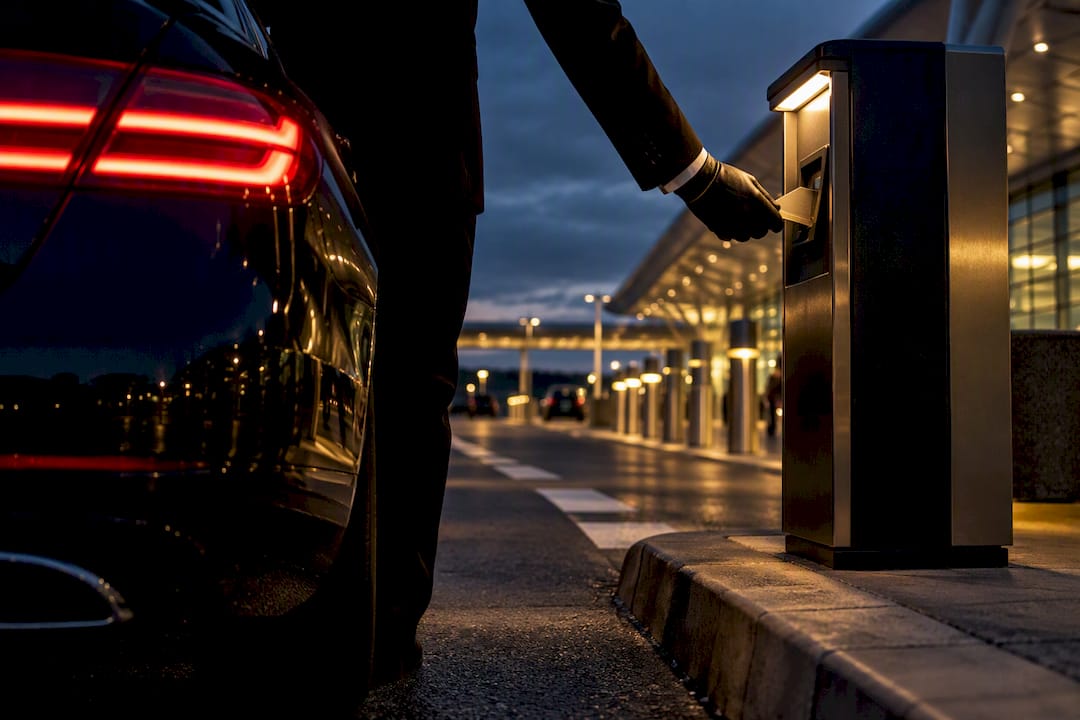
Briefly loading bags while you stay with the car counts as stopping, not parking, and it’s usually free. The moment you leave the vehicle or overstay a marked short-term limit, it legally becomes parking, and a fee applies. At Tallinn Airport, the Kiss & Fly zone gives you 10 free minutes before that switch happens, and enforcement there is genuinely active, not theoretical.
TL;DR:
- Stopping for quick luggage drop-offs within a few minutes is allowed without paying, but leaving the vehicle unattended for over a minute or extending the stop turns it into parking, incurring fees.
- Parking fees start when a vehicle enters a paid zone and is logged either by ticket or license plate, with disputes often resolved through collecting and presenting timestamped proof of payment.
- Tallinn’s highest parking rates and shortest free time are in the Old Town and city center zones, while outer zones have lower tariffs and longer free windows, but the zone only matters when the stop exceeds legal loading time.
- Tallinn Airport’s Kiss & Fly allows a strictly enforced 10-minute free stop for drop-offs and pickups; overstaying or leaving the vehicle unattended can trigger parking charges or penalties.
- To avoid extra fees, transfer drivers should stay with the vehicle during loading, and passengers must share precise exit details in advance to minimize curb time and prevent unintentional parking.
Table of Contents
- What Counts as Parkimistasu Transfeeris?
- How Do Parking Fees Start During a Transfer?
- What Are Tallinn’s Parking Zones and Tariffs?
- How Does Kiss & Fly Work at Tallinn Airport?
- What Happens If You Get a Parking Fine in Tallinn?
- How Can Transfer Drivers and Passengers Avoid Extra Fees?
- Author Perspective: What Reduces Parking Risk on a Transfer
- Book a Transfer That Handles Parking for You
- Sources
- FAQ
What Counts as Parkimistasu Transfeeris?
(Parking Fees for Transfers)
Estonian traffic law draws a sharp line between two words that sound almost interchangeable: peatumine (stopping) and parkimine (parking). The Liiklusseadus defines stopping as a brief, intentional halt to load or unload passengers or cargo. The driver stays put, engine often running, ready to move again within moments. Parking begins the instant that halt runs longer than necessary or the driver steps away from the vehicle.
That distinction decides whether a curbside transfer costs anything.
- Allowed as stopping: a driver pulls up outside a hotel, pops the trunk, hands over luggage, and pulls away within a minute or two.
- Counts as parking: the same driver walks into the lobby to fetch a guest, or leaves the car curbside for ten minutes while checking a flight board.
Misjudge that line and the consequences arrive fast. A parking attendant or camera system doesn’t ask why the car sat there. It logs the time, and if no valid ticket or session exists, a fine follows. Tallinn’s own guidance on parking zones and enforcement confirms that operators like EuroPark act on exactly this kind of gap between intent and behavior.
How Do Parking Fees Start During a Transfer?
Charging typically begins the moment a vehicle enters a paid zone and either takes a ticket from a machine or gets logged by an entry system, depending on the location. Tallinn’s municipal areas run on session-based charging tied to your license plate or a purchased ticket. Airport parking works similarly but with its own entry ticketing tied to a signed parkimislepingu tingimused.
Paying is rarely complicated once you know where to look:
- Use PARGI.EE or a comparable mobile parking app to start and stop a session by zone code.
- Pay at a curbside parking machine with a card if no app is installed.
- At the airport, take a ticket on entry and settle it at a payment terminal or via the airport’s own app before returning to your car.
- Keep the digital or paper receipt until you’ve left the zone entirely.
Disputes happen more often than they should, usually because a payment provider switched systems mid-transition and an app session didn’t sync properly. Screenshot your payment confirmation, photograph the ticket machine display, and note the exact time you entered and left.
Pro Tip: Save every parking receipt for at least 30 days after a Tallinn trip. If a fine notice shows up later citing a session gap, a timestamped photo settles the dispute in minutes instead of weeks.
What Are Tallinn’s Parking Zones and Tariffs?
Tallinn splits its paid parking into zones that behave differently depending on how close you are to the Old Town core. Charging hours generally run on weekdays and Saturdays, with Sundays and public holidays typically free in most zones, though it’s worth checking signage since exceptions exist near major venues.
- Old Town and city center zones carry the highest hourly tariffs and the shortest free allowances, sometimes just a couple of minutes for active loading.
- Pirita and outer residential zones run lower rates and often longer free windows before metered time kicks in.
- Resident and business permits let local plate holders park free or discounted within their registered zone, but a visiting transfer vehicle gets no benefit from someone else’s permit.
None of this changes the core rule. A driver who stays with the car for a fast handover isn’t parking regardless of zone, according to Tallinn’s own parking guidance. The zone only matters once the stop crosses into actual parking.
How Does Kiss & Fly Work at Tallinn Airport?
Tallinn Airport’s Kiss & Fly area exists for exactly one purpose: a fast drop-off or pickup where the driver never really leaves the wheel. The first 10 minutes are free, based on the airport’s own parking terms, and that window is monitored closely rather than loosely enforced.
The 10-minute threshold isn’t a suggestion. Automated ticketing and periodic patrol checks at Kiss & Fly capture overstays, and the system treats a car left unattended, even briefly, the same as a car parked for an hour.
Beyond Kiss & Fly, the airport runs standard short-term and long-term paid parking with covered options, periodic pricing campaigns, and clearly posted entry ticketing. A few operational points matter for anyone doing a transfer:
- Entry tickets are issued at the barrier and must be settled at a payment terminal before exit.
- Mobility-impaired passengers can register for a short-use exemption at airport information rather than relying on Kiss & Fly’s tight window.
- The signed parkimislepingu tingimused allows the operator to apply a leppetrahv (contractual penalty), block your exit, or in repeated cases arrange vehicle removal.
What Happens If You Get a Parking Fine in Tallinn?
Enforcement in Tallinn runs through operators like EuroPark and, at the airport, the airport’s own parking administration, both acting under powers set out in Estonia’s Parkimisseadus. They can issue a viivistasu for unpaid municipal parking or a contractual leppetrahv for breaching signed airport terms, and the airport’s documented example penalty for a breach sits at €50, according to its published price list and terms.
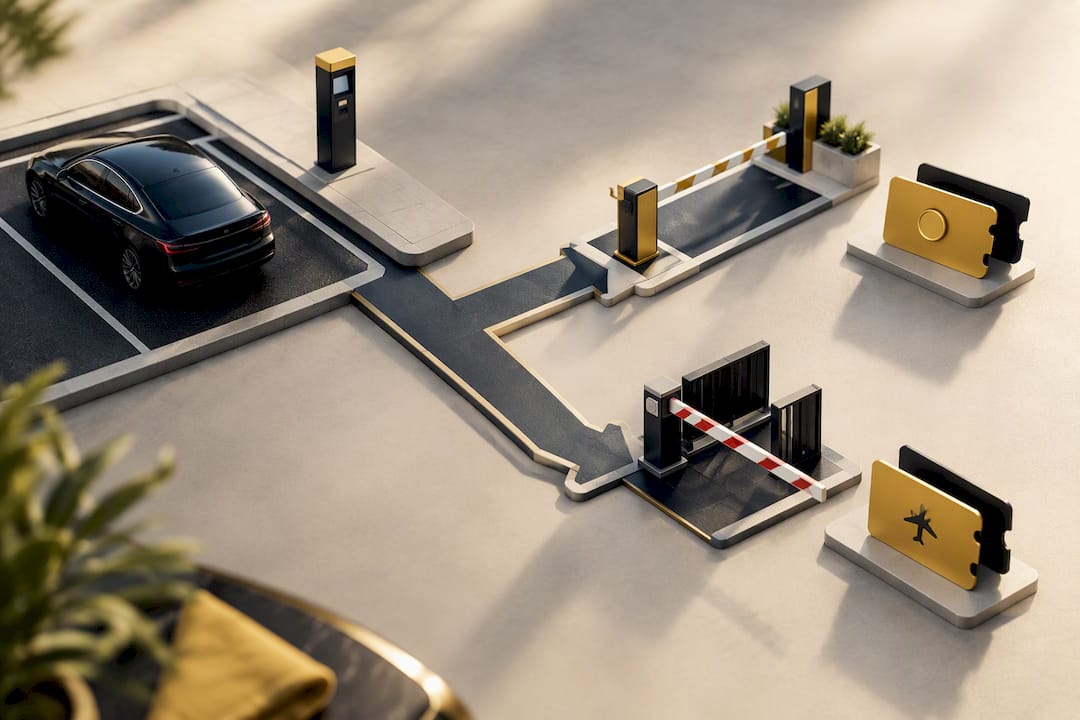
Most notices carry a payment window of around 14 days before the claim escalates or additional costs get added. Ignoring one doesn’t make it disappear. It can lead to a blocked exit on a return visit or a referral for further collection.
If a notice lands and you believe it’s wrong, act fast:
- Pull your payment receipt, app session log, or timestamped photo immediately.
- Contact the issuing operator directly using the number or portal listed on the notice itself.
- File through the relevant municipal or airport iseteenindus (self-service) portal rather than waiting for a reply by mail.
- Keep copies of everything you submit, including the date and confirmation number.
How Can Transfer Drivers and Passengers Avoid Extra Fees?
The single best habit for any driver doing airport transfer services or hotel pickups is staying with the vehicle. That one behavior keeps a stop legally classified as stopping, not parking, in almost every scenario covered above.
- Stay inside or immediately beside the car during loading and unloading.
- If luggage help is needed, ask the passenger to bring bags curbside rather than leaving the car to fetch them.
- Know the nearest legal short-term zone before you arrive, especially at hotels with limited curb space.
- Carry a working payment app or card ready to go, since fumbling for payment method is what turns a 90 second stop into a five minute one.
Booking a pre-arranged transfer changes the math entirely for groups, delayed flights, or passengers with mobility needs. A private transfer booking checklist helps you line up pickup points, contact details, and timing in advance so the driver isn’t circling while waiting for a call.
Pro Tip: Passengers, share your exact terminal exit or hotel entrance in advance. A driver who knows precisely where to stop cuts curb time dramatically, which is the difference between a free stop and a paid one.
Author Perspective: What Reduces Parking Risk on a Transfer
Real-time flight monitoring changes how a pickup unfolds. When a driver tracks your flight and times arrival to match your walk out of baggage claim, there’s no idle curb time for enforcement to catch. Meet-and-greet service, luggage handling, and a driver who never leaves the vehicle unattended all work toward the same outcome: the stop stays legally a stop. That’s less about convenience and more about avoiding a preventable fine on what should be a simple arrival.
— Erki
Book a Transfer That Handles Parking for You
Pre-booked transfers can include waiting and curbside logistics as part of the service to simplify parking and pickup. Drivers may track your flight, position ahead of arrival, and remain with the vehicle to comply with legal stopping requirements.

If you’re arranging an airport, hotel, or station pickup and want the parking question handled before you land, check the transfer pricing and vehicle options for routes across Estonia, including Tallinn Airport transfers available in a range of vehicle options. For longer routes or advance planning, the fixed-quote booking page gets you a price in four steps, no curbside guesswork required.
Sources
- Liiklusseadus (traffic law) — Riigi Teataja
- Parkimine — Tallinn city official page
- Parkimine lennujaamas — Tallinn Airport
FAQ
Is a Quick Hotel Drop-Off Considered Parking in Tallinn?
No, as long as the driver stays with the vehicle for a brief load or unload. It becomes parking under Estonian traffic law the moment the driver leaves the car or the stop runs longer than necessary.
How Long Is Free at Tallinn Airport’s Kiss & Fly Zone?
The Kiss & Fly area allows 10 free minutes for active drop-off or pickup. Overstaying or leaving the car unattended during that window can trigger a parking fee.
What Happens If I Ignore a Parking Fine in Tallinn?
Ignoring a notice can lead to additional collection costs or a blocked exit on a future visit, based on enforcement powers under the Parkimisseadus. Most notices give roughly 14 days to pay or contest before escalation.
Does Solidride Include Parking in Its Transfer Price?
Solidride’s pre-booked transfers are structured so drivers manage waiting and pickup logistics as part of the service. Pricing for specific routes and vehicles, including the Tallinn Airport Mercedes-Benz E-Class transfer at €33 per hour, is listed on the pricing page.
Can I Dispute an Airport Parking Fine in Tallinn?
Yes, by submitting your payment receipt, app session log, or timestamped photo directly to the issuing operator listed on the notice. The airport’s parking terms outline the leppetrahv process and how breaches are handled.
Lisa kommentaar