


Chauffeur etiquette is the professional standard that combines punctuality, discreet service, and proactive assistance, and these three behaviors define a genuine luxury transfer. You should expect a chauffeur who tracks your flight or train, greets you by name, handles your luggage without being asked, and keeps the vehicle spotless before you ever step inside. Providers like Solidride build their service model around exactly these practices.
TL;DR:
- Professionals track flights in real-time and adjust pickup windows accordingly, especially when delays occur, to ensure a smooth experience.
- Luggage handling is proactive and discreet, with bags loaded first and fragile items handled separately, minimizing passenger effort.
- Vehicles and chauffeurs must meet strict appearance, maintenance, and safety standards, including proper training and annual continuing education.
- Discretion is standard, with privacy measures like no photos or trip details shared, and confidentiality protocols available for high-profile clients.
- Customers should verify driver credentials, training hours, and policies for delays and special accommodations before booking to avoid service gaps.
Table of Contents
- Meet-and-greet, punctuality and handling delays
- Luggage handling, boarding assistance and invisible service
- Appearance, vehicle presentation and safety standards
- Privacy, discretion and handling sensitive passengers
- Accessibility, pets and special-service considerations
- How to vet and book a professional chauffeur
- What experience on the ground actually looks like
- Book a chauffeur who actually follows these standards
- FAQ
- Sources
Meet-and-greet, punctuality and handling delays
A professional chauffeur stages the vehicle or waits near the terminal exit well before your scheduled arrival, holding a clearly printed name sign where you can see it immediately. For flights, the driver tracks the actual arrival time rather than the scheduled one, adjusting the pickup window as gates, customs lines, and baggage claim add delay.
The real test comes when plans change. A delayed flight or a late train should trigger a proactive text or call from dispatch, not silence while you wonder if anyone is coming. According to the Global Service Standards published by LAI, dispatch and flight-tracking competence are core requirements for professional chauffeur operations, not optional extras.
Watch for these markers of a reliable provider:
- A name sign staged at the correct arrivals exit, not a vague meeting point.
- Flight or train numbers confirmed back to you before the trip.
- A direct phone line to dispatch, not just an automated booking confirmation.
- A stated grace period for delays instead of a hard cutoff.
Pro Tip: Ask any provider what happens if your flight lands an hour late; a confident, specific answer tells you more than any marketing page.
Luggage handling, boarding assistance and invisible service
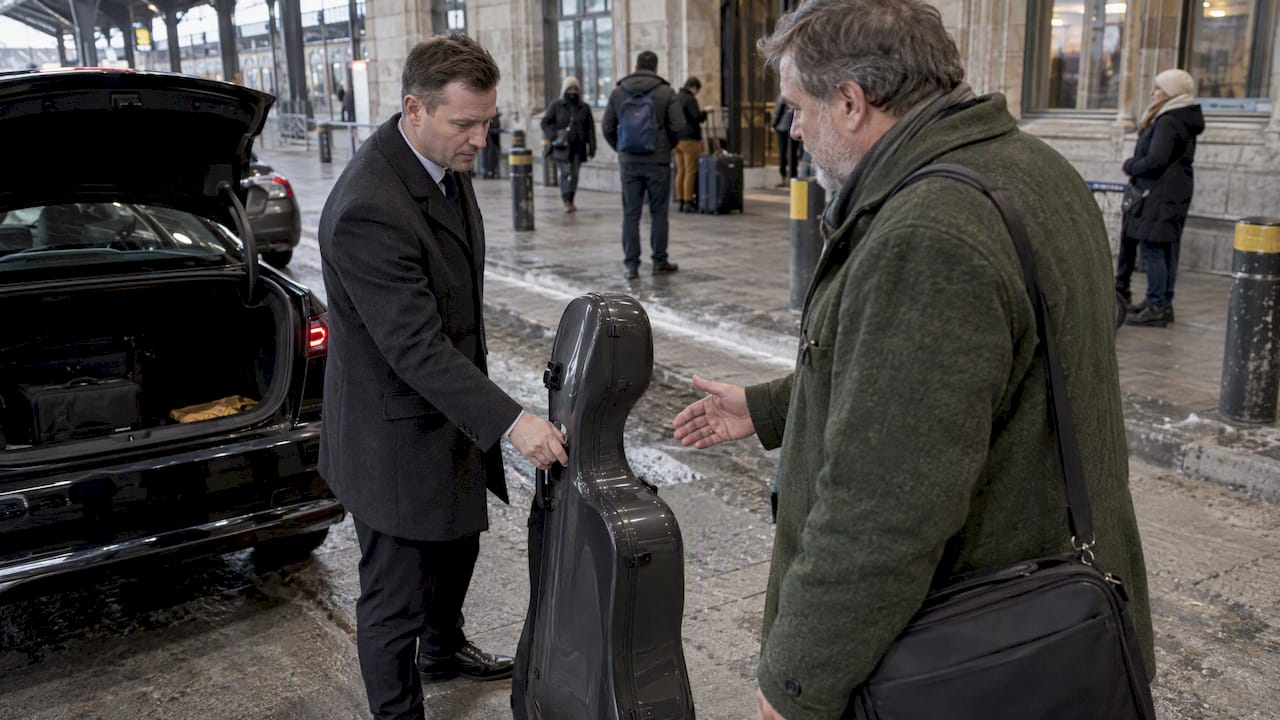
Good chauffeur service is mostly invisible. The driver reaches for your bags before you ask, opens the door from the correct angle so you step out onto dry pavement instead of a puddle, and times the approach so you are never left standing in traffic.
A well-run pickup usually follows this sequence:
- The chauffeur meets you at the sign, confirms your name, and offers to take your luggage.
- Bags are loaded first, with fragile or marked items handled separately and confirmed with you.
- The vehicle door is opened on the curb side, away from moving traffic.
- Climate and seating are already adjusted before you sit down.
- The chauffeur confirms the destination verbally, then minimizes conversation unless you initiate it.
This is the same anticipatory approach described in what a VIP airport transfer service is built to deliver: fewer decisions for you, more preparation behind the scenes.
Pro Tip: A chauffeur should ask before moving anything that looks fragile, personal, or oddly shaped, even if it means a few extra seconds at curbside.
Appearance, vehicle presentation and safety standards
Appearance signals competence before a single word is spoken. A professional chauffeur wears a clean, pressed uniform or business attire with no visible wear, and the vehicle itself should look freshly detailed, inside and out, with no lingering odors, trash, or smudged glass.
Before you ever see the car, the chauffeur should have already checked:
- Interior cleanliness, including floor mats and upholstery.
- Working climate control, charging ports, and interior lighting.
- Fuel or charge level sufficient for the full trip plus contingencies.
- Tire condition and basic mechanical readiness.
Training matters as much as appearance. The Global Service Standards from LAI call for a minimum 40-hour defensive driving course along with customer-protocol training and annual continuing education, a benchmark corporate travel buyers rely on when choosing a provider. For corporate procurement teams, asking about this kind of credentialing is a faster risk check than relying on reviews alone; many turn to Individual Travel Rewards: Corporate Program Excellence when considering travel transfer solutions for employee rewards and client gifts.
Privacy, discretion and handling sensitive passengers
Discretion is the default, not an upgrade. A chauffeur should let you set the tone for conversation: a quiet nod and a confirmed destination are enough unless you choose to talk. Topics like your schedule, your business, or who else is in the car are never brought up by the driver.
For VIP or high-profile clients, serious providers can apply added confidentiality measures on request, including non-disclosure arrangements and restricted trip details shared only with dispatch.
Expect these behaviors as standard:
- No photos, no social media mentions, no repeating trip details to anyone.
- Phones and documents left untouched unless you ask for help with them.
- Routes and timing kept off public-facing logs when requested.
- A simple way to flag extra privacy needs directly on the booking form.
Accessibility, pets and special-service considerations
Special needs should never be a surprise at pickup. If you require wheelchair access, a companion seat, or extra boarding time, say so when booking rather than at the curb.
A few practical steps make this easier:
- Note mobility requirements, including wheelchair type, when you book.
- Confirm pet policies in advance, including carrier requirements and cleaning procedures for pet-friendly vehicles.
- For group transfers, specify passenger count and luggage volume so the right vehicle size is assigned.
- Use direct booking language such as “wheelchair-accessible pickup needed” or “traveling with one carry-on pet carrier” rather than general notes.
Visit Estonia’s accessibility guidance recommends advance notice for accessibility needs, since many smaller providers have limited options for passengers who require special assistance. Confirming these details early, rather than hoping a driver can improvise, is the single biggest factor in whether the pickup goes smoothly.
How to vet and book a professional chauffeur
Before booking, ask direct questions rather than relying on a polished website. A provider worth your money should answer each of these without hesitation.
- Do your chauffeurs complete formal defensive driving training, and how many hours?
- How do you track flights or trains, and what counts as a “late” pickup?
- What is your grace period before additional charges apply?
- Are your drivers background-checked or credentialed through an industry body?
- What insurance coverage applies during the transfer?
| What to ask | Why it matters |
|---|---|
| Training hours | Confirms professional-level driving skill, not just a license |
| Flight-tracking method | Determines whether delays are handled proactively |
| Wait-time policy | Avoids surprise fees or rushed pickups |
| Background checks | Reduces risk for solo travelers and corporate bookings |
| Confidentiality terms | Protects sensitive itineraries and VIP details |
Solidride answers these points directly on its site: real-time flight monitoring, meet-and-greet as standard, luggage assistance, and 24/7 availability across its Mercedes-Benz fleet. Full pricing and vehicle options sit on the Solidride, and the guide on how to vet a professional driver service walks through the same checklist in more depth.
What experience on the ground actually looks like
I have watched a good pickup save a trip that was already going wrong: a delayed flight, a missed connection, a client who just wanted to get to a hotel without explaining any of it twice. The chauffeur had already rebooked the pickup window using the flight tracker, so there was no scramble at the curb, just a name sign, a quiet nod, and bags loaded before the client finished a phone call. That is the whole job: remove friction, say little, and let the ride be the easy part of the day.
— Erki
Book a chauffeur who actually follows these standards
Reading a checklist is one thing. Getting a driver who follows it every time is another, and that gap is where Solidride focuses its service model: flight-tracked pickups, meet-and-greet as standard, hands-on luggage help, and availability around the clock across our Mercedes-Benz fleet.

Before you book, have these details ready:
- Flight or train number, plus your return schedule if applicable.
- Any mobility, pet, or group-size needs stated clearly on the form.
- Your exact pickup point, especially for hotels or multi-terminal airports.
Full vehicle options and rates are listed on our pricing page, and special requests, including wheelchair access or pet-friendly transport, can be noted directly when you book.
FAQ
Is tipping expected for a private chauffeur?
Tipping practices vary by provider and are not fixed by law in most markets, so check the specific terms at booking. Many luxury transfer services include service charges in the quoted rate, which your provider should state clearly before you pay.
How long should a chauffeur wait if my flight is delayed?
Reputable providers build a grace period into the booking, often tracking actual flight arrival rather than the scheduled time. Confirm this policy before booking since it varies by company and trip type.
Should I sit in the front or back seat?
Standard etiquette for a private chauffeur service is to sit in the back seat, which preserves a professional distance and gives the chauffeur clear sightlines. You are welcome to sit in front if you prefer a more casual ride, but it is not the default expectation.
What proof should I ask for before booking a chauffeur?
Ask for details on driver training hours, background checks, and flight-tracking procedures, since these separate a professional operator from a standard taxi. Industry benchmarks like the Global Service Standards from LAI outline the training and protocol levels worth asking about.
Can I request a pet-friendly or accessible vehicle in advance?
Yes, and you should state these needs clearly when you book rather than at pickup. Guidance on accessibility in Estonia notes that advance notice matters because many smaller providers have limited accessible options.
Lisa kommentaar