


Allergen-conscious transport refers to a set of risk-reduction policies and operational steps, including cleaning protocols, buffer seating, ventilation management, and passenger communication, that transport providers use to lower a traveler’s exposure to specific allergens. The term is not an industry-standard certification; it is a descriptive phrase covering practices that vary widely by carrier and mode. IATA guidance is explicit: carriers should provide information and risk-reduction measures, but they cannot guarantee a completely allergen-free environment. The U.S. Department of Transportation and FAA shape airline obligations domestically, while the FDA’s Sanitary Transportation rule governs how food moves through supply chains and reaches catering operations.
The practical bottom line: these measures reduce risk. They do not eliminate it. Travelers with severe allergies must still prepare independently.
- Carry at least two epinephrine auto-injectors in your carry-on at all times.
- Bring your own food rather than relying on carrier catering.
- Contact your carrier at least 48 hours before departure to request accommodations.
- Ask specifically about buffer zones, pre-boarding seat cleaning, and in-cabin announcements.
Pro Tip: Clinicians advise that severe food allergies may qualify as a disability for air travel under U.S. law, which means you can request accommodations formally, not just as a courtesy.
Table of Contents
- What transport settings does allergen-aware shipping and travel apply to?
- What do providers actually do to reduce allergen exposure?
- How should you prepare before and during travel?
- What U.S. rules and official guidance shape carrier obligations?
- Why operators cannot guarantee an allergen-free environment
- How allergens actually travel through air and why it matters
- A transport professional’s perspective on what actually works
- Official resources for deeper reading
- Sources
What transport settings does allergen-aware shipping and travel apply to?
Allergen-sensitive logistics is not limited to air travel, though that is where most formal guidance exists. The concept applies across every mode where passengers or food products share an enclosed space.
- Commercial air travel: The most regulated setting. Airlines may offer buffer zones, allergen-free meal options, and pre-boarding cleaning on request.
- Commuter and intercity rail: Assigned seating on long-distance trains makes buffer zones feasible. Open-boarding commuter rail offers almost no control over adjacent passengers.
- Long-distance buses: Limited control. Open seating, high turnover, and short cleaning windows between trips make proactive measures difficult.
- Rideshare and private hire: No formal allergen policy from most platform operators, but a private hire driver can be instructed directly. The vehicle is yours alone, which removes the adjacent-passenger variable.
- School buses: Relevant for children with severe allergies. Some districts have no-food policies; enforcement varies.
- Hotel and airport transfer shuttles: Shared shuttles carry the same risks as buses. Private airport transfers allow pre-trip cleaning requests and no-snack policies.
- Food and freight shipping: The FDA Sanitary Transportation rule applies here, covering temperature control and contamination prevention for food shipments, which directly affects allergen risk in catering supply chains.
The key variable across all modes is whether seating is assigned or open. Assigned seating makes a buffer zone meaningful. Open boarding makes it nearly impossible to enforce.
What do providers actually do to reduce allergen exposure?
Provider-side measures fall into five categories. How well any of them work depends heavily on the mode and the operator.
Buffer zones and advance seating work best on aircraft and long-distance trains, where seat assignments are fixed. On a flight, a buffer zone typically means keeping the rows immediately around you free of passengers who have brought the triggering allergen. The Canadian Transportation Agency requires carriers to establish these zones on request and permits pre-boarding so passengers can wipe down their seat area before others board. That is a Canadian regulatory standard, not a U.S. federal requirement, but it illustrates what a well-structured policy looks like and what you can reasonably request from any carrier.
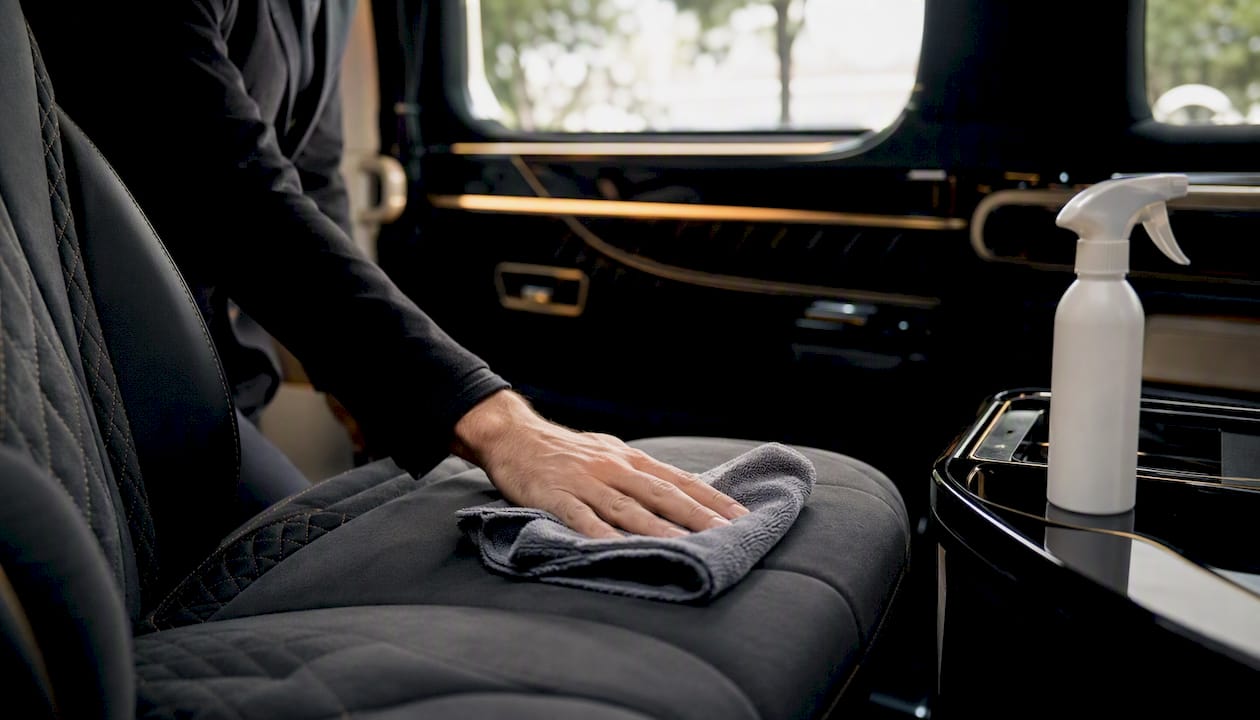
Cleaning protocols vary dramatically. A private transfer vehicle can be deep-cleaned before pickup. A commercial aircraft on a 45-minute turnaround gets a surface wipe, not a thorough clean. Residue from previous passengers, particularly food proteins on tray tables and armrests, can persist through routine cleaning.
Meal handling is where most carriers fall short. Allergen-free meal requests are available on many airlines, but cross-contact in catering facilities is a real risk. Most clinicians advise bringing your own food rather than trusting airline catering for severe allergies.
Ventilation and filtration matter more than most travelers realize. Many commercial aircraft use HEPA filtration systems that recirculate cabin air through high-efficiency filters, which reduces airborne particulate load. Buses and cars rely on HVAC systems with no equivalent filtration standard, making enclosed cabin air a higher-risk environment for aeroallergens.
Staff training and announcements vary by carrier. Some airlines make in-cabin announcements asking passengers not to open nut-containing products. Others do not. Ask specifically when you call to request accommodations.
Pro Tip: Policies that focus only on peanuts and tree nuts may leave travelers with allergies to other foods unprotected. When you contact a carrier, name your specific allergen explicitly rather than asking for a general “allergy accommodation.”
How should you prepare before and during travel?
A chronological checklist gives you the most control.
- Before booking: Research the carrier’s published allergy policy. Ask directly whether buffer zones, pre-boarding cleaning, and in-cabin announcements are available for your specific allergen.
- At booking: Request accommodations in writing. Get the name of the policy and a contact for follow-up. Notify the carrier at least 48 hours before travel to request seat cleaning and a buffer zone; carriers may ask for a medical certificate or physician’s note.
- Pre-trip packing: Pack at least two epinephrine auto-injectors in your carry-on. Bring your own food. Pack antibacterial wipes to clean your seat, tray table, and armrests before settling in.
- Day of travel: Request pre-boarding to clean your seat area before other passengers board. Choose a window seat when possible to reduce contact with the aisle and passing passengers.
- During transit: Notify the driver or cabin crew at the start of the trip. Decline any offered snacks or beverages you did not bring yourself. Keep your epinephrine accessible, not buried in overhead luggage.
- If exposure occurs: Use your epinephrine auto-injector immediately if symptoms suggest anaphylaxis. Alert staff and request emergency assistance. Have a written emergency action plan from your physician that staff can follow.
Pro Tip: Travel cofactors like sleep deprivation and stress can lower your reaction threshold. Plan rest before long trips and treat the travel day itself as a higher-risk window.
What U.S. rules and official guidance shape carrier obligations?
In the United States, no single federal statute mandates a specific allergen protocol for passenger transport. Obligations come from a patchwork of rules and guidance.
- DOT and FAA (air travel): The Air Carrier Access Act prohibits discrimination against passengers with disabilities, and severe food allergies can qualify. The DOT has historically addressed peanut policies on aircraft, though no permanent federal ban on peanuts in flight has been enacted. Airline policies vary, and what you receive depends heavily on the carrier and the route.
- FDA Sanitary Transportation rule (food supply chains): This rule covers the safe transport of human and animal food, including temperature control and contamination prevention. It affects how catering ingredients reach airline kitchens and how food allergen cross-contact is managed upstream of your meal.
- IATA guidance: Not law, but widely adopted. IATA’s allergen-sensitive passenger guidance frames the carrier’s role as providing risk-minimizing procedures and passenger information while acknowledging that national regulations differ and no carrier can guarantee total safety.
- Canadian CTA (comparative context): The CTA’s framework, which mandates buffer zones and pre-boarding cleaning on request, is more prescriptive than current U.S. federal requirements. It is useful as a benchmark when asking U.S. carriers what they can offer.
What is statutory versus policy matters when you push back. A carrier that refuses a reasonable accommodation request under the Air Carrier Access Act faces a different legal exposure than one that simply declines a courtesy request.
Why operators cannot guarantee an allergen-free environment
No carrier, however well-intentioned, can fully control the allergen environment in a shared transport space. Several structural reasons explain why.
- Cross-contact from previous passengers: Food proteins can persist on surfaces through routine cleaning. A tray table wiped between flights may still carry trace peanut protein.
- Shared ventilation: Even with HEPA filtration, cabin air circulates. Research shows that combustion-derived particulates and other airborne particles can bind allergens and increase their delivery to the lower airways, amplifying allergic responses.
- Other passengers: A carrier cannot search bags or confiscate food. A passenger two rows back opening a product containing your allergen is outside any operator’s control.
- Catering and labeling limits: Commercial catering operates at scale. Even when an allergen-free meal is requested, cross-contact in the kitchen is a real possibility.
- Short turnaround times: A 30-minute aircraft turnaround does not allow for deep cleaning. The same is true for buses and shared shuttles.
The phrase “allergen-conscious” accurately describes the intent: reduce risk through deliberate steps. It does not mean allergen-free. Travelers with severe allergies should treat every provider measure as a layer of protection, not a guarantee, and maintain their own preparedness as the primary defense.
How allergens actually travel through air and why it matters
Understanding the physics helps explain why even small exposures can trigger reactions in sensitized individuals.
Aeroallergens, including pollen proteins, fungal spores, and food protein particulates, do not float freely as isolated molecules. They attach to carrier particles: dust, soot, and combustion byproducts. A review published in Frontiers in Immunology found that diesel exhaust particles can bind allergens and increase their delivery to the lower airways, potentially amplifying the immune response beyond what the allergen alone would trigger. In an enclosed vehicle or cabin, this particle-binding effect concentrates exposure.
The biological consequence is significant. A 2025 laboratory study demonstrated that certain pollen allergens can traverse airway epithelial models and induce epithelial alarmins and pro-inflammatory mediators. This means the barrier between the airway surface and the immune system is not impermeable. Small airborne doses that would seem clinically insignificant can still initiate an inflammatory cascade in a sensitized person.
Outdoor aeroallergen concentrations fluctuate with season, weather, and geography. Inside a vehicle or aircraft, the enclosed space concentrates whatever particulates enter, and ventilation systems recirculate them. HEPA filtration on aircraft reduces this load; standard HVAC on buses and cars does not.
A transport professional’s perspective on what actually works
The requests that get results are specific and early. When a passenger contacts us at least 48 hours before pickup and asks for a vehicle deep-clean, no snacks in the cabin, and first-boarding priority, we can deliver all three reliably. What we cannot do is guarantee the vehicle has never carried a triggering allergen. We can clean thoroughly, remove all food items, and air the cabin, but residue from prior trips is a real variable. The honest answer is that private transfers give you far more control than any shared service, because the vehicle is prepared for you specifically, not for the last ten passengers. For travelers who need that level of pre-trip control, a private transfer service with written instructions at booking is the most practical option available.
Travelers with severe allergies get the best outcome when they treat allergen-conscious transport as a framework for reducing risk, not a promise of safety, and combine provider measures with personal preparation.
| Point | Details |
|---|---|
| Definition | Allergen-conscious transport means risk-reduction steps by providers, not a guarantee of an allergen-free environment. |
| Notify early | Contact your carrier at least 48 hours before travel to request buffer zones, seat cleaning, and announcements. |
| Self-preparation is primary | Carry two epinephrine auto-injectors and bring your own food; do not rely on carrier catering for severe allergies. |
| Private transfers offer more control | A dedicated vehicle can be deep-cleaned and configured to your needs in ways shared transport cannot match. |
| Regulations vary | U.S. DOT/FAA and FDA rules shape obligations, but no single federal mandate covers all allergen accommodations. |
Official resources for deeper reading
These sources are worth bookmarking before you contact a carrier or travel agent.
- IATA allergen-sensitive passenger guidance: The industry-level framework covering what airlines should offer and why they cannot guarantee a fully allergen-free cabin. Useful when asking an airline what its policy is based on.
- Canadian Transportation Agency: Severe allergies guide: The most detailed public-facing regulatory document on buffer zones and pre-boarding cleaning. Even though it is a Canadian standard, quoting its buffer-zone language gives you a concrete benchmark when negotiating with any carrier.
- CTA: Travelling with severe allergies: Practical traveler-facing advice on the 48-hour notification timeline, what documentation carriers may request, and what to expect from seating and notification procedures.
- Healio: Flying with food allergies (clinical guidance): Clinical perspective on disability accommodations, cofactor risks, and the case for carrying multiple auto-injectors.
- U.S. DOT Air Carrier Access Act guidance: The statutory basis for disability accommodations in U.S. air travel; available at transportation.gov and useful when a carrier refuses a reasonable request.
- FDA Sanitary Transportation rule (21 CFR Part 1, Subpart O): Governs food safety in transit and is the regulatory foundation for allergen risk in airline catering supply chains.
When you contact a carrier, reference the specific document and section. “Your buffer-zone policy, consistent with IATA guidance” carries more weight than a general request and signals you know what you are asking for.
This article is general information, not a substitute for advice from a qualified doctor. Consult a qualified healthcare professional about your own circumstances before acting on anything here.
Sources
- Allergen-sensitive passenger (IATA)
- What patients, clinicians need to know about flying with food allergies (Healio)
- Severe allergies: A guide (Canadian Transportation Agency)
- Travelling with severe allergies (Canadian Transportation Agency)
- Study: Transcellular transport and epithelial response of PR-10 pollen allergens (MDPI, 2025)
Lisa kommentaar