

Yes, vehicle class meaningfully affects passenger comfort. The suspension design, seat architecture, NVH (noise, vibration, harshness) control, and cabin space all shift significantly from one class to the next. But class is not the whole story: driver skill, vehicle maintenance, and service quality can close the gap between a well-run midsize and a neglected luxury sedan.
Quick picks by trip type:
- Airport transfer, solo or duo: Luxury sedan (Mercedes-Benz S-Class, BMW 7 Series) or executive van for long hauls; full-size sedan for short city runs.
- Family trip with luggage: Minivan (Chrysler Pacifica) or three-row SUV (Chevrolet Suburban, Kia Telluride) — cargo workflow beats cabin prestige every time.
- Corporate group transfer: Executive van or minibus; one vehicle beats two sedans for luggage handling and arrival coordination.
- Off-road or rural route: Crossover or midsize SUV (Subaru Outback) with all-wheel drive.
Upgrading from compact to midsize delivers the biggest comfort jump. After that, returns diminish fast — and a poorly maintained luxury car will ride worse than a well-kept midsize.
Table of Contents
- How vehicle class affects travel comfort: what the terms actually mean
- The six comfort components every traveler should understand
- How each vehicle class typically affects the core comfort components
- Cost vs. comfort: when upgrading vehicle class is worth the price
- Why driver skill, maintenance, and service level matter as much as vehicle class
- What the studies say about ride comfort
- Your 60-second checklist: pick a vehicle class under pressure
- Key Takeaways
- The comfort gap between class and execution
- Solidride: premium transfers built around your comfort
- Further reading and sources
How vehicle class affects travel comfort: what the terms actually mean
“Vehicle class” in a booking interface often appears as economy, premium, or executive. Under the hood, class is really a bundle of physical attributes: body size, suspension design, seating layout, cargo capacity, and the feature set the manufacturer installs at that price point. Those attributes directly determine how comfortable a trip feels.
Here is how common classes map to real U.S. models:
| Class | Typical U.S. Examples | Primary Comfort Strength |
|---|---|---|
| Compact/midsize sedan | Toyota Camry, Honda Accord | Affordable, adequate for short trips |
| Full-size sedan | Dodge Charger | More legroom, smoother ride than compact |
| Luxury/executive sedan | Mercedes-Benz S-Class, BMW 7 Series, Genesis G90 | Best NVH, active suspension, premium seats |
| Midsize SUV/crossover | Kia Telluride, Subaru Outback | Versatile, good cargo, moderate ride quality |
| Full-size SUV | Chevrolet Suburban | Maximum passenger and cargo capacity |
| Minivan/MPV | Chrysler Pacifica | Best ingress/egress, flat floor, family cargo |
| Executive van | Mercedes-Benz V-Class | Group comfort, luggage capacity, chauffeur-ready |
| Full-size pickup | Ford, Ram | Cargo/towing; passenger comfort is secondary |
| EV passenger models | Tesla Model S, Rivian R1S | Quiet cabin, instant torque, different NVH profile |
Booking platforms rarely list the exact model. When you see “executive sedan,” that typically means a vehicle in the luxury sedan tier. When you see “minivan” or “people mover,” expect a sliding-door layout with flat-floor access. Clarifying the actual model or at minimum the class tier before you confirm a booking saves surprises.
The six comfort components every traveler should understand
Comfort is not one thing. Research confirms it is multi-dimensional: vibrational, acoustic, thermal, and visual factors all contribute, and the weakest component tends to drag down the overall experience. Here are the six you should evaluate:
- Suspension and ride dynamics. How well the vehicle absorbs road irregularities, especially low-frequency oscillations below 1 Hz that trigger motion sickness and fatigue. Active and semi-active suspensions in higher classes handle this far better than passive setups.
- Seats and ergonomics. Lumbar support, adjustability, cushion firmness, and seat ventilation. This matters most on trips over 90 minutes.
- NVH (noise, vibration, harshness). Cabin insulation against road noise, wind, and drivetrain vibration. Premium classes invest heavily here; the difference is audible within minutes.
- Cabin space and layout. Legroom, headroom, shoulder room, and whether the floor is flat or has a transmission tunnel. Layout also determines whether passengers can move, stretch, or work during the ride.
- Climate and air quality. Multi-zone climate control, rear-seat vents, and air filtration. A hot or stuffy cabin degrades comfort faster than most people expect.
- Ingress/egress and door workflows. How easily passengers get in and out, especially with luggage or in formal attire. Sliding doors on minivans and executive vans are a genuine operational advantage at busy airports and hotels.
Which component matters most depends on the trip. NVH and seat ventilation dominate on long highway transfers. Ingress/egress and cargo access matter most for multi-stop itineraries or group pickups. Climate control becomes critical in extreme weather.
Checklist: questions to ask before booking
- What suspension type does this vehicle use (passive, semi-active, or active)?
- Does the rear seat have adjustable lumbar and ventilation?
- How old is the vehicle, and when was it last serviced?
- Is the cabin insulated for highway noise?
- Are rear climate controls independent?
- How much trunk or cargo space is available?
Pro Tip: Overly soft seats feel luxurious for the first 30 minutes and then become a fatigue source. For any trip over two hours, prioritize adjustable lumbar support and seat ventilation over plush cushioning.
How each vehicle class typically affects the core comfort components
| Class | Suspension/Ride | NVH | Seat Ergonomics | Cabin Space | Ingress/Egress | Best For |
|---|---|---|---|---|---|---|
| Compact sedan | Passive, adequate | Moderate | Basic, limited adjust | Tight | Standard doors | City hops under 45 min |
| Full-size sedan | Passive/semi-active | Good | Better support | Comfortable | Standard doors | City and short highway |
| Luxury sedan | Active/semi-active | Excellent | Adjustable, ventilated | Generous | Standard doors | Long corporate transfers |
| Midsize SUV | Passive/semi-active | Good | Decent | Good, 2–3 rows | Standard doors | Versatile, family, light off-road |
| Full-size SUV | Passive/semi-active | Good | Decent | Excellent, 3 rows | High step-in | Large groups, heavy luggage |
| Minivan/MPV | Passive | Moderate | Configurable | Best flat-floor | Sliding doors | Families, airport runs with gear |
| Executive van | Semi-active | Good | Premium, configurable | Excellent | Sliding doors | Groups, chauffeur service |
| Pickup truck | Passive/leaf spring | Fair | Adequate | Limited rear | High step-in | Cargo; not comfort-first |
| EV models | Varies | Quiet engine, tonal risk | Varies by model | Varies | Varies | Quiet highway; check tonal NVH |
Industry testing consistently places the Mercedes-Benz S-Class, BMW 7 Series, and Genesis G90 at the top for NVH and ride isolation. The S-Class in particular uses advanced suspension with active body control that adjusts to road conditions. The BMW 7 Series matches this with superior acoustic glass and door seals, while the Genesis G90 offers similar isolation at a somewhat lower cost.
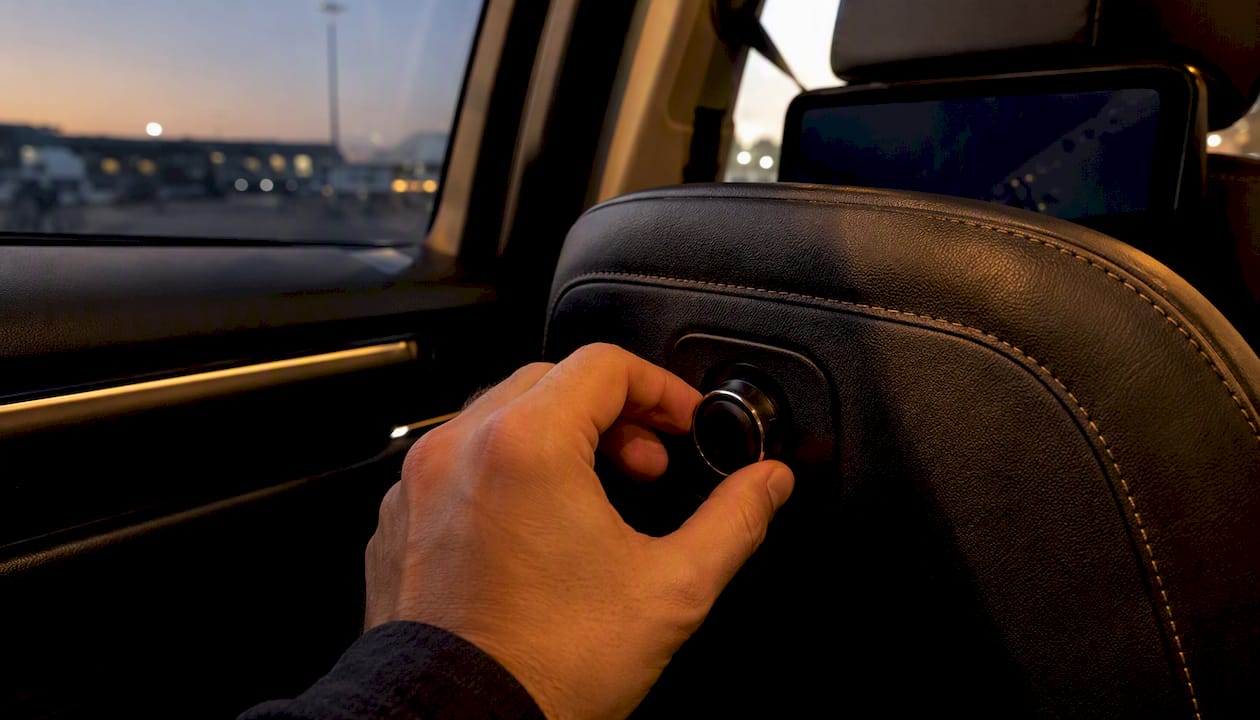
The Chrysler Pacifica exemplifies minivan comfort, with sliding doors, flat floors, and flexible seating that ease airport pickups with bulky gear compared to sedans. The Chevrolet Suburban performs well for larger groups, though its higher step-in height and firmer ride on rugged roads can reduce comfort.

EVs shift the NVH equation. Quieter propulsion removes low-frequency engine rumble, which improves acoustic comfort on smooth roads. But Chalmers research on NVH in modern cars notes that EVs can expose higher-frequency tonal sounds from electric motors and inverters that become noticeable precisely because the engine noise that used to mask them is gone.
One practical note: a five-year-old luxury sedan with worn suspension bushings and degraded door seals will ride and sound worse than a current-year midsize with fresh service. Vehicle age and maintenance condition are real variables within any class.
Cost vs. comfort: when upgrading vehicle class is worth the price
The first upgrade, compact to midsize or full-size sedan, delivers the most noticeable comfort improvement per dollar. Legroom, seat quality, and basic NVH all improve meaningfully. The jump from full-size sedan to luxury sedan is real but smaller in absolute terms: you are paying for active suspension, superior acoustic insulation, and seat ventilation rather than a fundamental change in space.
Beyond luxury sedan, returns diminish sharply. An ultra-luxury trim adds massage seats and ambient lighting, but the core ride quality difference over a well-specced luxury sedan is marginal for most passengers.
Rules of thumb:
- Trip over two hours: step up at least one class from your default. Seat ergonomics and NVH compound over time.
- Group of four or more with luggage: choose minivan or full-size SUV over a larger sedan. Space and workflow beat cabin prestige.
- Highway leg over 90 minutes: prioritize ADAS (adaptive cruise control with lane centering) regardless of class. Research shows that ADAS features help reduce highway fatigue, and a midsize with adaptive cruise will leave a driver less fatigued than a luxury sedan without it.
- Multi-stop city itinerary: prioritize ingress/egress and cargo access over ride quality. A minivan or executive van earns its keep here.
Pricing varies widely by market, provider, and season. Use class tiers as a relative guide: executive van typically runs higher than a luxury sedan for the same route, and a full-size SUV often costs more than a minivan despite similar passenger capacity. Always confirm the final rate and what is included (luggage handling, waiting time, flight monitoring) before booking.
Why driver skill, maintenance, and service level matter as much as vehicle class
A vehicle’s class sets the ceiling for comfort. The driver and service provider determine how close to that ceiling you actually get.
Chalmers research distinguishes static comfort from dynamic discomfort and makes a point that operators often underestimate: dynamic discomfort depends heavily on driving style and road quality, not just the vehicle. Smooth acceleration, gentle braking, and anticipatory lane changes reduce perceived vibration and body movement regardless of suspension type.
Operational checklist for booking:
- Confirm driver training level and years of experience on the specific route.
- Ask when the vehicle was last serviced and whether tires are at correct pressure.
- Verify vehicle age and whether the cabin is cleaned and pre-conditioned before pickup.
- Check whether the provider offers real-time flight monitoring and will adjust pickup time for delays.
- Confirm on-board amenities: water, phone chargers, Wi-Fi, and climate pre-set.
For corporate transfers, consistent chauffeur training and route knowledge frequently deliver more realized comfort than a one-off vehicle-class upgrade. A familiar driver who knows the terminal layout, adjusts for traffic, and handles luggage without prompting reduces the psychological friction that research links directly to perceived discomfort.
Poor maintenance on a high-class car is not a hypothetical. Worn suspension bushings, degraded door seals, and under-inflated tires on a luxury sedan can produce more NVH than a current-year midsize with a fresh service. Class label and actual condition are two different things.
What the studies say about ride comfort
The academic picture on ride comfort is consistent across several research streams. A multi-factor study published in Applied Sciences frames comfort as a composite of vibrational, acoustic, thermal, and visual factors, and finds that the overall score is limited by whichever component scores lowest. That means a vehicle with excellent suspension but poor acoustic insulation will feel less comfortable than its suspension alone would suggest.
A literature review on road vehicle ride comfort identifies low-frequency vibrations below 1 Hz and seat design as the primary drivers of motion sickness and long-trip fatigue. Active and semi-active suspensions in higher-class vehicles specifically target this frequency range, which is why the difference between a passive and an active suspension feels most pronounced on long highway runs rather than short city trips.
Vehicle System Dynamics research adds a psychological layer: perceived safety, trust in the driver, and situation awareness all affect how passengers experience physical comfort. This is why consistent chauffeur service and predictable driving style improve reported comfort even when the vehicle is unchanged.
Key research takeaways for travelers:
- Active/semi-active suspensions reduce the low-frequency motion most responsible for nausea and fatigue on long trips.
- Acoustic insulation is a major differentiator in premium classes because cabin silence reduces cognitive load over time.
- ADAS, particularly adaptive cruise control with lane centering, reduces driver workload and highway fatigue independently of vehicle class.
- EVs produce quieter propulsion but can expose tonal electrical noise that affects acoustic comfort on smooth roads.
- Road quality and driving style can dominate dynamic discomfort; vehicle class reduces but does not eliminate those effects.
Your 60-second checklist: pick a vehicle class under pressure
Run through this before you confirm any booking:
- Trip duration: Under 45 min → standard sedan is fine. 45–120 min → full-size or premium. Over 2 hours → luxury sedan or executive van minimum.
- Passenger count: 1–3 → sedan or crossover. 4–5 → minivan or midsize SUV. 6+ → executive van or full-size SUV.
- Luggage volume: More than two large bags → minivan, full-size SUV, or executive van. Check cargo specs before booking.
- Stop frequency: Multiple stops → sliding-door vehicle (minivan or executive van) for faster boarding.
- Accessibility needs: Step-in height, flat floor, or door width constraints → minivan or executive van.
- Must-have features: Seat ventilation and ADAS for highway legs; rear climate control for long trips; luggage assistance for airport runs.
- Budget tier: Set your ceiling, then pick the class that meets your top two priorities within it.
Quick pick rules:
- Solo business traveler, trip over 3 hours → luxury sedan or executive van.
- Family of 5 with gear → minivan or three-row SUV (Kia Telluride, Chevrolet Suburban).
- Corporate group of 6–8 → executive van; one vehicle beats two sedans every time.
- Off-road or rural route → midsize AWD crossover (Subaru Outback).
Always confirm driver experience, vehicle condition, and whether flight monitoring is included. The high-end transfer booking checklist from Solidride covers these points in detail if you want a structured pre-booking reference.
Key Takeaways
Vehicle class shapes travel comfort most through NVH control, seat ergonomics, and suspension design, but driver quality and vehicle condition determine how much of that potential you actually experience.
| Point | Details |
|---|---|
| Class affects NVH and seats most | Luxury sedans and executive vans lead on acoustic insulation and adjustable seat support for long trips. |
| Driver and service quality matter equally | Smooth driving style and maintained vehicles close the gap between classes; poor maintenance erases the luxury advantage. |
| Minivan wins for luggage-heavy families | Sliding doors, flat floor, and cargo capacity make minivans the practical choice for groups with gear. |
| ADAS reduces highway fatigue | Adaptive cruise control with lane centering lowers driver workload on long transfers regardless of vehicle class. |
| Solidride’s Mercedes fleet and chauffeur service | Solidride pairs executive-class vehicles with 24/7 flight monitoring and luggage assistance for transfers in Estonia. |
The comfort gap between class and execution
Most travelers focus on vehicle class when booking a transfer, and that instinct is reasonable. Class sets the physical ceiling: a luxury sedan genuinely isolates road noise better than a compact, and an executive van genuinely handles six passengers and their luggage better than two sedans. The research backs this up clearly.
What gets underestimated is how much execution narrows or widens that gap. A luxury sedan with a distracted driver who brakes hard and accelerates aggressively will feel worse than a midsize with a calm, experienced chauffeur. A high-class vehicle that has not been serviced in six months will transmit more vibration than a well-kept full-size sedan. The class label on the booking form is a starting point, not a guarantee.
The practical implication: when choosing between a slightly lower-class vehicle from a provider with strong operational standards and a higher-class vehicle from one with no service guarantees, the former is often the better bet. Comfort is delivered at the intersection of the vehicle and the people running it.
For long corporate transfers especially, the psychological comfort layer matters. Knowing your driver has your flight details, will be at the right terminal, and will handle your bags without being asked removes a layer of mental load that compounds over a long travel day. That is not a luxury add-on; it is a core part of what makes a transfer genuinely comfortable.
Solidride: premium transfers built around your comfort
Solidride operates private transfers across Estonia with a Mercedes-Benz fleet, 24/7 availability, and real-time flight monitoring built into every airport booking. The practical difference from a standard taxi or ride-share is concrete: your driver tracks your flight, adjusts for delays, meets you at arrivals with a name board, and handles luggage to the vehicle. You step off the plane and into a pre-conditioned, clean cabin without a single logistical decision.

For corporate travelers and groups, Solidride’s executive van and sedan options cover the full range of trip types covered in this article, from solo airport transfers to group event transport. The service is designed around the comfort components that matter most for longer transfers: NVH-controlled Mercedes cabins, experienced chauffeurs, and the kind of operational reliability that removes friction before it starts.
Book your transfer or check vehicle options directly on the Solidride site, or use the transfer booking checklist to confirm every detail before you travel.
Further reading and sources
The guidance in this article draws on peer-reviewed research, industry vehicle testing, and operational transfer experience. A few notes on interpreting these sources: vehicle review rankings reflect subjective and objective testing under controlled conditions; real-world comfort also depends on road quality, load, and driving style. Academic studies measure comfort under standardized conditions that may not match your specific route.
Key sources:
- Impact of Environmental Factors on Passenger Ride Comfort
- Front seat passengers’ experience of ride comfort and NVH in modern cars
- Occupants’ comfort: what about human body dynamics in road and rail vehicles?
- Ride comfort in road vehicles: a literature review
- Adaptive driving-assist systems and driver fatigue reduction
- Most Comfortable Cars in 2026 | U.S. News
- Best cars for road trips — MotorTrend
- solidride.ee
For deeper dives into specific transfer scenarios, the Solidride resource library covers executive transport service types and private transfer options in detail.
Lisa kommentaar