


No — do not reuse a nicotine patch. Once you remove a patch, apply a fresh one for your next dosing interval. MedlinePlus is direct: remove the used patch, then apply the next patch to a different skin area. Reapplying an old patch risks underdosing, skin irritation, and contamination.
Three rules to follow from day one:
- Apply one new patch every 24 hours on clean, dry, hairless skin.
- Rotate application sites and wait about one week before reusing the same spot.
- Fold the used patch sticky-side together and dispose of it immediately, out of reach of children and pets.
Used patches still contain nicotine. Even a patch you wore all day retains enough nicotine to harm a child or a pet. Dispose of every used patch right away — never leave one on a counter, in a pocket, or in an open trash can.
Key Takeaways
Never reuse a nicotine patch: apply a fresh patch every 24 hours, rotate sites weekly, and dispose of used patches immediately by folding sticky sides together and keeping them away from children and pets.
| Point | Details |
|---|---|
| Never reuse a removed patch | Always apply a fresh patch for each 24-hour dosing interval; reuse risks underdosing and skin irritation. |
| Rotate application sites | Use a new skin area each day and wait at least one week before returning to the same spot. |
| Dispose of used patches safely | Fold sticky sides together, place in the original pouch, and discard out of reach of children and pets. |
| Replace a fallen patch with a new one | If a patch loosens or falls off, apply a fresh patch and keep your usual schedule. |
| Call Poison Control for suspected ingestion | Contact 1-800-222-1222 immediately if a child or pet is exposed to a used or unused patch. |
Table of Contents
- Why can’t you reuse a nicotine patch?
- What to do when your patch falls off or loosens
- Where to place nicotine patches and how to rotate sites
- Skin reactions: what’s normal and when to get help
- How to dispose of used nicotine patches safely
- How long to use nicotine patches and combining them with other quit aids
- What official sources say about nicotine patch use
- What to do if you accidentally wear two patches or notice overdose symptoms
- How to store nicotine patches so they stay effective
- Quitting is hard — use every tool correctly
- Sources
Why can’t you reuse a nicotine patch?
A nicotine patch works through a controlled-release membrane that delivers a steady dose over 24 hours. That delivery depends on two things: the integrity of the membrane and clean, intact skin. Once you pull a patch off, both conditions are compromised.
The adhesive picks up skin oils, dead cells, and moisture. Reapplying it to a new site means the patch no longer seals properly, so nicotine absorption becomes unpredictable. You might get too little, which weakens your quit attempt, or uneven delivery that causes nausea or dizziness. DailyMed’s product labeling is unambiguous: one new patch every 24 hours, applied to clean dry hairless skin.
People sometimes try to reapply a patch because it still feels sticky. That stickiness is not a reliable sign of remaining dose. The patch may look functional while delivering a fraction of its labeled strength. Clinicians note that patches are designed for once-per-day dosing, and reusing a removed patch risks underdosing alongside increased skin irritation, per Mayo Clinic guidance.
Skin that has already held a patch for hours is also primed for contact dermatitis. Reapplying to the same or a recently used site compounds that risk, particularly for people with eczema or psoriasis, where absorption can change and irritation escalates faster.
What to do when your patch falls off or loosens
A loosened patch is one of the most common problems people run into, and the fix is straightforward.
- Remove any remaining adhesive residue from your skin gently with warm water.
- Dry the area completely before touching a new patch.
- Apply a fresh patch to a different, clean, hairless site right away if you are still within your dosing window.
- Keep your usual replacement schedule — do not double up to compensate.
- If you cannot replace the patch immediately, keep the skin area clean and dry, and apply a new patch as soon as you can. Do not skip the day entirely; just resume as close to your normal schedule as possible.
If you accidentally sleep with the patch on and wake up with vivid dreams or disrupted sleep, that is a known side effect of overnight nicotine delivery. Remove the patch before bed next time. Some people do better on a 16-hour schedule rather than 24 hours — your pharmacist or clinician can advise on which fits your pattern.
Pro Tip: Keep one spare patch in its sealed pouch in your bag or wallet. If a patch loosens mid-day, you have a replacement ready without breaking your schedule.
Where to place nicotine patches and how to rotate sites
Placement affects both how well the patch sticks and how consistently nicotine absorbs. The best sites are flat, relatively hairless, and away from joints that flex throughout the day.
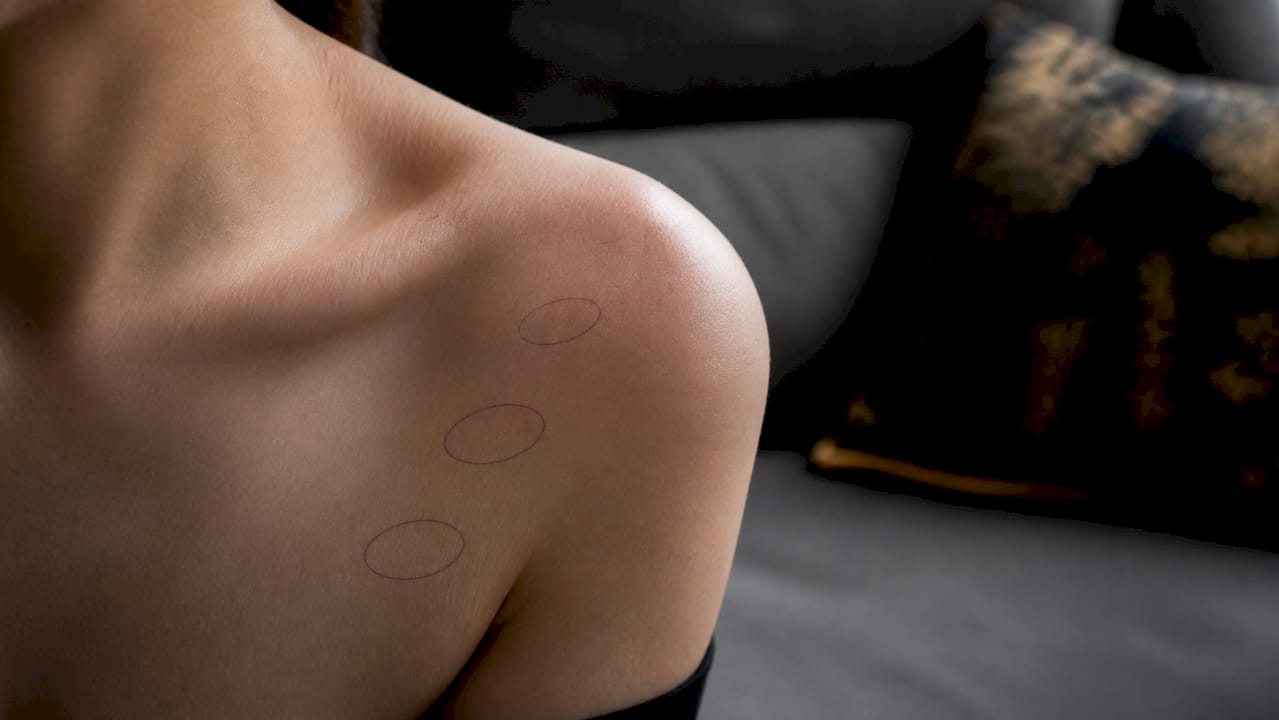
Recommended sites: upper outer arm, chest (below the collarbone), upper back, or hip.
Avoid the inner arm, any area with visible irritation, broken skin, or active skin conditions like psoriasis or eczema. Applying to inflamed or diseased skin changes absorption and worsens irritation, per UT MD Anderson guidance. Hair traps air under the patch and weakens the seal, so trim or choose a naturally smooth area.
Cleveland Clinic recommends changing the patch every day and waiting at least one week before using the same area again. A practical rotation plan: pick four to six acceptable sites and cycle through them in order. Label them mentally (right upper arm, left upper arm, right chest, left chest, right hip, left hip) and move to the next one each day.
A few firm dos and don’ts:
- Press the patch firmly for 10 full seconds after applying — a proper seal matters.
- Never cut a patch to adjust the dose; cutting disrupts the membrane and makes delivery unreliable.
- Do not apply lotion, oil, or powder to the site before placing the patch.
- Wash your hands after handling any patch, used or new.
Skin reactions: what’s normal and when to get help
Mild redness, slight itching, or tenderness at the patch site is common and usually fades within an hour of removal. That kind of local reaction does not mean you need to stop using patches.
Give the skin at least a week to recover before using that site again.
When to stop and seek care: Severe blistering, swelling beyond the patch edges, hives, or any difficulty breathing after applying a patch are signs of an allergic reaction. Remove the patch immediately, wash the area with soap and water, and contact your doctor or go to urgent care. For suspected nicotine poisoning — from a patch ingested or worn by a child or pet — call Poison Control at 1-800-222-1222 right away.
Underlying skin conditions raise the risk. Dermatology teams caution that eczema and psoriasis can alter absorption and accelerate dermatitis when patches are reapplied to already-stressed skin. If you have a chronic skin condition, talk to your clinician before starting patch therapy.
How to dispose of used nicotine patches safely
Disposal is not optional. A used patch can still contain a meaningful amount of nicotine, enough to cause serious harm if a child or pet gets hold of it.
- Fold the used patch in half with the sticky sides pressed together.
- Place it back in the original foil pouch if one came with the packaging.
- Seal the pouch and place it in a lidded trash can that children and pets cannot access.
- Wash your hands thoroughly after handling any used patch.
Keep the pouch. DailyMed’s disposal instructions specifically advise saving the foil pouch for this purpose. If you lost the pouch, a small zip-lock bag works as a substitute. Never flush patches down the toilet.
If a child or pet touches or mouths a used patch, call Poison Control at 1-800-222-1222 immediately. Do not wait for symptoms.
How long to use nicotine patches and combining them with other quit aids
Patch programs typically involve stepping down through dose strengths over a course of weeks, following the product label or clinician’s schedule. Follow the product label or your clinician’s schedule rather than stopping early because you feel confident — cravings can return.
The CDC advises starting on the dose that matches how much you smoke and pairing the patch with gum or lozenge for breakthrough cravings. That combination is well-supported: the patch handles baseline nicotine levels while the gum or lozenge handles acute urges. Just stay within recommended total nicotine limits and do not add a second patch to compensate for cravings.
Talk to your clinician before starting or adjusting if you:
- Are pregnant or breastfeeding.
- Have a history of heart disease or irregular heartbeat.
- Are still smoking while using the patch.
- Are considering prescription options like varenicline (Chantix) or bupropion (Wellbutrin).
Pro Tip: Smokefree offers free quit plans, text coaching, and combination NRT guidance — a practical resource to pair with your patch regimen.
NRT, including patches, is safer than continuing to smoke. CDC materials confirm that side effects from NRT are generally minor compared to the risks of ongoing tobacco use.
What official sources say about nicotine patch use
| Guidance area | MedlinePlus / DailyMed | CDC | Mayo Clinic / Cleveland Clinic |
|---|---|---|---|
| Replacement timing | New patch every 24 hours; do not reuse | Wear one patch per day | Designed for once-per-day dosing |
| Site rotation | New area each day | Clean, dry, hairless skin | Wait at least one week before reusing same site |
| Disposal | Fold sticky sides together; use original pouch | Dispose safely; keep from children | Used patches still contain nicotine; fold and discard |
Every major clinical source agrees on the core rules. Product labeling and DailyMed are the primary, authoritative source for patient-facing instructions. When in doubt, read your specific product’s label and confirm with your pharmacist.
What to do if you accidentally wear two patches or notice overdose symptoms
Wearing two patches at once can happen — you forget to remove the old one before applying a new one. If you realize the mistake quickly, remove both patches, wash the skin, and wait a few hours before applying a single new patch.
Nicotine overdose symptoms include nausea, vomiting, dizziness, rapid or irregular heartbeat, cold sweats, and headache. If you experience these after applying a patch (or two), remove the patch immediately, wash the area with soap and water, and call Poison Control at 1-800-222-1222 or seek emergency care if symptoms are severe.
Do not try to manage overdose symptoms at home by simply removing the patch and waiting. Nicotine continues to absorb from skin for a short time after patch removal, so symptoms can persist or worsen briefly even after you take the patch off.
How to store nicotine patches so they stay effective
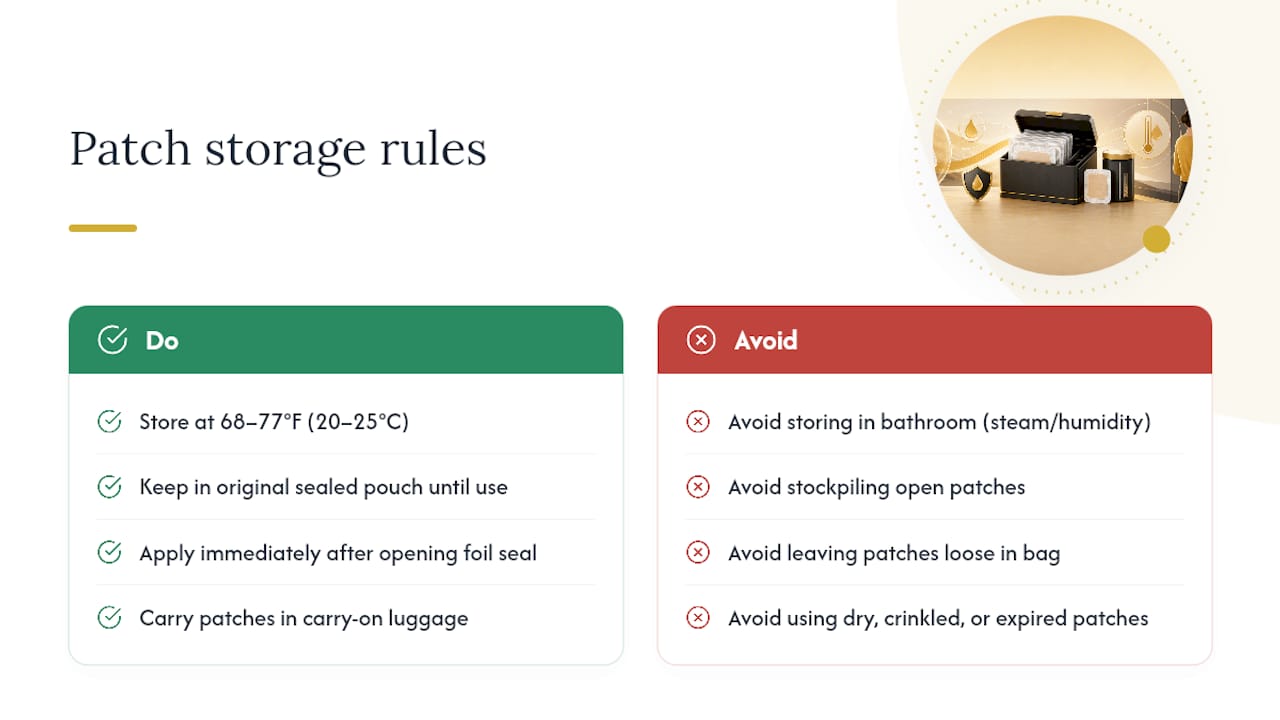
Store patches at room temperature, between 68°F and 77°F (20°C–25°C). Keep them away from direct sunlight, heat sources, and humidity — a bathroom medicine cabinet is actually a poor choice because of steam from showers.
Keep patches in their original sealed pouches until you are ready to use them. Once the foil seal is broken, the patch should be applied immediately. Do not stockpile open patches or leave them loose in a bag where they can pick up lint or lose adhesion.
If a patch feels dry, crinkled, or has lost its flexibility when you open it, do not use it. A compromised patch will not deliver a reliable dose. Check the expiration date on the box; expired patches may have degraded nicotine content.
Traveling with patches? Keep them in your carry-on, away from checked luggage that may be exposed to temperature extremes in cargo holds. If you travel frequently for work, private transfer services that handle your luggage with care can help you keep medications secure and accessible throughout your journey.
Quitting is hard — use every tool correctly
Nicotine patches work best when you follow the instructions exactly: fresh patch daily, rotated sites, safe disposal. Cutting corners — reusing an old patch, skipping a day, or doubling up — undermines the steady nicotine delivery the therapy depends on. The research is consistent: correct, uninterrupted NRT use improves quit rates. If you are unsure about your dose, your schedule, or a skin reaction, call your pharmacist or clinician. They have seen every variation of this and can give you a direct answer in minutes.
Sources
- Nicotine Transdermal Patch: MedlinePlus Drug Information
- DailyMed – QUIT SMOKING NICOTINE PATCHES- nicotine transdermal patches patch
- How to Use a Nicotine Patch | CDC
- Nicotine (transdermal route) – Side effects & dosage – Mayo Clinic
- Nicotine Patch: How to Use & Side Effects – Cleveland Clinic
This article is general information, not a substitute for advice from a qualified doctor. Consult a qualified healthcare professional about your own circumstances before acting on anything here.
Lisa kommentaar