


If you are 18 or older, have held a valid B-category licence for at least six months, and can upload a clear photo of that licence plus a working payment card, you meet the baseline for rendiauto Bolt juhile tingimused for Estonia. The rest comes down to details: pricing runs on a mix of time and distance with a booking fee attached, basic liability insurance is included but comprehensive cover usually costs extra, and short-term reservations carry a strict time limit before they auto-cancel.
- Minimum age: 18, plus a minimum driving experience period
- Documents: valid B-category licence, verified account, payment card
- Pricing: time (minute/hour/day) plus distance, with caps and a booking fee
- Insurance and fuel: liability included as standard, kasko often optional and billed separately
Quick fact: Estonia’s official eligibility floor is 18 years old with at least a minimum required driving experience period, which is stricter than some neighboring markets.
Die wichtigsten Erkenntnisse
Meeting Estonia’s rendiauto Bolt juhile tingimused requires age 18 or older, a minimum required driving experience period, a verified B-category licence, and a payment card, with pricing and insurance details worth confirming before every booking.
| Punkt | Details |
|---|---|
| Eligibility floor | You need to be 18 or older with at least a minimum required driving experience period and a valid B-category licence. |
| Pricing structure | Rentals combine time and distance charges with a booking fee, so check the model-specific rate before confirming. |
| Insurance gap | Liability cover is included, but comprehensive kasko protection is usually optional and billed separately. |
| Booking timing | Short-term reservations in Estonia carry strict time limits and can auto-cancel if left unclaimed. |
| Managed alternative | Solidride offers chauffeur-driven transfers with insurance, fuel, and booking logistics fully handled for you. |
Inhaltsverzeichnis
- What Are the Bolt Rendiauto Requirements for Drivers in Estonia?
- How Much Does Bolt Rendiauto Cost for Drivers?
- What Does Bolt Rendiauto Insurance Actually Cover?
- Which Vehicle Classes and Parking Rules Apply to Bolt Rentals?
- How Do You Register, Book, and Return a Bolt Rental Car?
- Is Long-Term Bolt Rendiauto Cheaper Than Short-Term?
- Can You Take a Bolt Rental Car Across Estonia’s Borders?
- What Happens If You Cancel or Change a Bolt Rental Booking?
- What Penalties Apply for Late Returns or No-Shows?
- What Are the Driver Behavior Rules Inside a Bolt Rental?
- What Emergency Support Is Available During a Bolt Rental?
- How Solidride Simplifies Transport When Self-Serve Rentals Get Complicated
- Frequently Asked Questions
- Sources
What Are the Bolt Rendiauto Requirements for Drivers in Estonia?
The core rendiauto Bolt juhile tingimused checklist in Estonia has four parts: age, experience, licence type, and verification. You need to be at least 18, hold a valid B-category driving licence, and have logged a minimum of a required minimum period of driving experience before the platform will approve you as a rental driver. A valid payment card and a verified account round out the baseline, and Bolt Drive’s own eligibility notes confirm the same age and experience floor applies specifically to self-service rentals, not just ride-hailing work.
Here’s how the verification sequence typically plays out:
- Confirm your licence issue date. Your six months of experience is calculated from the date your B-category licence was first issued, not from when you started driving regularly.
- Photograph the licence correctly. Both sides need to be visible, legible, and unobstructed, with no glare washing out the licence number or expiry date.
- Handle a newer licence carefully. If you upgraded or replaced your licence recently, Estonian records usually show consolidated experience history, but the app sometimes flags this for manual review, so expect a short delay.
- Add a payment card and pass account verification. Some vehicle categories or partner fleets apply stricter age or experience minimums, particularly for higher-value or performance models.
Pro Tip: Before booking, check the specific car’s listing for any extra age or experience requirement. A driver who meets the general 18-and-six-months rule can still be blocked from certain premium vehicles.
How Much Does Bolt Rendiauto Cost for Drivers?
Bolt rendiauto hind is built from three moving parts: a time charge, a distance charge, and a per-model base rate, so two drivers renting the same category of car on different days can pay noticeably different totals. Bolt’s own explanation of long-term rental pricing confirms that short-term and extended rentals use separate rate structures, with long-term deals trading a lower daily cost for fewer inclusions.
What actually shows up on your bill:
- Time-based rate: charged per minute, hour, or day depending on how you book, with the per-day rate usually working out cheaper than stacking hourly charges.
- Distance rate: a per-kilometer charge added on top of time, which matters more for drivers covering long routes than for short city hops.
- Minimum pricing limits and maximum caps: most rentals have a floor price even for very short use, and a daily cap that kicks in once distance charges would otherwise exceed it.
- Booking or reservation fee: applied when you lock in a car ahead of time rather than unlocking one immediately nearby.
Local partner listings, including Autofyrent’s Bolt rental price sheet, show weekly rental ranges that vary by vehicle class and confirm that base fees generally bundle in the compulsory liability insurance, while extras like kasko sit outside that base price. Before you confirm any booking, open the specific car’s listing screen and check its model-specific rate card. Two vehicles in the same visual class can carry different per-kilometer charges.
What Does Bolt Rendiauto Insurance Actually Cover?
Rendiauto kindlustus Bolt juhile always includes basic liability cover as part of the standard rental price, but this is not the same as full protection against damage to the car itself. Comprehensive coverage, often called kasko locally, is typically an optional add-on with its own fee, and community discussion among Estonian rental operators confirms that skipping it leaves you exposed to a deductible if something goes wrong.
- Included as standard: third-party liability insurance, covering damage you cause to other people or property.
- Usually optional: kasko-style comprehensive cover, which reduces or removes your deductible exposure on damage to the rental car itself.
- If damage happens: document it immediately with photos and timestamps, since Autofyrent’s pricing page notes that unresolved damage claims can trigger a chargeback against your linked payment card.
- Fuel policy: you generally return the car with the fuel level it had at pickup, or the cost gets logged and billed; some promotional rentals bundle fuel differently, so check the listing.
Pro Tip: Confirm your kasko deductible amount inside the app before you drive off the lot, not after an incident. The gap between “included” and “optional” coverage is where most disputes start.
Which Vehicle Classes and Parking Rules Apply to Bolt Rentals?
Bolt’s rental fleet in Estonia splits roughly into compact city cars, standard sedans built for regular passenger work, and larger vehicles suited to bigger groups or bulkier loads. Picking the right class matters because pricing, fuel consumption, and even eligibility rules can shift between categories.
- City compacts: cheapest per-minute rate, best for short urban trips and drivers just starting platform work.
- Standard sedans: the default choice for passenger-service driving, balancing comfort with fuel cost.
- Larger vehicles: intended for bigger groups or extra luggage, often carrying stricter experience minimums.
- Pet and child-seat policies: not every car in the fleet allows pets or comes equipped with a child seat, so confirm equipment availability on the specific listing before booking.
- Parking at end of rental: cars must be returned to designated zones shown in the app; leaving one outside that zone can trigger extra fees or a failed handover.
- Pre-existing damage: photograph the car’s condition the moment you start the rental so you are not blamed later for scratches or dents you did not cause.
How Do You Register, Book, and Return a Bolt Rental Car?
Getting from sign-up to your first drive takes a handful of clear steps, and most delays trace back to a rushed licence photo or a missed booking deadline.
- Create your account and upload your licence. Both sides need to be sharp and fully readable, showing your name, licence number, category, and issue date.
- Wait for verification. This usually clears quickly, but if it stalls beyond a day or two, contact support directly through the app rather than resubmitting the same photo repeatedly.
- Reserve or unlock. You can reserve a car ahead of time or unlock one immediately if it is nearby, but reservations in Estonia carry a strict maximum holding window before an unclaimed booking cancels automatically.
- End the rental properly. Park in an approved zone, photograph the car’s final condition, and confirm the app registers the return before walking away.
Pro Tip: Screenshot your booking confirmation and your end-of-rental photos together. If a dispute ever comes up over timing or condition, having both in one place saves a lot of back-and-forth.
Is Long-Term Bolt Rendiauto Cheaper Than Short-Term?
Long-term rental windows, typically spanning multiple days to several weeks, come with a lower effective daily rate than booking the same car hour by hour. That discount is the main draw for drivers doing platform work regularly rather than occasionally.
- Lower daily cost: the trade-off for committing to a longer window instead of repeated short bookings.
- Different inclusions: long-term deals more often exclude fuel and some insurance extras from the base price, shifting those costs onto you directly.
- Logistics differences: delivery and pickup arrangements, contract length, and cancellation terms all work differently than a same-day rental, according to Bolt’s own long-term rental breakdown.
- Best fit: drivers working the platform full-time or near-full-time usually come out ahead financially with a long-term contract rather than stacking short bookings.
If you are only renting occasionally, the flexibility of short-term booking usually outweighs the modest savings a long-term contract offers.
Can You Take a Bolt Rental Car Across Estonia’s Borders?
Cross-border travel is one of the areas where platform rental terms tend to be stricter than most drivers expect. Standard rental agreements are built around domestic use inside Estonia, and taking a rental car across an international border without prior confirmation can void your insurance coverage entirely, leaving you personally liable for any damage or incident that happens abroad.

Before you assume a quick trip to Latvia or Finland is fine, check the specific terms attached to your rental listing. Some vehicles may permit limited cross-border use within the Baltic region or onto ferries to Finland, but this is never a blanket right, and it usually requires explicit confirmation through the app or a support request rather than an assumption based on general EU freedom-of-movement rules. Insurance policies underwriting platform rentals are often written with geographic limits baked in, separate from what a private car insurance policy would allow.
If your work or personal plans genuinely require crossing a border, the safest move is to contact support ahead of time and get written confirmation that your specific rental permits it. Driving into another country without that confirmation risks a denied insurance claim if anything happens, plus potential contract violations that could affect your ability to rent again. This is not a rule worth testing informally, since the financial exposure from an uninsured cross-border incident falls entirely on the driver, not the platform.
What Happens If You Cancel or Change a Bolt Rental Booking?
Cancellation and modification rules depend heavily on how far ahead you booked and whether the rental had already started. Reservations made well in advance typically allow free cancellation up to a certain window before the scheduled pickup time, but that window narrows the closer you get to the actual booking start.
Cancelling after a reservation has already begun, or after a car has been unlocked for you, generally triggers at least a partial charge, since the vehicle was held or made unavailable to other drivers during that time. Modifying a booking, such as extending a rental you are currently using, is usually straightforward inside the app as long as the car is not already reserved by someone else for the following slot. Shortening a booking early, on the other hand, does not typically refund the unused portion, since pricing is calculated on actual usage plus any applicable minimums.
For long-term rentals, cancellation terms shift again. Because these contracts often involve delivery, pickup logistics, and a locked-in weekly or monthly rate, breaking a long-term agreement early can carry a more significant fee than cancelling a short hourly booking. If your plans are uncertain, it is worth booking the shorter-term option first, even at a slightly higher daily rate, rather than committing to a long-term contract you might need to exit prematurely. Always check the exact cancellation deadline listed on your specific booking screen, since these windows can vary by vehicle class and rental duration.
What Penalties Apply for Late Returns or No-Shows?
Returning a rental car late almost always costs money, and the charge structure is designed to discourage drivers from holding a vehicle past its agreed window. Once your booked time expires, the app typically begins charging you at the standard per-minute or per-hour rate for the extra time, on top of whatever base pricing already applied to your original booking.
If you fail to return the car to an approved parking zone at all, or ignore repeated in-app reminders about an overdue rental, the consequences escalate beyond a simple late fee. Some drivers have reported account restrictions or temporary suspension from booking future rentals after a pattern of late returns, since the platform relies on timely handovers to keep vehicles available for the next driver in the fleet.
No-shows work differently but carry their own penalty. If you reserve a car and never show up to unlock it within the reservation window, Estonia’s short booking limits mean the reservation cancels automatically, and depending on how the booking fee was structured, that fee may not be refunded. Repeated no-shows can also affect your account standing over time, since reserved vehicles are pulled out of the available pool for other drivers while your reservation is active.
The practical fix is simple: build in a buffer before your booking deadline, and if you know you are running late, check the app immediately for an extension option rather than letting the clock run out silently. Extending a booking before it expires is almost always cheaper and cleaner than dealing with an automatic late fee after the fact.
What Are the Driver Behavior Rules Inside a Bolt Rental?
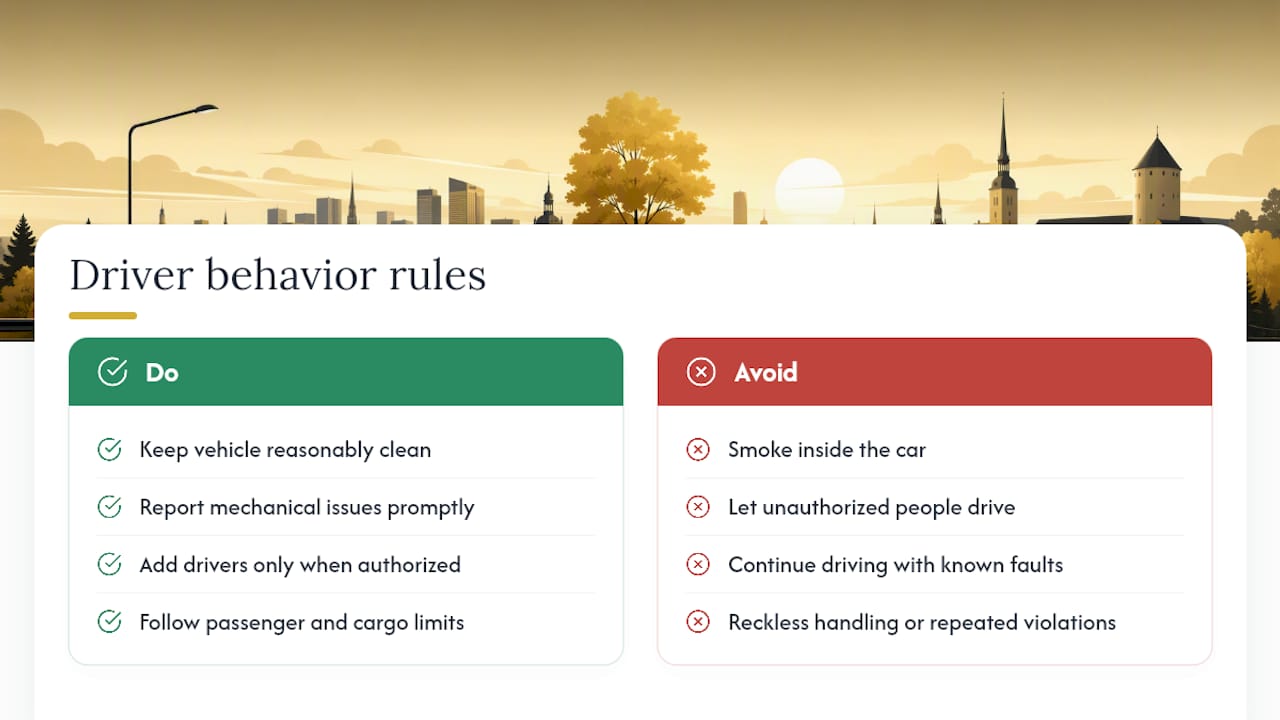
Driver conduct rules inside a rental vehicle are stricter than what most people assume, mainly because these are shared fleet cars used by many different drivers over their lifespan. Smoking inside a rental car is prohibited across essentially all platform rental agreements, and violating this typically results in a cleaning fee charged directly to the driver responsible, sometimes a substantial one if the smell requires professional deep cleaning.
Adding an unauthorized additional driver is another rule that catches people off guard. The rental agreement and its insurance coverage are tied specifically to the verified driver who booked the car, so letting a friend, partner, or colleague drive it without proper authorization voids your insurance protection for that period. If something happens while an unauthorized person is behind the wheel, the verified renter remains financially responsible, and the incident is treated as if no valid insurance applied at all.
Other behavior expectations include keeping the vehicle reasonably clean, not exceeding any stated passenger or cargo limits, and reporting mechanical issues promptly rather than continuing to drive a car with a known problem. Consistent violations, whether that is repeated smoking complaints, unauthorized drivers, or reckless handling reported by other users of the fleet, can lead to account warnings or permanent removal from the rental platform. Since these are shared assets moving between drivers constantly, the behavior rules exist less as bureaucratic formality and more as the mechanism that keeps the whole rental system functional for everyone using it.
What Emergency Support Is Available During a Bolt Rental?
Mechanical breakdowns and accidents do not wait for convenient timing, so knowing what support exists before you need it matters more than most drivers realize until they are stuck on the shoulder of a road at night. Platform rental agreements typically include access to in-app support channels that connect you directly to a support team who can guide you through next steps, whether that is roadside assistance, a replacement vehicle, or accident reporting.
For genuine breakdowns, roadside assistance is generally coordinated through the app rather than a separate phone number, which means having your phone charged and your booking details accessible is essential during any rental. If an accident occurs, the standard advice across Estonian rental operators is consistent: document everything immediately. Photograph all vehicles involved, capture the surrounding scene, and collect the other party’s information before anyone leaves, since insurance claims move faster and more smoothly with thorough documentation collected on the spot.
Response times for support can vary depending on time of day and how the issue is reported, so treating the in-app help channel as your first stop, rather than trying to resolve a mechanical or legal issue independently, keeps you protected under the terms of your rental agreement. Drivers who skip proper documentation or wait too long to report an incident sometimes find their insurance claims delayed or complicated as a result. Building the habit of reporting immediately, even for a minor scrape, protects you far more than trying to handle it quietly on your own.
One habit that prevents most rental headaches
The single habit that saves drivers the most trouble is checking the licence issue date and confirming optional insurance cover before the rental even starts, then photographing the vehicle’s condition at handover. Skip the photos or the coverage check, and a small dispute over pre-existing damage or a surprise deductible becomes an expensive argument instead of a five-minute conversation.
How Solidride Simplifies Transport When Self-Serve Rentals Get Complicated
Self-serve platform rentals work well for drivers who want flexibility and don’t mind handling verification, insurance checks, and booking timers themselves. If you would rather skip that entirely, Solidride offers a managed alternative built around chauffeur-driven transport, so there’s no licence upload, no deductible math, and no watching a reservation clock count down.

Solidride runs a fleet of Mercedes-Benz V-Class vehicles with 24/7 availability across Estonia, covering airport, rail, seaport, and hotel transfers along with group travel and pet-friendly options; learn more about what to look for in a corporate chauffeur service to ensure a smooth experience. Every booking comes with real-time flight tracking, personalized meet-and-greet service, and luggage assistance handled by multilingual drivers, so the operational details that trip up self-serve renters, insurance limits, fuel logging, return-zone parking, simply aren’t your problem. For travelers or corporate clients who want the comfort of a private vehicle without managing any of the platform-driver logistics covered above, Solidride’s autorent landing page outlines the rental and platform-driver support services available, and the private transfer booking checklist walks through what to confirm before booking. Ready to skip the self-serve headache? Check availability and get a quote through the high-end transfer booking checklist.
Frequently Asked Questions
What is the minimum age to rent a Bolt car in Estonia?
You must be at least 18 years old, and you also need at least a minimum required driving experience period on a valid B-category licence before the platform approves your rental account.
Does Bolt rendiauto insurance cover everything?
No. Basic liability insurance comes included in the base price, but comprehensive kasko coverage that protects the rental car itself is typically an optional add-on with its own fee.
How is Bolt rendiauto hind calculated?
Pricing combines a time-based charge (per minute, hour, or day), a per-kilometer distance charge, and model-specific base rates, plus a booking fee if you reserve ahead rather than unlocking immediately.
Can I drive a Bolt rental car outside Estonia?
Cross-border use is restricted by default and can void your insurance coverage without prior confirmation, so contact support before assuming a trip abroad is permitted under your rental terms.
What happens if I return the car late?
Late returns trigger extra time-based charges beyond your booked window, and repeated late returns or no-shows can lead to account restrictions on future bookings.
Is long-term Bolt rendiauto cheaper than short-term rental?
Yes, long-term rentals typically offer a lower effective daily rate, but they often exclude fuel and some insurance extras from the base price, shifting those costs to the driver.
Einen Kommentar hinzufügen