


Ein Hafenabholtransfer ist der Vorgang der Abholung von Fracht oder Passagieren in einer Hafenanlage, bei dem die Verantwortung formal vom Beförderer auf den Empfänger bzw. den Reisenden übergeht. In der Frachtlogistik lautet der Fachbegriff „CY/CY“ (Container Yard to Container Yard), was bedeutet, dass die Verantwortung des Beförderers am Ziel-Containerhof endet und der Empfänger die Verantwortung von dort an übernimmt. Für Kreuzfahrtpassagiere ist ein Hafen-Transfer etwas ganz anderes: ein im Voraus vereinbarter Landtransport zwischen einem Kreuzfahrtterminal und einem Flughafen, einem Hotel oder dem Wohnort, der in der Regel 24 bis 72 Stunden im Voraus gebucht wird.
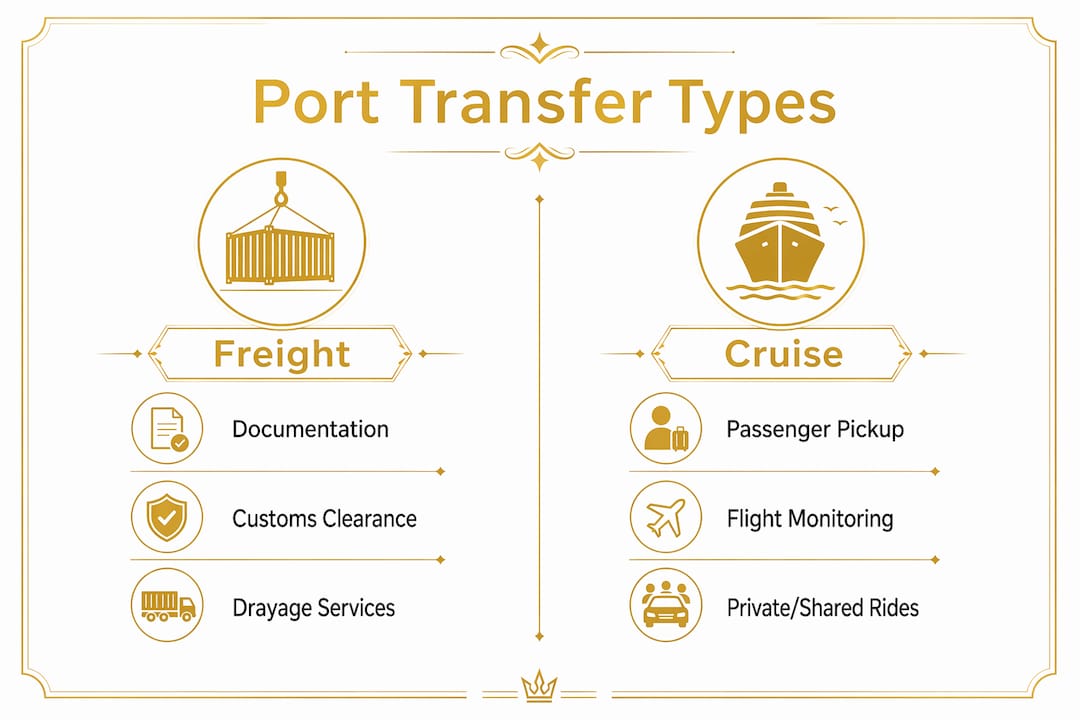
Diese beiden Kontexte haben zwar denselben Namen, weisen aber in der Praxis fast keine Gemeinsamkeiten auf. Im Einzelnen lassen sie sich wie folgt aufschlüsseln:
Abholung am Frachthafen (CY/CY):
- Die Reederei entlädt den Container auf dem Containerlagerplatz des Zielhafens.
- Der Empfänger oder sein Zollagent kümmert sich um die Einfuhranmeldungen, Zölle und Terminalgebühren.
- Der Empfänger organisiert den Landtransport (LKW-Transport), um den Container ins Landesinnere zu befördern.
- Demurrage-Gebühren fallen an, wenn der Container länger als die zugeteilte kostenlose Tagesfrist steht
- Incoterms wie FOB legen die Zeitpunkte des Risiko- und Kostenübergangs fest, während CY/CY regelt, wer den abschließenden Landtransport organisiert.
Abholung von Kreuzfahrtpassagieren am Hafen:
- Ein im Voraus gebuchtes Fahrzeug (Privatwagen, Shuttle oder Limousine) holt die Passagiere am Terminal ab
- Der Fahrer kümmert sich um das Gepäck und durchläuft die Sicherheitskontrollen im Terminal
- Der Transfer erfolgt in der Regel zwischen dem Kreuzfahrtterminal und einem nahegelegenen Flughafen oder Hotel.
- Die Buchungsfristen beginnen mindestens ein oder zwei Tage vor der Ankunft.
- Zu den professionellen Dienstleistungen gehören die Flugüberwachung in Echtzeit und die Koordination des Meet-and-Greet-Services
Fünf entscheidende Faktoren bei der Organisation eines Transfers vom Frachthafen
Um eine Abholung am Frachthafen reibungslos abzuwickeln, müssen fünf betriebliche Anforderungen erfüllt sein. Wird auch nur eine davon nicht eingehalten, drohen Verzögerungen, Bußgelder oder ein am Terminal festsitzender Container.
-
Zollabfertigung und Einfuhrunterlagen. Bevor ein Container das Terminal verlässt, reicht der Empfänger oder sein Zollagent die Einfuhranmeldungen ein und entrichtet alle anfallenden Zölle, Steuern und Terminalgebühren. Zu den erforderlichen Unterlagen gehören in der Regel die Handelsrechnung, die Packliste, der Frachtbrief sowie gegebenenfalls Ursprungszeugnisse oder Einfuhrgenehmigungen. Die Zollabfertigung muss abgeschlossen sein, bevor das Terminal den Container zur Abholung freigibt. Das Überspringen oder Verzögern dieses Schritts ist der häufigste Grund dafür, dass Container ihren kostenlosen Tag verpassen.
-
Fahrerausweise: TWIC- und UIIA-Zertifizierung. Jeder Transportfahrer, der einen US-Hafen betritt, muss im Besitz eines von der Transportation Security Administration ausgestellten Transportation Worker Identification Credential (TWIC) sein. Die TWIC ist eine biometrische Zugangskarte, die die Identität des Fahrers und die Unbedenklichkeitsprüfung seiner Person bestätigt. Zusätzlich zur TWIC verlangen die meisten großen US-Seehafenterminals, dass das Transportunternehmen Mitglied des „Uniform Intermodal Interchange and Facilities Access Agreement“ (UIIA) ist, das den Austausch von Ausrüstung zwischen Spediteuren und Anbietern intermodaler Ausrüstung regelt. Ein Fahrer, der ohne beide Berechtigungsnachweise erscheint, wird am Tor abgewiesen – Punkt.
-
Erläuterung des kostenlosen Tages und der Standgebühren. Für jeden Container in einem US-Hafen gilt ein kostenloser Tag, in der Regel ein bis fünf Kalendertage, während dessen die Lagerung im Seefrachttarif enthalten ist. Sobald dieses Zeitfenster abgelaufen ist, fallen täglich Standgebühren an, deren Höhe oft mit der Dauer des Standes des Containers steigt. Detention-Gebühren fallen separat an, wenn das Transportunternehmen das Chassis oder den Container über die zulässige Zeit hinaus außerhalb des Terminals zurückhält. Die Koordination von Zollabfertigung und Transport so zu gestalten, dass beides innerhalb des kostenlosen Zeitraums erfolgt, ist die zentrale Herausforderung bei jeder Abholung am Frachthafen.
-
Terminvereinbarung für die Abholung im Hafen. Die meisten US-Seehafenterminals verlangen mittlerweile von Lkw-Fahrern, dass sie vor ihrer Ankunft am Tor einen Abholtermin über ein Online-Terminal-Betriebssystem buchen. Terminals in großen Häfen wie dem Hafen von Los Angeles, dem Hafen von Long Beach und dem Hafen von New York und New Jersey nutzen allesamt terminbasierte Torsysteme. Wird ein vereinbarter Termin versäumt oder zu spät erreicht, wird der Fahrer ans Ende der Warteschlange verwiesen oder verliert den Termin gänzlich. Empfänger sollten die Verfügbarkeit eines Termins unmittelbar nach Abschluss der Zollabfertigung bestätigen, nicht erst danach.
-
Spezialausrüstung und Krantermine. Standardcontainer werden per Fahrgestell und Lkw transportiert. Überdimensionale Ladungen, Sendungen außerhalb der zulässigen Abmessungen oder Stückgut erfordern häufig einen Kranhub oder spezielle Umschlaggeräte, und die Terminals planen diese separat von den regulären Terminen am Tor ein. Die vorherige Koordination von Kranleistungen und Terminen ist für jede nicht standardmäßige Ladung zwingend erforderlich. Wird dies nicht im Voraus geregelt, kann sich die Abholung um mehrere Tage verzögern, wodurch der kostenlose Tag aufgebraucht wird und Liegegebühren anfallen.
Profi-Tipp: Arbeiten Sie gleichzeitig mit einem zugelassenen Zollagenten und einem erfahrenen Spediteur zusammen, nicht nacheinander. Der Zollagent sollte die Einfuhrpapiere einreichen, während der Spediteur bereits einen Termin bestätigt hat. Dieser parallele Arbeitsablauf sorgt dafür, dass die Fracht innerhalb des Freitags weiterbefördert wird.
Was Sie von einem Transfer vom Kreuzfahrthafen erwarten können
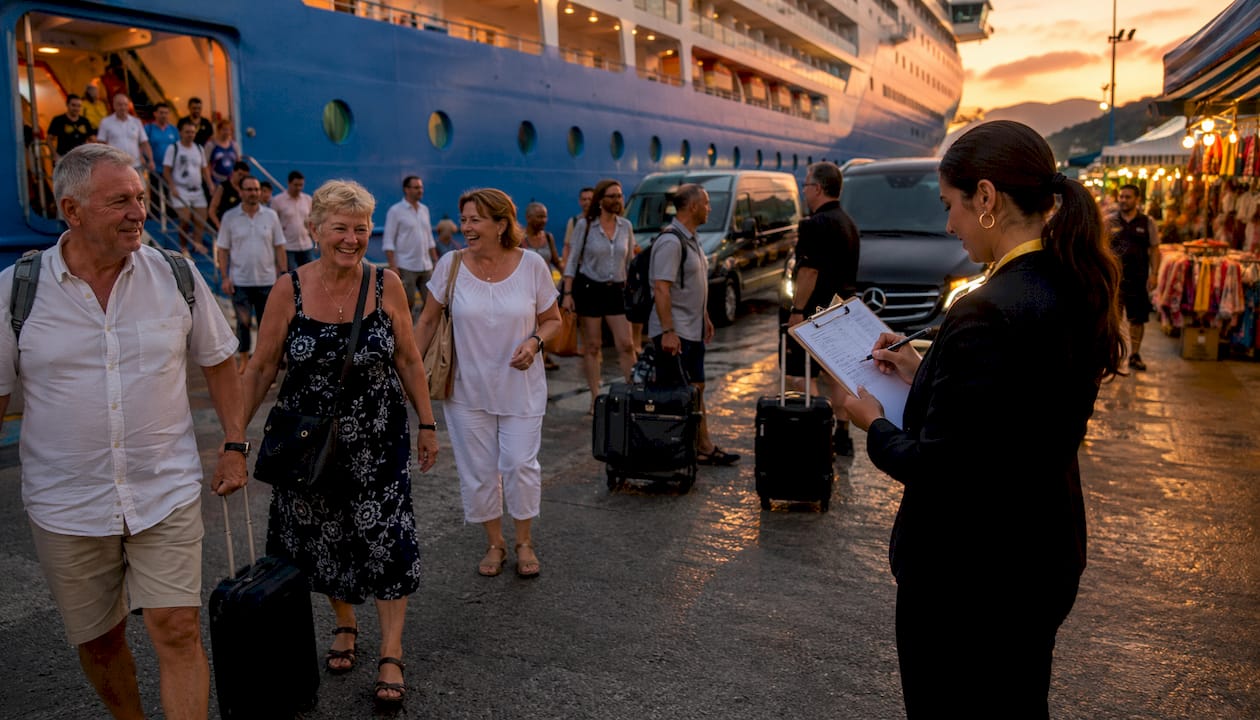
Der Transport zum Kreuzfahrtterminal funktioniert nach einer völlig anderen Logik als der Güterverkehr. Das Ziel ist der Komfort der Passagiere und die Einhaltung des Zeitplans, nicht die Einhaltung der Zollvorschriften. Dennoch erfordert eine reibungslose Abwicklung eine umfassende Koordination, insbesondere wenn Flug- und Schiffsfahrpläne eine Rolle spielen.
Die wichtigsten Transportmöglichkeiten in US-amerikanischen Kreuzfahrthäfen lassen sich in drei Kategorien einteilen:
- Bustransfers der Kreuzfahrtgesellschaft: Bequem und im Voraus organisiert, allerdings müssen Sie warten, bis der Bus voll besetzt ist, bevor es losgeht. Weniger flexibel, wenn Ihr Flug früher oder später landet.
- Gemeinsame Shuttle-Dienste: Geringere Kosten pro Person, jedoch verlängern die gemeinsam genutzten Kleinbusse die Gesamtfahrzeit aufgrund von Zwischenstopps an mehreren Terminals.
- Transfers mit Privatwagen oder Limousine: Direkter Transfer von der Tür zum Pier. Ein professioneller Chauffeur empfängt Sie in der Ankunftshalle mit einem Namensschild, kümmert sich um Ihr Gepäck und bringt Sie ohne Zwischenstopps zum Eingang Ihres jeweiligen Terminals.
Für Passagiere, die am Tag der Einschiffung in eine Hafenstadt fliegen, kommt es vor allem auf das richtige Timing an. Professionelle Kreuzfahrt-Transfers überwachen die Flugankünfte in Echtzeit und passen sich an Verspätungen an – etwas, das Mitfahr-Apps einfach nicht leisten können. In PortMiami beispielsweise stehen Kreuzfahrtpassagieren an allen Terminals verschiedene Transportmöglichkeiten wie Shuttles und Limousinen zur Verfügung, wobei es auch ausgewiesene Ein- und Ausstiegszonen für Mitfahrdienste gibt.
Was einen professionellen Abholservice am Kreuzfahrthafen von einem Taxi oder einem Mitfahrdienst unterscheidet, ist die Kenntnis der Terminals. Chauffeure für Kreuzfahrthäfen sind in den Abgabeverfahren am Terminal geschult und bringen die Passagiere direkt zum richtigen Eingang – und nicht zu einem allgemeinen Bereich am Straßenrand, wo man sein Gepäck über einen überfüllten Parkplatz schleppen muss. Am Pier 91 in Seattle beispielsweise bieten private Transferservices die direkte Abgabe am ausgewiesenen Kreuzfahrteingang an, einschließlich der Gepäckabfertigung vom Straßenrand bis zum Terminal.
Übliche Leistungen bei professionellen Abholservices vom Kreuzfahrthafen:
- Flugverfolgung in Echtzeit mit automatischen Flugplananpassungen
- Namentliches Meet-and-Greet in der Ankunftshalle mit einem gut sichtbaren Schild
- Gepäckabfertigung vom Fahrzeug zum Gepäckträger
- Klimatisierte Fahrzeuge mit Platz für übergroße Gegenstände
- Abgabe am Straßenrand am Eingang des jeweiligen Terminals
- 24/7-Verfügbarkeit für Einschiffungen am frühen Morgen
Profi-Tipp: Buchen Sie Ihre Abholung am Kreuzfahrthafen mindestens 48 Stunden vor Ihrer Ankunft und geben Sie bei der Buchung Ihre Flugnummer an. Ein guter Anbieter überwacht diesen Flug automatisch und passt Ihr Abholfenster entsprechend an, ohne dass Sie anrufen müssen.
Um genauer zu verstehen, wie sich private Transferdienste von Mitfahrgelegenheiten unterscheiden: Am wichtigsten ist dieser Unterschied am Tag der Abreise, wenn die Zeit knapp ist.
So vermeiden Sie versteckte Kosten und Verzögerungen in US-Häfen
Versteckte Kosten bei Transfers mit Abholung am Hafen lassen sich fast immer auf dieselben beiden Ursachen zurückführen: versäumte Fristen und unvollständige Unterlagen. Beides lässt sich vermeiden.

Für Frachtversender ist der kostenlose Tag der entscheidende finanzielle Knackpunkt. Sobald dieser abgelaufen ist, fallen täglich Liegegebühren an, und ein erfahrener Spediteur kann helfen, diese Kosten zu vermeiden, indem er die Zollabfertigung und den Transport parallel statt nacheinander koordiniert. Der Empfänger sollte niemals auf das Eintreffen des Konnossements warten, bevor er mit der Zollanmeldung beginnt. Fordern Sie vom Versender eine Telex-Freigabe oder ein elektronisches Konnossement an, damit der Zollagent bereits mit der Einreichung der Einfuhrpapiere beginnen kann, während sich das Schiff noch auf See befindet.
Praktische Maßnahmen zum Schutz vor Verzögerungen und Gebühren bei der Abholung im Hafen:
- Bestätigen Sie die Anzahl der kostenlosen Tage mit der Reederei, bevor das Schiff eintrifft.
- Reichen Sie die Zollanmeldungsunterlagen so früh wie möglich ein, idealerweise noch vor der Ankunft des Schiffes.
- Überprüfen Sie die TWIC- und UIIA-Zugangsdaten des Fahrers, bevor Sie ihn zum Terminal entsenden.
- Buchen Sie den Termin am Terminal-Gate, sobald der Container vom Zoll freigegeben wird.
- Für übergroße Ladungen vereinbaren Sie bitte Termine für den Kran oder Spezialausrüstung mindestens 48 Stunden im Voraus.
- Überwachen Sie den Status der Container täglich über das Online-Tracking-System des Terminals
Profi-Tipp: Verhandeln Sie die Anzahl der kostenlosen Tage mit Ihrer Reederei bereits bei der Buchung und nicht erst nach Ankunft des Containers. Reedereien verlängern die kostenlose Zeit oft auf stark frequentierten Routen oder für etablierte Versender, allerdings nur, wenn Sie dies vor Vertragsunterzeichnung anfragen.
Bei Passagiertransfers sehen die versteckten Kosten anders aus. Preisanstiege durch Mitfahr-Apps an stark frequentierten Abreisetagen, unerwartete Gepäckgebühren bei Sammel-Shuttles und die Kosten, die entstehen, wenn man das Schiff verpasst, weil das Taxi zu spät kam – all das summiert sich. Bei im Voraus gebuchten privaten Abholservices vom Hafen gelten Festpreise, sodass der bei der Buchung angezeigte Preis auch der Preis ist, den Sie bezahlen. Keine Preisanstiege, keine Überraschungen.
Eine korrekte Dokumentation verhindert die meisten Frachtverzögerungen. Die Handelsrechnung muss genau mit dem Lieferschein und dem Frachtbrief übereinstimmen. Schon eine einzige Unstimmigkeit – eine abweichende Stückzahl oder ein falscher HS-Code – kann zu einer Zollsperre führen, die den kostenlosen Tag aufbraucht, bevor überhaupt jemand bemerkt, was passiert ist. Erfahrene Koordinatoren für den Transport nach dem Hafen weisen oft schon vor der Einreichung auf solche Unstimmigkeiten hin – genau diese Art von Überprüfung bewahrt Versender vor vermeidbaren Liegegebühren.
Die wichtigsten Erkenntnisse
Bei einer Abholung am Hafen liegt die volle Verantwortung beim Empfänger oder Reisenden am Hafen, sodass die rechtzeitige Vorbereitung der Unterlagen und Berechtigungsnachweise sowie die Terminplanung den Unterschied zwischen einer reibungslosen Übergabe und kostspieligen Verzögerungen ausmachen.
| Punkt | Details |
|---|---|
| CY/CY legt die Haftung für die Fracht fest | Die Haftung des Spediteurs endet auf dem Containerhof; der Empfänger kümmert sich um die Zollabfertigung und den Landtransport. |
| TWIC und UIIA sind vorgeschrieben | LKW-Fahrer in US-Häfen müssen beide Ausweise vorweisen können, andernfalls wird ihnen der Zugang zum Terminal verwehrt. |
| Die zeitliche Planung des freien Tages ist entscheidend | Demurrage-Gebühren fallen ab dem Zeitpunkt an, an dem die Freitage ablaufen, weshalb eine parallele Koordination von Zollabfertigung und Transport unerlässlich ist. |
| Für Transfers zu Kreuzfahrten ist eine Voranmeldung erforderlich | Buchen Sie 24 bis 72 Stunden im Voraus und teilen Sie Ihre Flugnummer mit, damit der Anbieter die Ankünfte in Echtzeit verfolgen kann. |
| Private Transfers zum Festpreis verhindern Überraschungen | Bei im Voraus gebuchten Dienstleistungen gelten Festpreise, wodurch Preisanstiege in Spitzenzeiten und das Risiko, ein Schiff aufgrund unzuverlässiger Transportmittel zu verpassen, vermieden werden. |
Planen Sie eine Premium-Abholung am Hafen oder am Terminal? Solidride bietet professionelle Privatransfers mit Flugverfolgung in Echtzeit, Meet-and-Greet-Service und Gepäckhilfe. Umgehen Sie die Warteschlange vor dem Taxi und entscheiden Sie sich für einen Premium-Transferservice – für eine zuverlässige Fahrt zum Festpreis vom Terminal bis zu Ihrem Zielort.

Benötigen Sie Hilfe beim Gepäcktransport bei der Ankunft? Der Gepäcktransport-Service von Solidride deckt den gesamten Weg vom Straßenrand bis zu Ihrer Haustür ab.
Einen Kommentar hinzufügen