


Ootetasu applies differently depending on what you book: ride-hailing apps charge it per minute almost automatically, pre-booked private transfers negotiate a free-wait window into the quote, and municipal or social transport services sometimes fix it as a flat hourly rate in their contracts. SolidRide, among other local operators, builds a fixed quote with flight tracking into its transfers so the fee never becomes a surprise. Before you book anything, ask exactly how the provider calculates waiting time and how much free time you get.
TL;DR:
- Municipal and social transport ootetasu is usually a fixed hourly rate of around 6 euros, often included in the service contract rather than charged per trip.
- Private transfer ootetasu varies between a negotiated free-wait window, commonly 15 to 60 minutes, and itemized rates or fixed quotes that include flight tracking.
- Ride-hailing apps automatically start minute charges upon driver arrival, regardless of passenger delay, making waiting fees less predictable.
- Booking strategies like requesting flight monitoring, fixed prices, and specific meet-and-greet details can prevent most waiting fee surprises.
- Clarifying how ootetasu is calculated and included before booking ensures transparency, especially for late arrivals, groups, or unpredictable delays.
Table of Contents
- What Does “Ootetasu” Mean in Estonian Transport?
- How Waiting Fees Work by Service Type
- What Ootetasu Actually Costs in Estonia
- Booking Tactics That Cut Your Waiting Fee to Zero
- The Booking Checklist That Prevents Ootetasu Surprises
- How SolidRide Removes the Guesswork on Waiting Time
- When I Accept Ootetasu, and When I Insist on a Fixed Price
- Sources
What Does “Ootetasu” Mean in Estonian Transport?
Ootetasu translates to “waiting fee” or “availability fee,” and it means slightly different things depending on who is charging it. In consumer transport, it usually covers the minutes a driver waits for a passenger beyond an agreed grace period. In municipal and public procurement contracts, the same word can describe something closer to a standby retainer: payment for a contractor’s availability, whether or not they end up driving.
That second meaning surprises a lot of travelers, because it has nothing to do with airport pickups. Local reporting from Saarte Hääl documented a municipality paying snow-clearing contractors a monthly ootetasu of €500 for months when no snow fell, simply to keep them on standby. That is a contractual readiness payment, not a per-minute surcharge, and it shows why the term shifts meaning by context.
Estonia’s own public-administration literature on social and special services procurement draws the same line: in procurement, ootetasu compensates for readiness; in consumer transport, it discourages delay. Keep both definitions in mind, because:
- A ride-hailing app’s ootetasu is a small per-minute charge tied to your specific trip.
- A municipal social-transport ootetasu can be an hourly line item written into a service contract, like the Otepää vald sotsiaaltransport rate schedule, which lists a starting fee plus per-kilometer pricing alongside its waiting charge.
- A special-contract ootetasu, like the snow-clearing example, can be a standing retainer with no per-trip logic at all.
For anyone booking a transfer rather than a municipal service, only the first two apply. Still, knowing the third exists explains why municipal rate sheets you find online can look nothing like a taxi receipt.
How Waiting Fees Work by Service Type
The trigger point for ootetasu, and how it’s calculated, depends entirely on which kind of transport you book. Here’s how the three main categories differ in practice.
- Ride-hailing apps. Most platforms start a minute-based charge automatically once the driver marks arrival and a grace period passes. This is an industry-standard pattern rather than a fixed Estonian rule, and it varies by app, but the mechanism is consistent: the meter effectively starts running whether or not you’re actually late.
- Private pre-booked transfers. These typically work off a negotiated free-wait window built into your quote, often 15 to 60 minutes for airport pickups with flight tracking, sometimes longer for cruise ship or train arrivals where delays are common. Charges beyond that window are usually spelled out per hour or per quarter-hour in the booking confirmation, not applied silently.
- Municipal and social transport. These use contract-level pricing set by the local government. The Otepää vald schedule is a clean example: a fixed ootetasu per hour, published as part of the service’s public rate card rather than negotiated trip by trip.
The practical difference matters more than the definitions. A ride-hailing fee accumulates the moment you’re not there. A private transfer fee usually only starts after a window you agreed to in advance. A municipal fee is baked into the service’s structure long before you ever ride.
Pro Tip: Before you finalize any transfer booking, ask the provider one direct question: “What happens if my flight is delayed by an hour?” The answer tells you everything about how that company handles ootetasu, and whether you need to negotiate anything further.
What Ootetasu Actually Costs in Estonia
Municipal social transport gives the clearest published figure available. Otepää vald’s service rate card lists an ootetasu of 6 euros per hour, alongside a starting fee and a per-kilometer charge of €0.80. That’s a public, contract-level number, not an estimate, and it’s a useful anchor for understanding how local authorities price standby time.
Structured commercial tariffs show the same pattern at a different scale. RMK Transporter’s published transfer charges list ootetasu as a distinct line item alongside vehicle and distance fees, treating waiting time as a formal, itemized cost rather than something buried into the base price.
For consumer-facing private transfers, pricing tends to look different again:
- A pre-booked private transfer from Tallinn Airport into the city center typically runs in a moderate price range, according to SolidRide’s own transfer pricing guide, with flight tracking and fixed quotes commonly built in to avoid separate waiting charges.
- Ride-hailing minute rates vary by app and time of day, and function more like a meter than a flat fee. Treat any per-minute figure you see quoted online as indicative, not fixed.
- Executive or chauffeured services, priced closer to €50 to €120 for private drivers, tend to fold waiting time into the quoted rate rather than billing it separately.
The takeaway: municipal ootetasu is published and predictable, while consumer ootetasu ranges from itemized (RMK-style tariffs) to invisible (fixed-quote private transfers). Ask which model you’re dealing with before you assume either one.
Booking Tactics That Cut Your Waiting Fee to Zero
You can eliminate most ootetasu risk before you ever step off a plane. The fix isn’t complicated. It’s about locking in the terms before you travel, not negotiating them at the curb.
- Book a pre-arranged transfer that includes flight tracking, so your pickup time adjusts automatically if your flight is delayed.
- Ask for an explicit free-wait window in writing, not a verbal assurance. Fifteen minutes of “we’ll be flexible” means nothing without a number attached.
- Specify meet-and-greet service and your exact pickup point in the booking notes. Confusion about where to stand costs more waiting time than actual delays do.
- For uncertain arrival windows, an hourly block booking or fixed-price quote removes the guesswork entirely. You pay one number regardless of how long the wait runs.
- If you’re using a ride-hailing app instead, call or message the driver as soon as you land. A quick heads-up often resets the clock on automatic minute charges.
Pro Tip: If you’re arriving on a red-eye flight or crossing a border late at night, always request a fixed-price quote rather than a metered one. Border crossings and late arrivals are exactly when delays happen, and exactly when a per-minute fee adds up fastest.
The Booking Checklist That Prevents Ootetasu Surprises
Before you confirm any transfer, run through these questions with the provider. Get the answers in writing, not just spoken over the phone.
- Does ootetasu apply to this booking, and is it calculated per minute, per hour, or as a flat fee?
- How much free-wait time is included before any charge starts?
- Is meet-and-greet service included, or is it a separate line item?
- What’s the cancellation policy, and is there a separate fee for last-minute delays or schedule changes?
- Can you get a fixed quote for late-night pickups or group transfers instead of a metered rate?
- For groups: is loading and unloading time factored into the price, and are additional stops charged separately?
Answering these six questions before you travel removes almost every source of a surprise ootetasu charge. The Private Transfer Booking Checklist for Estonia travel walks through the same questions in more detail if you want a printable version for group trips or repeat bookings.
How SolidRide Removes the Guesswork on Waiting Time
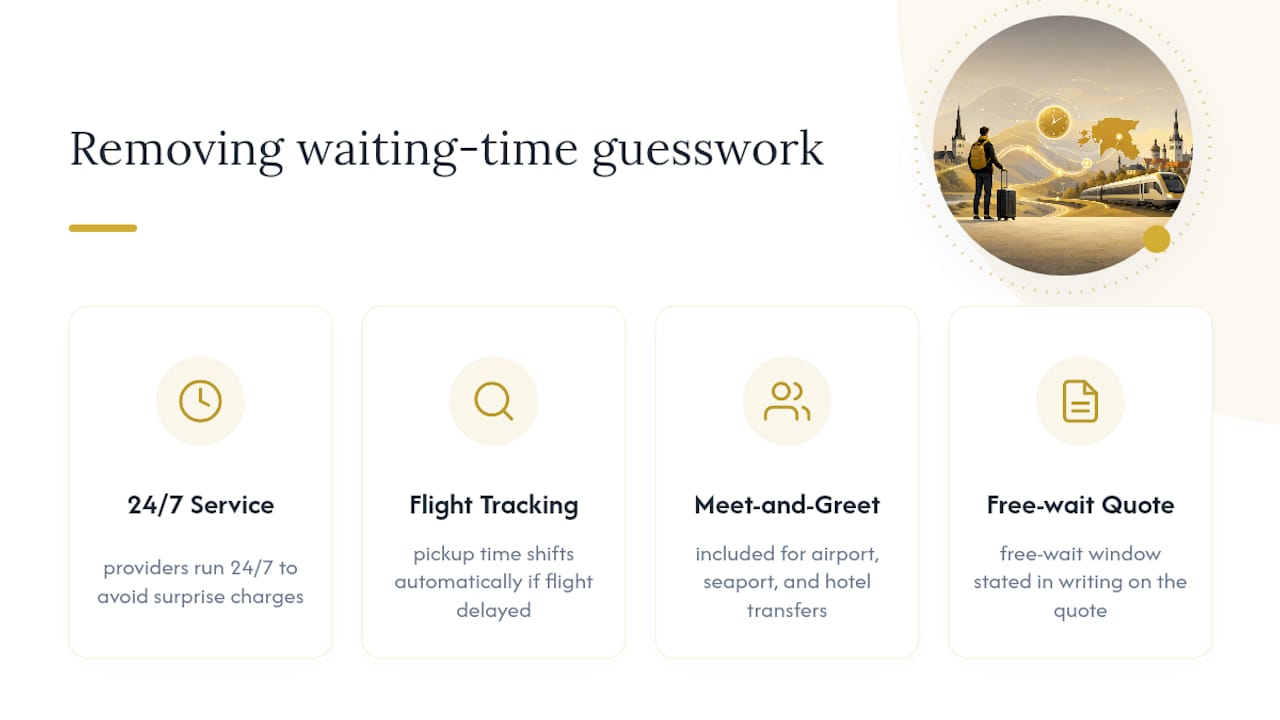
Some private transfer providers run 24/7 with real-time flight monitoring and meet-and-greet service built into their airport, seaport, and hotel transfers to address waiting fee concerns.

Every quote from some providers states your free-wait allowance up front, and flight tracking means your pickup time shifts automatically if your flight runs late, so a delayed landing doesn’t quietly turn into a waiting charge. For business travelers and event planners juggling group arrivals, that predictability matters more than the base fare. A Coventry Transportation Blog rundown on meet-and-greet best practices makes a similar point: clear pickup protocols prevent most of the delays that generate waiting fees in the first place.
If you want to lock in a fixed-price arrival before your next trip, work through the High-End Transfer Booking Checklist for 2026 and get your quote with the free-wait window spelled out in writing.
When I Accept Ootetasu, and When I Insist on a Fixed Price
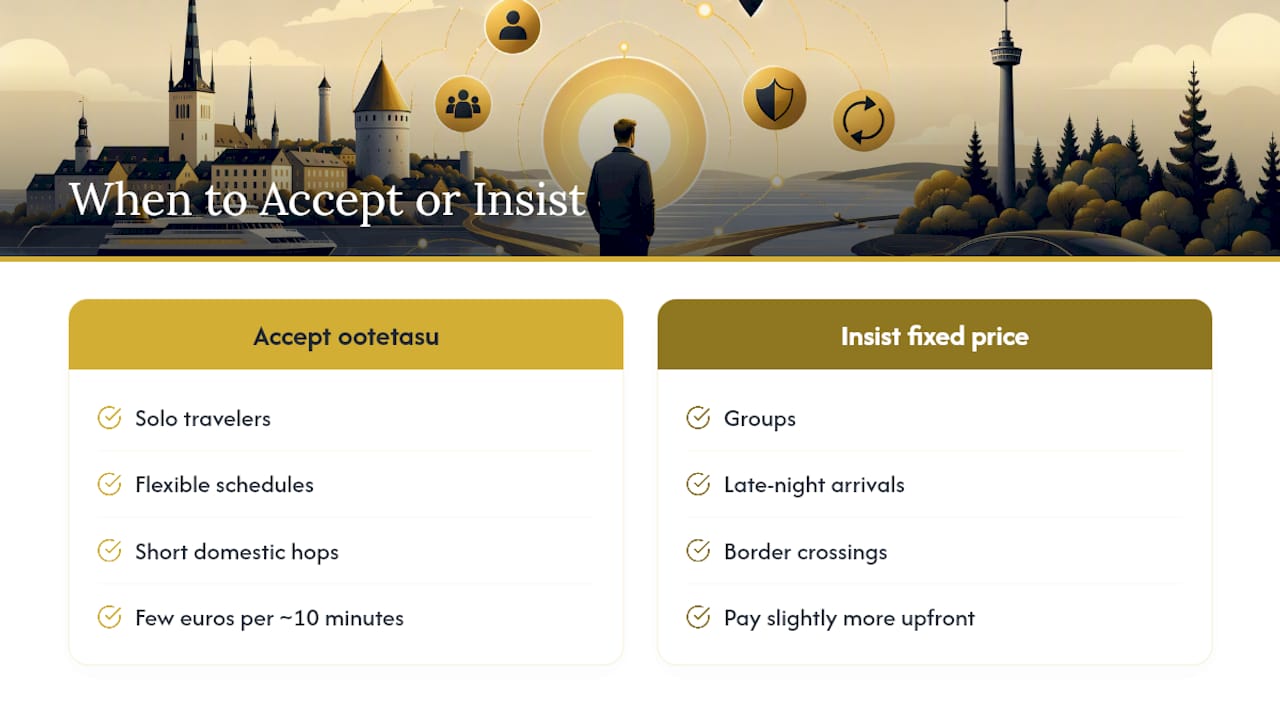
A small waiting fee is fine when the stakes are low. Solo travelers, flexible schedules, short domestic hops. Paying a few euros for an extra ten minutes beats haggling over it at the curb.
Everything changes for groups, late-night arrivals, and border crossings. A delayed flight at 2 a.m. with six tired colleagues and no fixed price is exactly when a “reasonable” per-minute rate stops being reasonable. That’s when I’d rather pay slightly more upfront for a guaranteed slot than gamble on how long the clock runs. The trade-off isn’t complicated: ootetasu rewards flexibility, fixed pricing rewards certainty. Know which one your trip actually needs before you book.
— Erki
Sources
- Sotsiaaltransport | Otepää vald
- Transfer sõidukitasud – RMK Transporter (blog)
- Vald pakub sahameestele ootetasu — Saarte Hääl
Add a comment