


TL;DR:
- A ferry port to city center transfer connects travelers from their arrival point to urban destinations using various options. Public transit is the most affordable, but private transfers offer fixed pricing and luggage assistance for comfortable travel. Planning ahead by confirming port terminals, providing vessel details, and booking private services ensures smoother, stress-free arrivals.
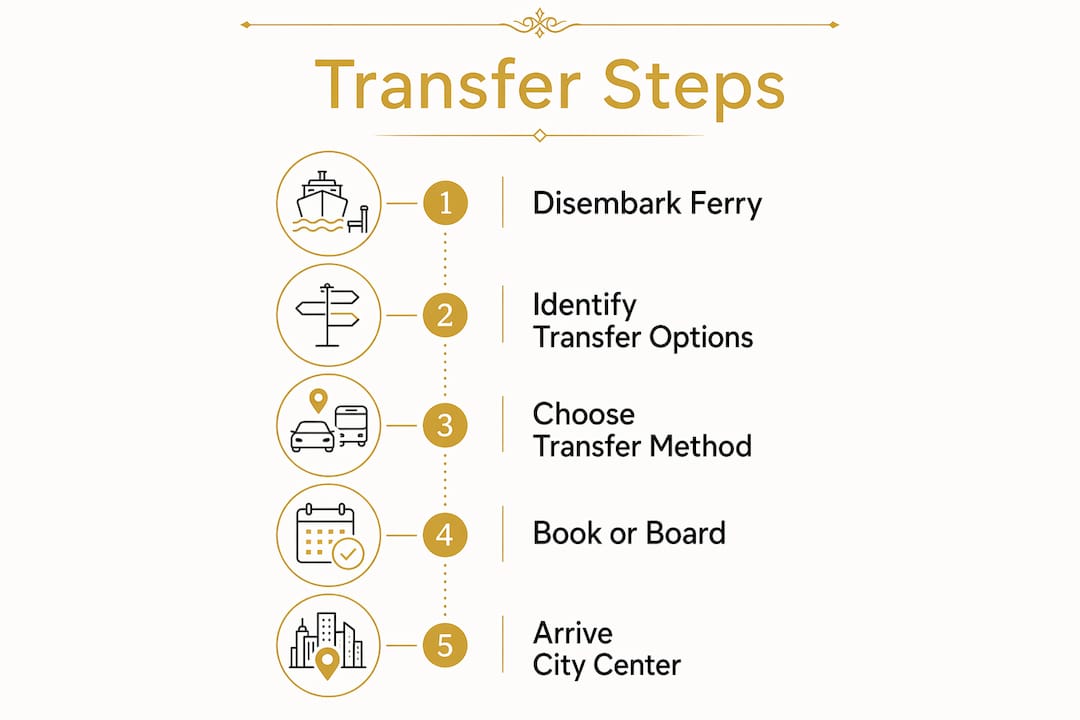
A ferry port to city center transfer is the transportation connection that moves travelers from their arriving ferry terminal to the heart of a city. The options range from public metro lines and shuttle buses to taxis and pre-booked private chauffeur services. Your best choice depends on four factors: cost, luggage volume, group size, and how much time you have. Metro fares run €1.20–€1.40 per ride, while private door-to-door transfers typically cost €35–€55. Knowing the gap between those two numbers before you disembark saves you from making a rushed, expensive decision at the terminal exit.
What public transportation options are available from ferry ports?

Public transit is the most affordable port to city transfer method, and it works well for solo travelers carrying one bag. Metro lines and express buses serve the majority of major ferry terminals worldwide. Bus shuttles take 25–30 minutes from terminal to city center, while metro connections average 20–35 minutes depending on terminal congestion and walking distance to the platform. That range matters because a 15-minute walk to the metro entrance with a heavy suitcase changes the calculation entirely.
Metro and express bus connections
Metro lines are the fastest public option when the station sits close to the terminal gate. Ticket prices are low and frequency is predictable during peak hours. The challenge is that many ports have multiple terminals located far apart, which means your vessel may dock at a pier that requires an internal shuttle or a short taxi ride before you even reach the public transit stop. Always confirm which terminal your ferry uses before assuming the metro entrance is a short walk away.
Express buses fill the gap where metro lines do not reach. They run fixed routes, stop at major city landmarks, and cost roughly the same as a metro ticket. The tradeoff is frequency. Off-peak arrivals can mean a 30-minute wait on a platform with luggage and no seating.
When public transit does not work
Walking is viable at small ports close to city centers for travelers with light luggage. At larger ports, the distance to the city makes walking impractical. Travelers with strollers, oversized luggage, or mobility limitations will find public transit genuinely difficult. Buses rarely have dedicated luggage storage, and metro stairs are common at older stations. For those travelers, the cost difference between a bus ticket and a taxi is worth paying.
Pro Tip: Download the local transit app before your ferry docks. Real-time departure boards are rarely visible from the terminal exit, and you will lose time searching for them while your ferry companions are already moving.
How do taxis and rideshare services work at ferry terminals?
Taxis are the default fallback for travelers who miss the bus or arrive late at night. Licensed taxis queue at designated stands near terminal exits at most major ports. Fares run on meters in regulated markets, so the price reflects actual distance and time. The problem is peak-hour congestion. Traffic and port operations can extend travel times well beyond what GPS estimates, which means a metered fare can climb fast during busy arrival windows.
What to watch for with taxis
- Unmetered fares. Some terminals attract unlicensed drivers offering flat rates. Always confirm the driver uses a meter or agree on a fixed price before entering the vehicle.
- Queue wait times. At busy ports, the taxi queue can stretch 20–30 minutes during peak ferry arrivals. Factor this into your schedule.
- Receipt requests. Always ask for a printed or digital receipt. It protects you if there is a billing dispute and helps with expense reporting for business travelers.
- Luggage surcharges. Many regulated taxi markets add a fee per large bag. Ask before loading.
Rideshare pickup zones
Rideshare apps work at some ferry terminals, but pickup zones are often poorly marked or located at a distance from the main exit. Drivers unfamiliar with port layouts sometimes cancel when they cannot find the passenger. If you use a rideshare app, share your exact location pin and confirm the pickup point by message before the driver arrives.
Pro Tip: Screenshot the taxi license plate and driver ID when you board. Send it to a contact. This takes 10 seconds and is standard practice in unfamiliar cities.
What are the benefits of booking a private transfer from a ferry port?
A private transfer is a pre-arranged, chauffeur-driven vehicle booked before your ferry arrives. The driver meets you at the terminal with a name sign, handles your luggage, and takes you directly to your destination without stops. Pre-arranged pickups with name signs reduce stress and eliminate the navigation confusion that hits most travelers the moment they step off a ferry in an unfamiliar city.
Key advantages of private transfers
- Fixed pricing. You agree on the fare before travel. No meter surprises, no surge pricing, and no ambiguity about what the ride costs.
- Luggage handling. The driver loads and unloads your bags. This matters most for families, travelers with mobility issues, and anyone moving between cities with full suitcases.
- Delay flexibility. Providing your ferry line, vessel name, and arrival time lets the driver monitor marine schedules and adjust the pickup if your ferry runs late. You do not pay extra for the wait, and you do not get stranded.
- Direct routing. Private transfers go door to door. No transfers between bus lines, no dragging luggage through metro turnstiles.
- Group efficiency. One vehicle for a group of four costs less per person than four individual taxi fares, and everyone arrives together.
How to book correctly
Book with your full ferry details: the ferry line name, vessel name, scheduled arrival time, and the specific terminal or pier. This information lets the driver plan the pickup precisely. Confirm the meeting point in writing, whether that is inside the terminal, at a specific exit, or at a designated pickup bay. Solidride, for example, offers private chauffeur service with 24/7 availability and real-time vessel monitoring, so the driver adjusts automatically if the ferry schedule shifts.
Pro Tip: Save your driver’s phone number before you board the ferry. Cell signal at port terminals is often poor, and a pre-saved contact means you can reach the driver the moment you disembark.
How to choose the best transfer method for your trip
The right ferry terminal transport option depends on your specific profile, not on which option sounds cheapest. Metro suits solo travelers with light luggage, while private transfers suit families and groups who need comfort and luggage assistance. Here is a direct comparison:
| Transfer type | Cost range | Travel time | Best for |
|---|---|---|---|
| Metro or bus | €1.20–€1.40 per ticket | 20–35 minutes | Solo travelers, light luggage |
| Taxi | Metered, varies | 15–40 minutes | Small groups, off-peak arrivals |
| Private transfer | €35–€55 fixed | 20–45 minutes | Families, groups, heavy luggage |
Common mistakes travelers make
- Assuming all ferry terminals share one exit. Large ports have multiple piers, and the wrong exit can add 30 minutes to your journey.
- Skipping buffer time. Port traffic and ship movements create delays that GPS apps do not predict. Add at least 20 minutes to any connection estimate.
- Booking a rideshare without confirming the pickup zone. Many port rideshare zones are a 10-minute walk from the terminal exit.
- Choosing public transit with oversized luggage. Bus aisles and metro turnstiles are not designed for large bags.
Pro Tip: Check the port’s official website the day before arrival. Terminal assignments for specific ferry routes change, and an outdated assumption about your pier can cost you significant time.
Key Takeaways
The most reliable ferry port to city center transfer is the one matched to your group size, luggage load, and arrival time, not simply the cheapest option available.
| Point | Details |
|---|---|
| Match option to traveler profile | Solo travelers with light bags do well on public transit; families and groups benefit from private transfers. |
| Know your terminal in advance | Large ports have multiple piers; confirm your specific gate before arrival to avoid long internal walks. |
| Book private transfers with vessel details | Providing the ferry line, vessel name, and arrival time lets drivers adjust for delays automatically. |
| Build in buffer time | Port traffic and ship operations extend travel times beyond GPS estimates; add at least 20 minutes. |
| Fixed pricing protects your budget | Private transfers eliminate metered fare surprises, especially during peak-hour congestion. |
What I have learned from watching travelers get this wrong
Erki here. After years of working in private transfer logistics, the pattern I see most often is travelers who plan everything about their trip except the last mile from the terminal. They research hotels, book restaurants, and map out attractions. Then they step off the ferry and stand at the exit with no plan, surrounded by unlicensed drivers offering cash-only flat rates.
The uncomfortable truth about ferry terminal transport is that the options that look convenient at the exit are often the worst value. The taxi queue at a busy port during a summer afternoon arrival is a 25-minute wait in the heat. The bus that looked fine on the map requires a 12-minute walk with luggage to reach the stop. The rideshare driver cancels because he cannot find the pickup zone.
What actually works is boring: book in advance, share your vessel details, and confirm the meeting point in writing. I have seen travelers with complex itineraries arrive completely relaxed because they sorted the transfer before they boarded the ferry. The cost difference between a pre-booked private transfer and a last-minute taxi is often smaller than people expect, especially for two or more travelers splitting the fare.
The other thing worth saying: technology helps, but only if you use it before you lose cell signal in the middle of the water. Download what you need, save the driver’s number, and screenshot your booking confirmation. Arriving at a ferry terminal with a plan is a completely different experience from arriving without one.
— Erki
Solidride private transfers for ferry arrivals
Travelers arriving at ferry terminals in Estonia can book a pre-arranged private transfer through Solidride, available 24 hours a day, seven days a week. Solidride operates Mercedes-Benz V-Class vehicles with professional chauffeurs who monitor vessel schedules and adjust pickups when ferries run late.

Solidride provides fixed-price private ferry transfers with full luggage assistance and a meet-and-greet service at the terminal. Booking takes minutes: enter your ferry details, arrival time, and destination, and the driver handles the rest. Group travelers and families can request larger vehicles to accommodate everyone in one trip. Reach Solidride directly through the website or WhatsApp for immediate support and booking confirmation.
FAQ
What is a ferry port to city center transfer?
A ferry port to city center transfer is any transportation service that moves travelers from a ferry terminal to the city center. Options include public transit, taxis, and pre-booked private vehicles.
How long does a port to city transfer usually take?
Bus shuttles average 25–30 minutes and metro connections average 20–35 minutes. Private transfers follow similar routes but avoid public transit stops, so total time depends mainly on traffic.
Is a private transfer worth the cost compared to a taxi?
For groups of two or more travelers, a private transfer with a fixed fare often costs the same or less per person than separate taxis. The added benefit is a confirmed pickup and no metered fare surprises.
How do I avoid problems at large ferry terminals?
Confirm your specific terminal gate before arrival, since large ports have multiple piers located far apart. Use internal port shuttles if your pier is not near the main exit.
What details should I give when booking a private transfer?
Provide the ferry line name, vessel name, and scheduled arrival time. This information lets the driver monitor marine schedules and adjust the pickup if your ferry is delayed.
Lisa kommentaar