


If you employ or contract platform drivers in Estonia, your 2026 budget rests on three pillars: a 33% employer social tax, a 0.8% employer unemployment contribution, and a 22% withholding tax on employee income. On top of that, a new vehicle compliance deadline on July 1, 2026 adds a real equipment cost for many light commercial vehicles.
TL;DR:
- Employees must apply through their employer to use the monthly allowance of €700, or €776 for pension age taxpayers, before payroll withholding changes.
- A contractor invoicing through a business account avoids employer payroll contributions, but operators should verify income classification and declared payouts to limit liability.
- Vehicles weighing 2.5 to 3.5 tonnes may require smart tachographs for international freight or cabotage, so operators should confirm each vehicle’s use against official criteria.
- Drivers mixing exempt and covered trips should retain 56 days of controllable history and record out of scope periods under a clear internal policy.
- Booking a certified installer early can prevent deadline congestion, while renting a compliant vehicle may shift installation and maintenance costs away from the operator.
Table of Contents
- Employer-side cost breakdown: payroll taxes and administrative duties
- When platform managers work as contractors or through an enterprise account
- Vehicle and compliance costs in 2026: smart tachographs and telematics
- Key dates and a 2026 action checklist
- Practical budgeting examples: two worked scenarios
- SolidRide perspective: operational tips for transport operators
- What the 2026 numbers actually tell employers
- A managed alternative to running compliance in-house
- FAQ
- Sources
Employer-side cost breakdown: payroll taxes and administrative duties
The social tax sits at 33% and applies to the gross salary you pay a platform manager or driver classified as an employee, according to EMTA’s 2026 rate guidance. This is paid on top of gross wages, not deducted from them, so it is a direct addition to your payroll budget rather than a withholding from the worker’s pay.
The employee also pays their own unemployment contribution, which is withheld from their pay, but that portion does not add to your employer-side cost.
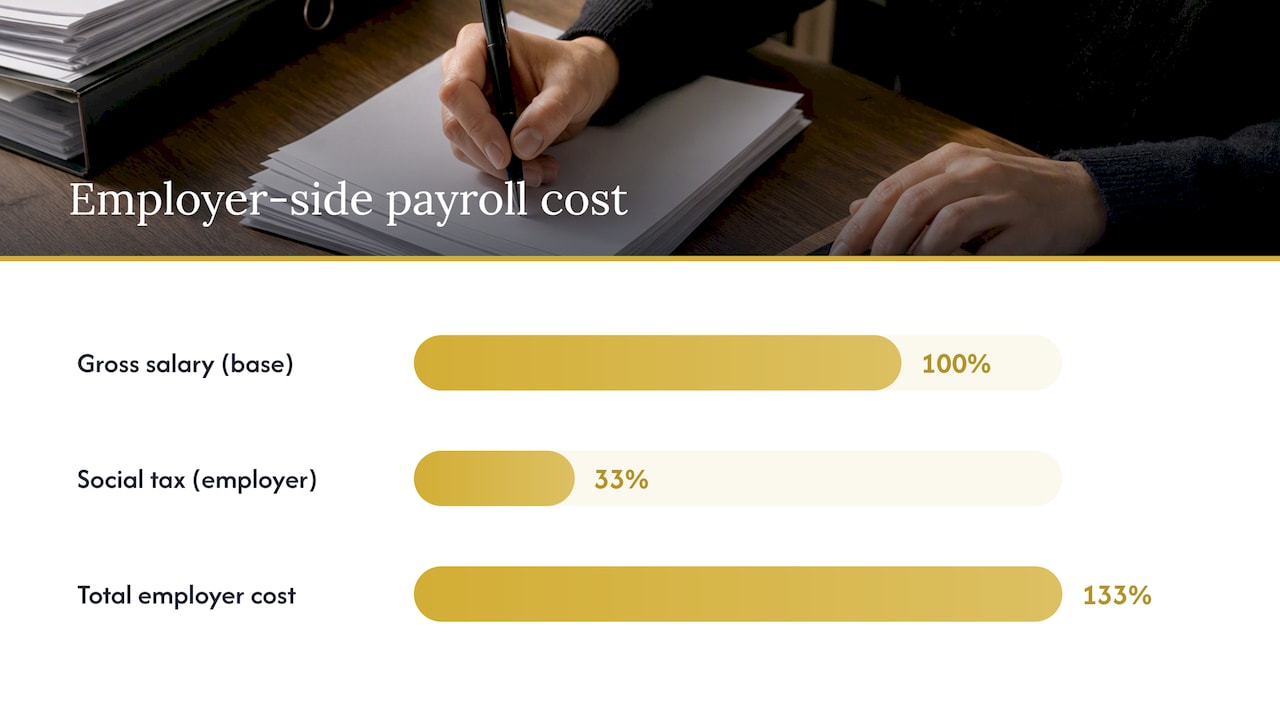
Income tax withholding is separate from these employer contributions. From January 1, 2026, the withholding income tax rate is 22%, applied after the employee’s monthly tax-free allowance is subtracted. The general monthly tax-free amount for 2026 is 700 euros (8,400 euros annually), while pension-age taxpayers get a higher monthly allowance of 776 euros. An employee must formally apply for this allowance through their employer, and payroll needs to process that request before it affects withholding.
Practical steps for payroll compliance in 2026:
- Confirm each worker’s tax-free allowance application status before running payroll.
- Calculate social tax and unemployment contributions on gross wages, not net pay.
- Keep documentation of declared income and contributions for EMTA reporting.
- Reconcile monthly declarations against actual platform payouts received by workers.
Pro Tip: Build a simple payroll checklist that flags any employee who has not yet submitted a tax-free allowance request, since missed requests mean over-withholding and employee complaints down the line.
When platform managers work as contractors or through an enterprise account
Not every platform worker is an employee, and the tax treatment shifts significantly depending on how the work relationship is structured. EMTA’s guidance on platform income draws a line between active work income, which carries the full employment tax burden (tulumaks, social tax, and unemployment contributions), and passive income such as rental or royalty payments, which is taxed only with the 22% income tax.
This distinction matters because platform-paid amounts are often prefilled into table 5.1 of the income declaration when the platform itself withholds taxes. That prefilling reduces paperwork for many workers, but it also means employers and managers carry more responsibility to verify that prefilled entries match actual payouts before they sign off on year-end figures.
Checks worth building into any contractor or enterprise-account arrangement:
- Confirm whether the platform classifies payouts as active income or passive income before assuming a tax treatment.
- Verify prefilled EMTA entries against internal payout records rather than accepting them automatically.
- Include a contract clause specifying who is responsible for correcting a misclassified or missing declaration.
- Clarify whether the worker invoices through a business account or receives payments as a private individual, since this changes reporting obligations on both sides.
Getting this wrong does not just create a tax headache for the worker. It can expose the engaging business to unexpected liability if a platform payout was quietly treated as income requiring employer-side contributions.
Vehicle and compliance costs in 2026: smart tachographs and telematics
The most concrete new cost line for 2026 involves vehicle hardware, not payroll. Under EU rules referenced in Transpordiamet’s info sheet, vehicles with a permissible maximum mass between 2.5 and 3.5 tonnes used for international freight or cabotage may fall under tachograph obligations starting July 1, 2026. This is a firm regulatory trigger period this year, not a recommendation, and it affects a wide slice of light commercial vehicles used in cross-border platform and delivery work.
Tangible cost items to plan for:
- Purchase and certified installation of a smart tachograph unit.
- Ongoing telematics subscription fees tied to the tachograph or fleet monitoring system.
- Possible AI camera or monitoring hardware where operators choose to pair compliance with safety tracking.
- Additional scheduled maintenance visits to keep tachograph calibration current.
For drivers who mix exempt trips with covered international or cabotage trips in the same workday, the guidance recommends keeping 56 days of controllable history and setting a clear internal policy for recording OUT-of-scope periods, which reduces enforcement risk during roadside checks.
Confirm whether your specific vehicles fall under the rule by checking Transpordiamet’s published guidance directly, then contact a certified installer early, since installation slots tend to fill up as the deadline approaches.
Key dates and a 2026 action checklist
Two deadlines anchor your 2026 planning. EMTA’s declaration and payment schedule sets the windows for reporting and settling 2025 income during 2026, and the July 1, 2026 tachograph obligation applies to qualifying LCVs regardless of payroll timing.
A short pre-deadline checklist:
- Confirm each worker’s classification (employee, contractor, enterprise account).
- Update payroll systems to reflect 2026 tax-free allowance amounts.
- Budget CAPEX for tachograph units ahead of the July deadline.
- Book certified installation slots before demand peaks in the second quarter.
Practical budgeting examples: two worked scenarios
Scenario 1, part-time employee driver: say a driver earns a gross 1,200 euros monthly. If a tachograph and installation cost 800 euros and is amortized over 36 months, that adds about 22 euros a month to the vehicle’s operating cost.
Scenario 2, contractor on an enterprise account: the same driver invoices as a business, so no employer social tax or unemployment contribution applies. The business pays the invoiced rate directly, and the main employer-side cost shifts to verifying the contractor’s own tax compliance rather than running payroll calculations.
- Scenario 1 shows the full payroll burden of direct employment.
- Scenario 2 shows how contracting shifts that burden to the worker.
Pro Tip: Always substitute your own gross salary and vehicle cost figures into these two scenarios before presenting a budget to finance, since the structure matters more than the exact numbers above.
SolidRide perspective: operational tips for transport operators
Booking tachograph installation early avoids the scramble that typically hits fleets closer to a compliance deadline. Scheduled maintenance windows and clear compliance clauses in driver contracts keep CAPEX predictable. For businesses weighing whether to buy and maintain vehicles outright, outsourcing certain routes or driver placements can reduce exposure to sudden hardware and maintenance costs, a tradeoff worth running through your own numbers before committing capital.
What the 2026 numbers actually tell employers
The payroll math around platform workers has not changed dramatically for 2026. The social tax rate, the unemployment contributions, and the 22% withholding rate are stable figures that most Estonian employers already understand. What catches people off guard is the vehicle compliance side, and that is where the real budgeting conversation needs to happen this year.
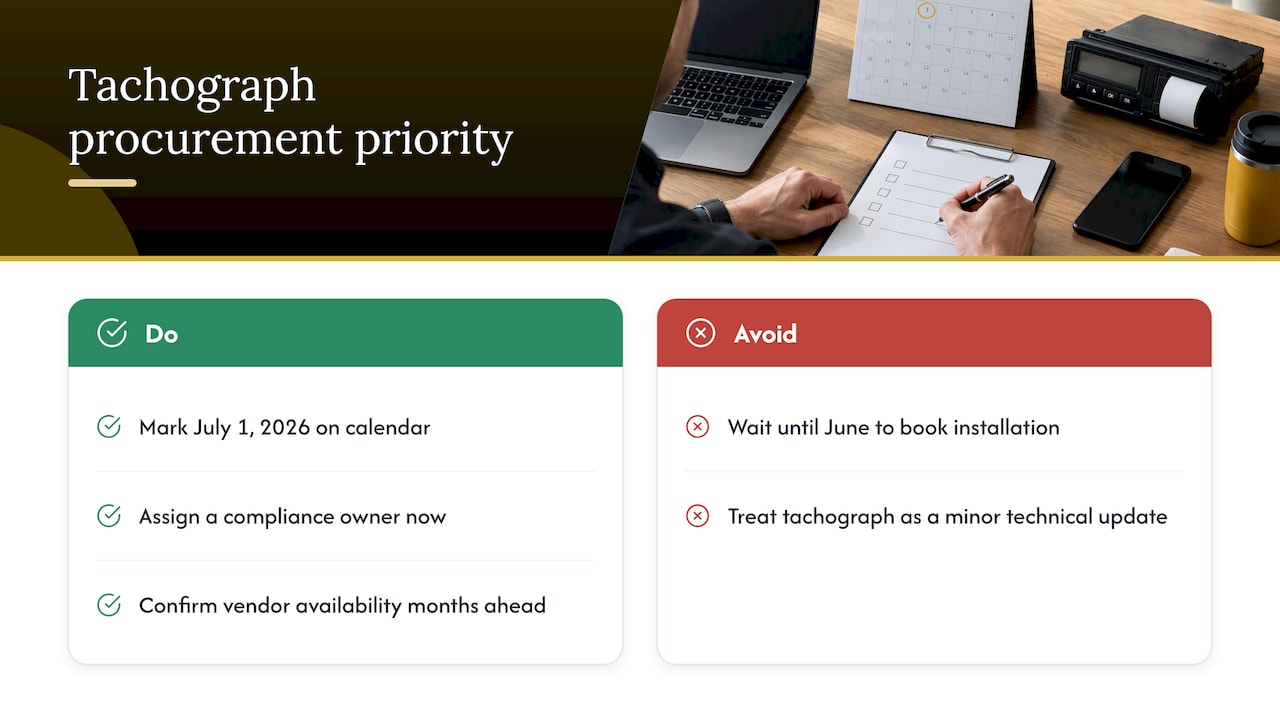
Too many operators treat the tachograph rule as a minor technical update rather than a procurement deadline with a hard date attached. Waiting until June to book installation is the most common and avoidable mistake we expect to see. The smarter move is treating July 1, 2026 the same way you would treat a tax filing deadline: mark it early, assign ownership, and confirm vendor availability months in advance rather than weeks.
If you prioritize one thing from this entire budget exercise, make it the tachograph procurement timeline. Payroll tax math is forgiving of a late fix. Vehicle hardware deadlines are not.
— Erki
A managed alternative to running compliance in-house
Buying, maintaining, and upgrading a compliant fleet is not the only route to getting platform work done. We offer autorent for platform work with flexible usage and insurance options, alongside chauffeur and transfer services for businesses that would rather hand off vehicle ownership entirely.

- Check current rates on our price list before committing to your 2026 budget.
- Explore autorent terms for platform drivers if CAPEX exposure is your main concern.
Get a quote today and compare the numbers against running your own fleet.
This article is general information, not a substitute for advice from a qualified financial advisor. Consult a qualified financial professional about your own circumstances before acting on anything here.
FAQ
What is the employer social tax rate in Estonia for 2026?
The employer social tax rate is 33% of gross wages, paid on top of salary rather than withheld from it. This applies to employees, not to contractors invoicing through their own business or enterprise account.
What is the 2026 tax-free income amount in Estonia?
The general monthly tax-free allowance for 2026 is 700 euros, or 8,400 euros annually, while pension-age taxpayers receive a higher monthly allowance of 776 euros. Employees must apply for this allowance through their employer for it to apply to payroll withholding.
Which vehicles need a smart tachograph by July 2026?
Vehicles with a permissible maximum mass between 2.5 and 3.5 tonnes used for international freight or cabotage may fall under the smart tachograph obligation starting July 1, 2026. Operators should confirm applicability directly against Transpordiamet’s published criteria for their specific vehicle use.
How is platform income declared to EMTA in 2026?
Active platform work income is taxed with employment-related taxes, while passive rental or royalty-type income is taxed only with the 22% income tax rate. Many platform payouts are prefilled into the income declaration when the platform withholds taxes, but workers and employers should verify these entries rather than assume they are complete.
Does renting a vehicle avoid the 2026 tachograph compliance cost?
Renting a compliant vehicle through a provider that handles installation and maintenance can shift that CAPEX burden away from the employer. This is worth comparing against the cost of purchasing and retrofitting a vehicle, especially for operators without existing fleet infrastructure.
Lisa kommentaar