

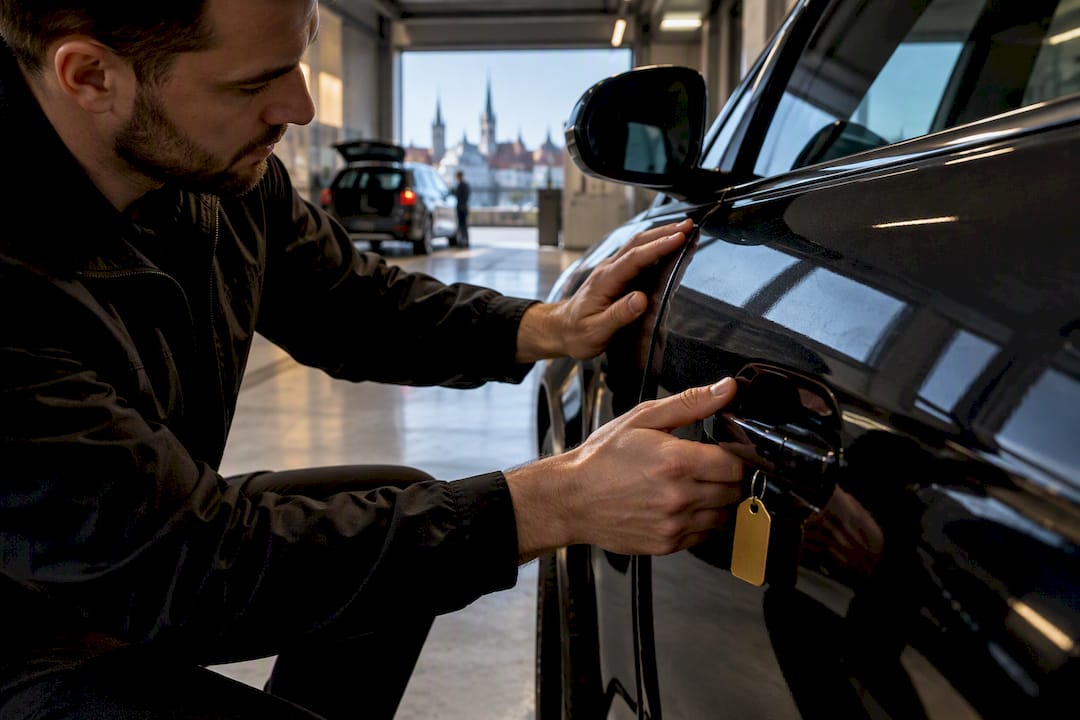
Yes, you can rent a car for Uber in Estonia if the rental contract and insurer explicitly permit platform or taxi use and you meet Uber’s driver rules. You will need a driving license with at least two years’ experience, a vehicle that clears Uber’s document and condition checks, and an insurance policy that names commercial or platform driving. Keep every rental invoice; you will likely need it for tax purposes.
TL;DR:
- Only vehicles that meet Uber Estonia’s model-year, seating, and document standards can be rented for Uber, and insurance must explicitly cover platform use.
- Drivers must hold a valid license issued at least two years prior and provide current, clear identification documents and a provider card if required.
- Rental agreements must explicitly state platform or taxi use and include written insurance confirmation to avoid coverage gaps.
- Operating as an entrepreneur or sole trader allows deduction of rental, fuel, and maintenance costs, but income is taxed as business revenue.
- SolidRide offers rental contracts tailored for platform drivers that specify use terms, insurance, and support document verification before Uber submission.
Содержание
- Quick checklist: documents and vehicle basics to confirm before you rent
- Vehicle requirements Uber sets for cars in Estonia
- Driver eligibility and the documents Uber requires from you
- What to check in an autorent contract for platform driving
- Tax rules for platform income and where rental costs fit
- Step-by-step registration with Uber in Estonia
- SolidRide’s view on renting for platform drivers
- Renting through SolidRide if you drive for Uber
- Sources
- Часто задаваемые вопросы
Quick checklist: documents and vehicle basics to confirm before you rent
Before you call a rental company or start the Uber application, gather the paperwork on both sides of the deal. Missing one item is the most common reason applications stall for weeks instead of days.
- Driver side: ID or passport, valid driving license, service or provider card if your setup requires one, bank account details, and a profile photo that meets Uber’s standards.
- Vehicle side: registration certificate, vehicle card, a valid insurance policy, and a current technical inspection certificate.
- Contract side: written permission for platform or taxi use, an insurance addendum covering that use, a clear deposit amount, mileage terms, and rules on adding a second driver.
Vehicle requirements Uber sets for cars in Estonia
Uber Estonia sorts vehicles into UberX, Comfort, and UberXL, and each tier carries its own model-year and seating rules. A car that qualifies for UberX will not automatically clear the bar for Comfort, so check the specific product you plan to drive on before signing a rental agreement.
Uber’s vehicle requirements page lists document standards alongside the model-year and seat thresholds for each product tier, and it directs drivers to the current vehicle-eligibility list to confirm a specific make and model. That list changes from time to time, so verify your exact car rather than relying on a friend’s approved vehicle.
Beyond age and seating, Uber checks the paperwork attached to the car itself:
- Valid registration certificate matching the vehicle and owner or renter on record.
- A vehicle card, since Uber’s guidance points drivers to apply for one when it is missing.
- Current insurance and a passed technical inspection.
- Four or five working doors, functioning air conditioning and windows, and no visible major damage.
If you are renting rather than buying, ask the rental company to confirm in writing that the specific car on the contract appears on Uber’s current eligibility list. A car that looked fine last year can drop off the list after a model refresh.
Driver eligibility and the documents Uber requires from you
Uber’s core rule for drivers is straightforward: you need a driving license showing at least two years of driving experience, and Uber verifies this against the license issue date rather than taking your word for it. If your license was issued less than two years ago, no rental car or insurance policy will get you approved.
A service or provider card is required for most drivers doing paid passenger transport in Estonia, and the application for one should start before you expect to be driving, not after your first rental payment is due.
- Profile photo: must be current, clear, and show your face without sunglasses or a hat.
- Bank details: needed so Uber can pay out your fares; a mismatch between the name on your account and your ID is a common rejection reason.
- Common upload mistakes: blurry scans, expired documents, and a driving license photo that doesn’t match your current profile photo.
Fix rejections quickly by re-uploading a sharper scan rather than waiting for a manual review, which can add days to the process.
What to check in an autorent contract for platform driving
This is where most new Uber drivers in Estonia get caught out. A standard consumer rental agreement is built around private use, and TTJA’s guidance on autorent warns that a typical policy may not extend to commercial or taxi driving, leaving a real gap in cover if something goes wrong.
Before signing anything, confirm the following:
- The insurer has explicitly confirmed, in writing, that the policy covers taxi or platform driving, not just private trips.
- The rental agreement itself contains an authorized-use clause naming platform work, not a vague “commercial use permitted” line.
- You understand the deposit amount, the monthly fee structure, the mileage allowance, and who pays for fines or accident damage.
- If a second driver will use the same car, that person is registered on the contract and covered by the same insurance terms.
Pro Tip: If a rental company cannot produce written insurer confirmation for platform use, treat that as a red flag rather than a formality; ask for the confirmation before you pay a deposit, not after your first ride.
Watch for vague insurance wording, open-ended liability clauses, or a contract that never mentions platform or taxi use at all. According to TTJA, a written clause shifting liability can clarify who handles a claim, but it does not substitute for actual insurer approval.

Tax rules for platform income and where rental costs fit
Once you start earning through Uber, the Estonian Tax and Customs Board treats regular platform income as business income that must be declared, not as occasional personal earnings.
Drivers face a real tradeoff between two setups, according to EMTA’s guidance on platform income: an entrepreneur account taxes income automatically but does not let you deduct expenses like your car rental, while operating as an OÜ or FIE lets you claim rental, fuel, and maintenance costs against your income.
- Keep every rental invoice, fuel receipt, and insurance document in one dated folder from your first week of driving.
- If you operate as an OÜ or FIE, log private versus business kilometers to support the deductible share of your costs.
- Talk to an accountant once your monthly driving income becomes regular rather than occasional; the right structure depends on your volume and expenses.
A driver renting a car and paying a monthly fee will usually find the expense-deduction route worth exploring once rental costs start adding up. Related pricing patterns for platform rentals are covered in this Uber auto rent pricing breakdown.
Step-by-step registration with Uber in Estonia
Once your documents and rental contract are in order, registration itself is a short online process.
- Create an account on partner.uber.com or through the Uber driver app and enter your contact details.
- Upload your ID or passport, followed by your driving license, vehicle registration, vehicle card, insurance certificate, service card, bank details, and profile photo.
- If the car is rented, attach the rental agreement and the insurer’s written confirmation covering platform use.
- Submit everything for review and expect Uber to follow up if any document is unclear or expired.
Verification times vary, but a clean, high-resolution set of documents submitted in one batch tends to move faster than files added piecemeal over several days.
SolidRide’s view on renting for platform drivers
A rental car built for platform work looks different from a standard consumer rental from the first line of the contract. The insurance has to name taxi or platform use directly, the mileage terms need to assume daily driving rather than weekend trips, and a second driver clause matters more than it does for a family car.
SolidRide’s autorent for platform work is structured around those specifics: contracts that state platform use plainly, insurance arrangements built for that use, and support checking documents before they go to Uber. Drivers renting through a specialist provider tend to spend less time chasing missing paperwork after the fact.
— Эрки
Renting through SolidRide if you drive for Uber
Many rental agreements leave platform use as an afterthought, buried in fine print or missing from the insurance entirely. SolidRide’s autorent Tallinnas platvormitööks is set up the other way around, with platform driving built into the contract from the start.

- Contracts state platform and taxi use explicitly, so you are not guessing what your insurer will actually cover.
- Deposit terms, mileage rules, and multi-driver options are laid out before you sign, not discovered after an accident.
- Onboarding support helps you check that your documents match what Uber expects before you submit them.
Check the SolidRide autorent page for current terms, or review general SolidRide pricing before you book, and ask for written insurance confirmation as part of the process.
Sources
- Uber: Driver requirements – Estonia
- EMTA: Platform income taxation guidance (Estonia)
- TTJA: Autorent guidance
Часто задаваемые вопросы
Can I use any rental car to drive for Uber in Estonia?
No, only if the vehicle meets Uber’s model-year, seating, and document standards on its vehicle requirements page, and the rental contract and insurance explicitly permit platform or taxi use. A car that is fine for private rental can still fail Uber’s eligibility check or lack the right insurance coverage.
Do I need two years of driving experience to drive for Uber?
Yes, Uber requires drivers in Estonia to hold a license showing at least two years of experience, verified against your license issue date. There is no exception for a shorter history, regardless of the car you rent.
How does EMTA treat income earned through Uber?
Regular platform income is generally treated as business income that must be declared, according to EMTA’s guidance. Drivers choose between an entrepreneur account, which taxes income automatically without expense deductions, or an OÜ or FIE structure, which allows deducting rental and other business costs.
Will a standard rental insurance policy cover Uber driving?
Not necessarily. TTJA’s autorent guidance warns that standard consumer rental policies often don’t extend to taxi or platform driving, so you need written insurer confirmation or a specific rideshare addendum before you start.
What does SolidRide’s autorent for platform drivers include?
SolidRide’s autorent Tallinnas platvormitööks is built with contract terms that name platform use explicitly, along with deposit, mileage, and multi-driver terms disclosed upfront. Pricing and current availability are listed on SolidRide’s pricing page.
Добавить комментарий