


TL;DR:
- Ein kundenorientierter Transferservice gewährleistet den gesamten Kundenprozess von der Bestätigung vor Reiseantritt bis hin zur Gepäckbetreuung und wird vollständig vom Anbieter selbst abgewickelt. Er bietet Datenschutz, Professionalität und einklagbare SLAs und gewährleistet so pünktliche Ankünfte und einen hochwertigen Service. Solidride setzt dieses Modell in Estland mit geprüften Fahrern, automatischer Flugverfolgung und detaillierten Verträgen um.
Ein kundenorientierter Transferdienst ist eine vertraglich vereinbarte Premium-Beförderungsleistung, bei der der Anbieter jedes Mal die gesamte Kundenreise in eigener Regie abwickelt – von der Bestätigung vor Reiseantritt über die Flugverfolgung in Echtzeit bis hin zur Begrüßung am Ankunftsort und der Unterstützung beim Gepäcktransport. Solidride, das in ganz Estland tätig ist, basiert genau auf diesem Modell: Die Fahrer werden sorgfältig geprüft, die Fahrzeuge werden nach Marke und Klasse festgelegt, und der Dienst läuft rund um die Uhr gemäß schriftlich festgelegten Lieferbedingungen. Es handelt sich hierbei nicht um ein Taxi, das man am Straßenrand heranwinkt.
Drei Dinge heben es sofort von anderen ab:
- Datenschutz und Planbarkeit: Schon vor der Landung kennen Sie den Namen des Fahrers, das Fahrzeugmodell und die Richtlinien zur Wartezeit.
- Repräsentativität der Marke: Der Chauffeur ist der erste Eindruck, den Ihr Unternehmen bei einem VIP-Gast hinterlässt.
- Rechenschaftspflicht: Eine schriftliche Dienstleistungsvereinbarung bedeutet, dass die zu erbringenden Leistungen einklagbar sind und nicht nur als Zielvorstellung gelten.
In den folgenden Abschnitten wird erläutert, wodurch sich diese Dienstleistungen auszeichnen, was in einem Vertrag festgehalten werden sollte, wie man einen Anbieter überprüft und wie die Preisgestaltung für Unternehmenskunden aussieht.
Inhaltsverzeichnis
- Wodurch unterscheidet sich ein kundenorientierter Transferdienst von einer normalen Fahrt?
- Warum entscheiden sich Geschäftsreisende und Führungskräfte für dieses Modell?
- Was sollte Ihre Buchungsbestätigung oder Ihr SLA eigentlich enthalten?
- Inwiefern unterscheidet sich das vom Kundenservice oder von Fahrdienstvermittlungsdiensten?
- Welche Fragen sollten Sie stellen, bevor Sie einen Anbieter buchen?
- Wie funktionieren die Buchungsfristen und die Preisgestaltung für Firmenkunden?
- Welche Vertrauenssignale und Dokumente sollte Ihnen ein seriöser Anbieter vorlegen?
- Die wichtigsten Erkenntnisse
- Der Aspekt, den die meisten gewerblichen Käufer übersehen
- Solidride deckt genau das ab, was in diesem Artikel beschrieben wird
- Quellen und weiterführende Literatur
Wodurch unterscheidet sich ein kundenorientierter Transferdienst von einer normalen Fahrt?
Die kurze Antwort: Die Verantwortung für die vertraglich vereinbarten Leistungen. Eine Fahrdienst-App schickt einfach denjenigen los, der gerade in der Nähe ist. Ein kundenorientierter Transferdienstleister garantiert hingegen die Fahrzeugklasse, das Erscheinungsbild des Chauffeurs und genau die Servicebedingungen, die Sie schriftlich vereinbart haben.
Besondere Merkmale, die Premium-Transfers auszeichnen:
- Professionalität der Chauffeure: Die Fahrer werden aufgrund ihrer emotionalen Intelligenz und ihrer Kommunikationsfähigkeit ausgewählt, nicht nur wegen ihrer Navigationsfähigkeiten. Sie bewältigen die Ankunft von Führungskräften in Stresssituationen, ohne dies zu zeigen.
- Leistungsumfang des SLA: Wartezeitfenster, Stornierungsbedingungen und Zusagen bezüglich Ersatzfahrzeugen werden schriftlich festgehalten und unterzeichnet.
- Proaktive Kommunikation: Flugverspätungen lösen automatische Umbuchungen aus – es kommt nicht zu einem hektischen Nachholversuch im Nachhinein.
- Erreichbarkeit rund um die Uhr: Ein namentlich benannter Ansprechpartner für Eskalationen, keine Chatbot-Warteschlange.
- Fahrzeugstandards: Bestimmte Marke und Modell, in einwandfreiem Zustand und mit Ausstattungsmerkmalen ausgestattet.
- Meet-and-Greet: Der Fahrer hält ein Namensschild hoch, hilft beim Gepäck und bestätigt das Ziel, bevor die Fahrt beginnt.
Der Anbieter kümmert sich vollständig um die Logistik. Der Reisende muss lediglich aus dem Flugzeug steigen.
Profi-Tipp: Fragen Sie jeden potenziellen Anbieter, wie er mit einer Flugverspätung um 2 Uhr morgens umgeht. Wenn die Antwort darin besteht, dass der Reisende eine Support-Hotline anrufen muss, handelt es sich um ein Kundensupport-Modell, nicht um ein kundenorientiertes Modell.

Warum entscheiden sich Geschäftsreisende und Führungskräfte für dieses Modell?
Denn durch die Verlagerung der Terminplanung und Nachverfolgung auf den Anbieter können Reisende arbeiten, sich ausruhen oder sich vorbereiten, anstatt sich um die Logistik kümmern zu müssen. Das ist das zentrale Argument für den ROI aus Sicht der Reisemanager.
Konkrete Vorteile nach Anwendungsfall:
- Geschäftsreisen: Der Manager landet, passiert die Zollkontrolle und wird von einem Fahrer erwartet. Keine App, keine Spitzenpreise, kein Rätselraten, welche weiße Limousine die richtige ist.
- VIP-Empfang: Der erste Eindruck, den ein Kunde oder Vorstandsmitglied von Ihrem Unternehmen gewinnt, ist ein gelassener, professioneller Fahrer in einem gepflegten Mercedes-Benz. Das ist wichtig.
- Referenten bei Veranstaltungen: Dank festgelegter Abholzeiten und direkter Ansprechpartner für dringende Fälle bleibt ein Referent niemals wegen einer Flugverspätung gestrandet.
- Gruppentransfers: Eine einzige Buchung umfasst mehrere Reisende mit aufeinander abgestimmten Abholzeiten – nicht fünf separate Fahrtanfragen.
Die Produktivitätsvorteile des Flughafentransfers sind unbestreitbar: Eine ungestörte Vorbereitungszeit in einem ruhigen Fahrzeug ist besser, als in einem Taxi zu sitzen und zu versuchen, trotz des Straßenlärms an einem Telefonat teilzunehmen. Für Reisemanager sind die messbaren Ergebnisse die pünktliche Ankunft und keine logistischen Anrufe des Reisenden während der Reise.
Was sollte Ihre Buchungsbestätigung oder Ihr SLA eigentlich enthalten?
Eine schriftliche Vereinbarung ist das, was einen Premium-Transfer von einem hochpreisigen Taxi unterscheidet. Folgendes sollten Sie verlangen:
- Fahrzeugmarke, -modell und -klasse werden bei der Buchung bestätigt.
- Der Name und die Telefonnummer des Fahrers werden vor der Abfahrt mitgeteilt.
- Angabe der Sprachkenntnisse (besonders relevant für internationale VIP-Ankünfte in Estland).
- Standard-Kleiderordnung (Anzug, Markenuniform oder Ähnliches).
- Wartezeitregelung: Wie lange der Fahrer nach der Landung seine Position hält und was eine Umbuchung auslöst.
- Stornierungs- und Änderungsbedingungen in verständlicher Sprache.
- Die Gepäckhilfe ist bestätigt und im Preis inbegriffen, sie ist nicht optional.
- Protokoll zur Flugüberwachung: Automatische Nachverfolgung, keine manuellen Check-ins.
- 24/7-Eskalationskontakt: Eine namentlich benannte Person oder eine Direktdurchwahl, kein allgemeiner Posteingang.
- Angaben zur gewerblichen Versicherung: Versicherungsdauer, Name des Versicherers und Haftpflichtversicherung für Fahrgäste.
Was die Gepäckhilfe im Einzelnen betrifft, sollten Sie klären, ob der Fahrer das Gepäck vom Gepäckband zum Fahrzeug oder nur vom Bordstein zum Kofferraum transportiert. Diese Unterscheidung ist für Reisende mit eingeschränkter Mobilität oder schwerem Gepäck von Bedeutung.
Profi-Tipp: Der einzige SLA-Punkt, der eine zuverlässige und konsistente Leistungserbringung am sichersten gewährleistet, ist das Flugüberwachungsprotokoll. Ein Anbieter mit automatisierter Nachverfolgung verfügt über die Infrastruktur, um Probleme zu erkennen, bevor sie den Reisenden erreichen. Ein Anbieter, der „manuell nachprüft“, verfügt nicht darüber.
Anbieter, die automatisierte und personalisierte Kontaktpunkte im Rahmen der SLA für die Bereitstellung nachverfolgen, anstatt eine separate Support-Warteschlange zu nutzen, sind strukturell besser in der Lage, Ausfälle zu verhindern.
Inwiefern unterscheidet sich das vom Kundenservice oder von Fahrdienstvermittlungsdiensten?
Diese drei Modelle weisen eine grundlegend unterschiedliche Funktionsweise auf:
| Dimension | Kundenbezogene Überweisung | Kundensupport | Fahrdienstvermittlung |
|---|---|---|---|
| Trigger | Vertraglich vereinbarter Umfang, proaktiv | Reaktives Ticket | Anfrage auf Abruf |
| Eigentumsverhältnisse | Der Anbieter ist für den gesamten Prozess verantwortlich | Behebt gemeldete Probleme | Der Fahrer nimmt an oder lehnt ab |
| Fahrzeuggarantie | Ja, schriftlich festgelegt | Nicht zutreffend | Nun |
| Meet-and-Greet | Standard | Nicht zutreffend | Nun |
| Rechnungsstellung für Unternehmen | Ja | Varies | Limited |
| Flugüberwachung | Ja, automatisiert | Nun | Nun |
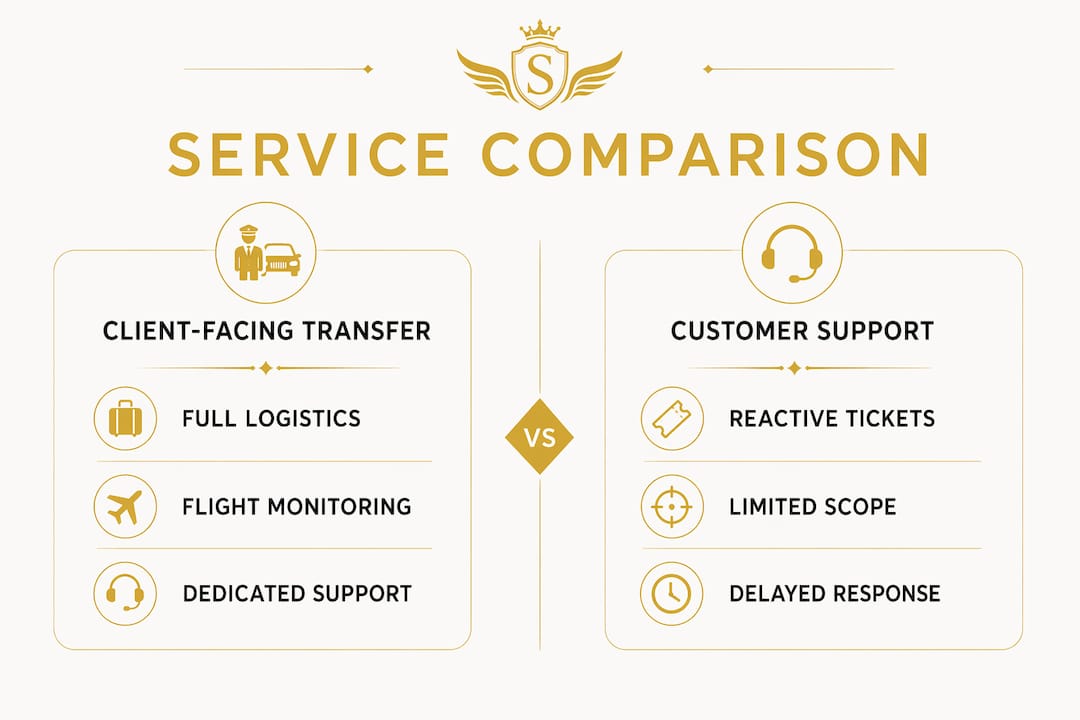
Der Kundenservice ist für den vertraglich vereinbarten Leistungsumfang zuständig und arbeitet beziehungsorientiert. Der Kundensupport bearbeitet Anfragen, wenn Probleme auftreten. Bei Fahrdienstvermittlungen erfolgt die Vermittlung nach bestem Bemühen, ohne vertragliche Verpflichtungen hinsichtlich der Fahrzeugklasse oder des Erscheinungsbilds des Fahrers.
Betrachten wir einmal das Szenario eines verspäteten Fluges. Ein kundenorientierter Anbieter passt die Abholzeit automatisch an, und der Fahrer wartet bereits, wenn der Reisende das Terminal verlässt. Bei einem Kundensupport-Modell ruft der Reisende eine Hotline an und wartet auf eine Lösung. Eine Fahrdienst-App zeigt Spitzenpreise und einen unbekannten Fahrer in einem nicht näher bezeichneten Fahrzeug an.
Welche Fragen sollten Sie stellen, bevor Sie einen Anbieter buchen?
Verwenden Sie diese Checkliste, bevor Sie etwas unterschreiben:
- Könnten Sie uns bitte eine Kopie Ihres gewerblichen Versicherungsnachweises, einschließlich der Deckungssummen für die Fahrgast-Haftpflicht, zur Verfügung stellen?
- Wie werden Fahrer überprüft? Hintergrundüberprüfungen, Überprüfung der Fahrerlaubnis – und wie oft?
- Liegt die SLA in schriftlicher Form vor und sind darin die Fahrzeugklasse, die Wartezeit und die Stornierungsbedingungen festgelegt?
- Wie funktioniert Ihre Flugüberwachung – automatisch oder manuell?
- Wer ist der benannte Ansprechpartner für Eskalationen bei Problemen außerhalb der Geschäftszeiten?
Warnsignale, auf die man achten sollte:
- Kein schriftliches SLA oder vage Formulierungen wie „Wir geben unser Bestes“.
- Es ist nicht möglich, den Fahrer zu benennen oder das Fahrzeug vor der Fahrt zu bestätigen.
- Vage oder ausweichende Antworten zum Versicherungsschutz.
- Keine Echtzeit-Tracking-Funktion.
- Es gibt keine 24/7-Erreichbarkeit außer über eine allgemeine E-Mail-Adresse.
Nutzen Sie die Checkliste für die Buchung von Hochpreis-Überweisungen, um diese Punkte systematisch durchzugehen, bevor Sie einen Lieferanten freigeben.
Wie funktionieren die Buchungsfristen und die Preisgestaltung für Firmenkunden?
Die Preismodelle variieren je nach Umfang:
- Festpreis-Transfers: Ein einheitlicher Preis für eine festgelegte Strecke, unabhängig vom Verkehrsaufkommen. Am häufigsten bei Flughafentransfers.
- Stundencharter: Bei Routen mit mehreren Zwischenstopps oder ohne festgelegtes Endziel erfolgt die Abrechnung stundenweise.
- Preise für Projekte oder Veranstaltungen: Die Preise werden pro Auftrag für Konferenzen, Delegationen oder mehrtägige Programme angegeben.
- Tarife für Firmenkunden: Ausgehandelte Tarife mit Sammelabrechnung, oft mit Mengenrabatten.
Angaben zur Vorlaufzeit:
- Buchungen am selben Tag: Bei den meisten Anbietern möglich, allerdings können die Auswahl an Fahrzeugklassen und Fahrern eingeschränkt sein.
- 24–48 Stunden: Standardzeitraum für die garantierte Verfügbarkeit eines bestimmten Fahrzeugs und Fahrers.
- Buchungen für Unternehmen oder Veranstaltungen: Mindestens zwei Wochen im Voraus für große Gruppen, VIP-Programme oder die Koordination mehrerer Fahrzeuge.
Die Preisgestaltung hängt von der Fahrzeugklasse, den Gebühren für die Abholung am Flughafen, Zuschlägen für Fahrten außerhalb der Geschäftszeiten sowie davon ab, ob die Service-Level-Vereinbarung (SLA) eine Ersatzfahrzeuggarantie beinhaltet. Bei Sammelbuchungen und Unternehmensverträgen sinken in der Regel die Kosten pro Fahrt. Für eine Übersicht über die verschiedenen Arten von VIP-Transportdiensten und deren jeweilige Kosten lohnt es sich, diese Seite vor den Preisverhandlungen durchzulesen.
Welche Vertrauenssignale und Dokumente sollte Ihnen ein seriöser Anbieter vorlegen?
Ein seriöser Anbieter wird nicht zögern, diese Informationen weiterzugeben:
- Erklärung zur Hintergrundüberprüfung von Fahrern: Häufigkeit, Umfang (Strafregister, Führerschein) und wer die Überprüfung durchführt.
- Versicherungsnachweis für gewerbliche Versicherungen: Versicherungszeitraum, Name des Versicherers und Haftungshöchstbetrag für Fahrgäste.
- Schriftliche SLA oder Buchungsbedingungen: Vor der ersten Fahrt unterzeichnet oder digital bestätigt.
- Fahrzeugwartungsprotokolle oder Normenliste: Marke, Modell und Inspektionsintervall.
- Richtlinie zur sicheren Zahlungsabwicklung und Datenverarbeitung: Wie Reisedaten gespeichert werden und wer Zugriff darauf hat.
| Dokument | Was ist zu überprüfen? |
|---|---|
| Versicherungsbescheinigung | Versicherung aktiv, Insassenhaftpflicht eingeschlossen, namentlich genannter Versicherer |
| Erklärung zur Überprüfung der Fahrer | Umfang und Aktualität der Hintergrundüberprüfung |
| SLA oder Buchungsbedingungen | Wartezeit, Stornierung, Fahrzeugklasse, Ansprechpartner bei Eskalationen |
| Liste der Fahrzeugnormen | Marke/Modell bestätigt, Sauberkeits- und Ausstattungsstandard |
| Richtlinie zur Datenverarbeitung | Aufbewahrung von Reisendendaten und Zugriffskontrollen |
Das Betriebsmodell von Solidride deckt alle fünf Aspekte ab: Die Standards für den sicheren Personentransport sind dokumentiert, die Fahrer werden überprüft, und die 24/7-Erreichbarkeit ist in jeder Buchung integriert. Mehrsprachige Fahrer gehen von sich aus auf Datenschutzwünsche von VIPs ein.
Dieser Artikel enthält allgemeine Informationen zur Reiseplanung. Bitte erkundigen Sie sich bei einem qualifizierten Fachmann oder der zuständigen Behörde nach den aktuellen Versicherungsanforderungen und örtlichen Vorschriften für Ihre konkrete Situation.
Die wichtigsten Erkenntnisse
Ein kundenorientierter Transferservice ist ein vertraglich vereinbartes Modell, bei dem der Anbieter alle logistischen Schritte übernimmt – von der Flugüberwachung bis zur Gepäckbetreuung –, sodass der Reisende sich zu keinem Zeitpunkt selbst um die Reise kümmern muss.
| Punkt | Details |
|---|---|
| Kernbegriff | Eine vertraglich vereinbarte Dienstleistung, bei der der Anbieter die gesamte Kundenreise im Blick hat, nicht nur die Fahrt. |
| Top-SLA-Artikel | Die Angabe der Fahrzeugklasse, des Fahrernamens, des Flugüberwachungsprotokolls und eines rund um die Uhr erreichbaren Eskalationsansprechpartners ist schriftlich erforderlich. |
| Wichtigste Vertrauenssignale | Eine Bescheinigung über eine gewerbliche Versicherung, Führungszeugnisse der Fahrer und ein unterzeichneter Dienstleistungsvertrag. |
| Wann sollte man sich dafür entscheiden? | Entscheiden Sie sich für einen kundenorientierten Transfer anstelle eines Fahrdienstes, wenn Fahrzeugklasse, Privatsphäre oder pünktliche Ankunft unverzichtbar sind. |
| Solidride | Solidride betreibt dieses Modell in Estland mit Mercedes-Benz-Fahrzeugen, automatischer Fahrtenverfolgung und schriftlich festgelegten Buchungsbedingungen. |
Der Aspekt, den die meisten gewerblichen Käufer übersehen
Bei der Bewertung von Transferanbietern neigt man instinktiv dazu, Preise und Fahrzeugfotos zu vergleichen. Dabei wird jedoch das eigentliche Unterscheidungsmerkmal übersehen. Was Sie kaufen, ist kein Auto. Sie kaufen die Bereitschaft des Anbieters, sich um das Problem zu kümmern, bevor es überhaupt zu einem Problem wird.
Anbieter, die den Kundenkontakt als reaktiven Support betrachten und Probleme erst beheben, nachdem der Fahrgast angerufen hat, sind mit diesem Modell bereits gescheitert. Der operative Schwerpunkt muss auf den Einweisungen der Fahrer und den Fahrzeugkontrollen vor jedem Auftrag liegen, nicht auf einer Support-Warteschlange, die Beschwerden im Nachhinein bearbeitet. Denn genau dort treten die meisten Fehler tatsächlich auf: nicht im Buchungssystem, sondern in den 20 Minuten vor der Abholung.
Für Unternehmenskunden, die SLAs aushandeln, ist eine Ersatzfahrzeuggarantie mit einem festgelegten Reaktionszeitfenster die sinnvollste Klausel, auf die sie bestehen sollten. An diesem einen Punkt lässt sich erkennen, ob der Anbieter über die nötige operative Tiefe verfügt, um seine Versprechen einzuhalten, oder ob er nur Vertrauen verkauft, das er nicht einlösen kann.
Solidride deckt genau das ab, was in diesem Artikel beschrieben wird
Wenn Ihr Unternehmen einen Transfer in Estland benötigt, der alle hier genannten Standards erfüllt, ist Solidride die ideale Lösung. Mercedes-Benz-Fahrzeuge, geprüfte und mehrsprachige Fahrer, automatische Flugverfolgung und schriftlich festgelegte Buchungsbedingungen gehören zum Standard und sind keine Zusatzleistungen. Firmenkunden profitieren von einer Sammelrechnung und einem festen Ansprechpartner für jede Fahrt.

Ganz gleich, ob Sie die Ankunft eines einzelnen VIPs oder ein mehrtägiges Delegationsprogramm koordinieren – der Buchungsprozess ist unkompliziert. Nutzen Sie die Checkliste für die Buchung von Premium-Transfers, um Ihre Anforderungen zu bestätigen, und buchen Sie dann direkt bei Solidride, um noch vor der Landung Ihres Reisenden ein bestätigtes Fahrzeug, einen Fahrer und eine SLA zu erhalten.
Quellen und weiterführende Literatur
- Investopedia: Kundenorientiert – Definition des kundenorientierten Geschäftsmodells und dessen Anwendung bei der Erbringung von Premium-Dienstleistungen.
- Pipedrive: Was versteht man unter Kundenservice? – Erläutert, wie sich der Kundenservice vom Kundensupport unterscheidet und warum proaktive Kontaktpunkte wichtig sind.
- eesel AI: Client Services vs. Customer Success – Erläutert die operativen und messbaren Unterschiede zwischen Client Services, Customer Success und Support.
- Indeed: Kompetenzen im Umgang mit Kunden – Behandelt die Kompetenzen und Verhaltensweisen, die für hochwertige Positionen mit Kundenkontakt charakteristisch sind.
- Vibe: Kompetenzen im Umgang mit Kunden und Beispiele – Eine praxisorientierte Perspektive auf emotionale Intelligenz und Standards für Chauffeure.
- Gladly: Kundenorientierte Rollen – Erläutert, warum Personalisierung und aktives Zuhören zu Wiederholungskäufen bei Premium-Dienstleistungen führen.
- Solidride: Was ist ein privater Transferservice? – Solidrides eigene Erläuterung zu den Standards für private Transfers und den Erwartungen bei der Buchung.
- Solidride: Leitfaden zur Sicherheit beim Personentransport – Beschreibt die Sicherheitsstandards, die Überprüfung der Fahrer und den Versicherungsansatz von Solidride.
- Solidride: Checkliste für die Buchung von High-End-Transfers – Schritt-für-Schritt-Checkliste für Reisemanager, die eine Buchung für einen Premium-Transfer abschließen.
- eSIM Estonia Unlimited Day Pass – Eine Mobilfunklösung für VIP-Reisende, die in Estland ankommen und Datenvolumen ohne lokale SIM-Karte benötigen.
Einen Kommentar hinzufügen