


Yes, you can rent a car through Forus Autolevi, Bolt, or Uber’s rental programs and use it for platform driving in Estonia, but only if the listing explicitly permits commercial or ride-hailing use. Before booking, check the permitted-use clause, the deposit and deductible terms, and the insurance coverage stated in the listing or owner message. Full terms sit inside the app’s rental agreement screen or in a direct message from the car owner, never assume they match a previous rental.
TL;DR:
- Confirm in writing that the rental listing explicitly allows platform or ride-hailing use, as some owners restrict it to personal use only.
- Verify the deposit and deductible amounts beforehand, noting that no upfront deposit does not mean damage is free, as deductibles may still apply after claims.
- Check for mileage caps and geographic restrictions, especially if crossing borders or exceeding daily limits, since these often catch drivers unprepared.
- Ensure your driving license, ID, age, and payment card meet the platform and owner requirements, with extra scrutiny for non-EU licenses or younger drivers.
- Obtain written confirmation of insurance coverage, including whether kasko is active during your rental period, and clarify the deductible before driving.
Table of Contents
- Key rental terms drivers should check first
- Driver eligibility and documents you must bring
- Pricing and extra fees: what drivers pay beyond the headline rent
- Insurance and liability: what coverage you get and what you owe
- Booking, pickup and return: step-by-step for smooth rentals
- Platform-specific notes for Forus, Bolt and Uber drivers
- How a professional transfer provider prepares for platform-driver rentals
- Age limits and driving experience beyond the basics
- Vehicle breakdown or accident handling procedures
- Quick recommendations for drivers renting for platform work
- SolidRide as a professional alternative for platform-related transport needs
- Sources
- FAQ
Key rental terms drivers should check first
A rental agreement that looks standard can still block platform driving if one clause says otherwise. Before you commit to a car, scan the contract for four things that decide whether the deal actually works for Bolt, Uber, or private hire.
The permitted-use clause matters most. Some Forus Autolevi owners list their cars for personal use only, while others explicitly allow or even market toward ride-hailing drivers, so the wording in the listing overrides any general assumption about the platform. Deposit and deductible mechanics come next: some listings run without an upfront deposit, according to local reporting on Forus Autolevi, but that does not mean damage is free. A deductible or card hold usually still applies once a claim is filed.
- Permitted use: confirm platform or commercial driving is allowed in writing, not implied.
- Deposit and deductible: know the exact amount held and what triggers a charge.
- Mileage and zones: check for daily kilometer caps and any geographic limits.
- Damage reporting window: find out how many hours you have to report an incident after it happens.
Mileage limits and usage zones catch drivers off guard more often than fees do. A car capped at a modest daily distance will not survive a full Bolt shift, and some owners restrict driving to Estonia only, which matters if you occasionally cross into Latvia. Finally, look at the damage reporting window: most agreements require notification within a short, defined period, and missing that window can shift liability entirely onto you regardless of fault.
Driver eligibility and documents you must bring
Estonian rental owners and platforms both check paperwork before handing over keys, and the requirements are consistent enough to prepare for in advance.
- Bring a valid driving license that matches your vehicle category. EU and EEA licenses are accepted without extra paperwork, while non-EU license holders sometimes need an accompanying international driving permit depending on the owner’s policy.
- Carry a government-issued ID card or passport alongside your license, since owners typically photograph both during handover.
- Meet the minimum age requirement, which commonly sits around 21 for standard rentals; younger drivers with less experience often face a young-driver surcharge or are declined outright.
- Have an active credit or debit card in your own name for the security hold. Prepaid cards and cards under someone else’s name are usually rejected because they cannot support a deposit freeze.
- Expect a background or platform verification step, especially for Bolt and Uber rental programs, which check driving history and platform standing before approving a car for ride-hailing use.
If you lack a suitable card, some owners accept a larger cash deposit instead, though this is decided case by case and should be confirmed before you travel to pick up the car. Major rental providers generally treat a valid license, an age minimum, and a payment card as the non-negotiable baseline, and Estonian peer-to-peer listings follow that same pattern even when specific numbers vary by owner.
Pricing and extra fees: what drivers pay beyond the headline rent
The advertised daily or hourly rate is only the starting number. Base rent structures vary: some Forus listings price by the day, others by the week with a lower effective rate, and a few owners offer hourly blocks for short-term testing before a longer commitment.
Fuel policy is where many drivers lose money without realizing it. Most agreements expect the car returned with the same fuel level it had at pickup, and returning it emptier triggers a refueling surcharge that is almost always higher than pump price. The simplest way to avoid it is to photograph the fuel gauge at both ends of the rental and keep the receipt from your last fill-up.
- Base rent: daily or weekly pricing, sometimes with a lower weekly rate per day.
- Fuel surcharge: charged when the car is returned below the agreed level.
- Waiting and late-return fees: applied per hour or per fixed block past the agreed return time.
- Cleaning and administrative fees: charged when the car is returned visibly dirty or with paperwork incomplete.
Peer-to-peer rental listings that advertise “no deposit” often still apply deductibles once a claim is filed, according to reporting on Forus Autolevi, which means the absence of an upfront hold is not the same as free coverage. Damage deductibles work by capping your maximum liability for a claim while the insurer covers the rest, and any card hold or escrow tied to the rental is typically released within a few days of a clean return once the owner confirms no issues. For a closer look at how these terms play out specifically on Forus-related bookings, see this breakdown of Forus auto rent pricing and conditions.
Insurance and liability: what coverage you get and what you owe
Estonian peer-to-peer rentals generally separate two layers of protection, and knowing the difference matters more than any other line in the contract. Third-party liability covers damage you cause to other people or their property, and it is mandatory on every registered vehicle in Estonia. Collision or comprehensive coverage, known locally as kasko, is what protects the rental car itself, and its presence during your rental period depends entirely on the listing.
Local coverage of Forus Autolevi notes that platform-provided kasko is often included during the rental period, but “often” is not “always,” so verifying the specific listing before booking protects you from a costly surprise.
- Confirm kasko is active for your exact rental dates, not just generally advertised for the platform.
- Ask what the deductible is if a kasko claim is filed, since this figure varies by owner and vehicle.
- Understand your on-scene obligations: most agreements expect a police report for any collision, plus timestamped photos of the damage.
- Know your claim reporting deadline, which is often measured in hours rather than days.
Pro Tip: Ask the owner to confirm insurance coverage in a written message before you pick up the car, not verbally at handover, so you have a record if a dispute comes up later.
When a listing is vague about coverage, request written confirmation before paying anything. A short message asking whether kasko is active and what the deductible amount is takes a minute to send and can save hundreds of euros in a dispute.
Booking, pickup and return: step-by-step for smooth rentals
A clean rental experience comes down to documentation at three points: before you drive off, during the rental, and at return. Skipping any of them is what turns a minor scratch into a drawn-out dispute.
- Photograph the entire car before driving away, including every panel, the wheels, the interior, and the fuel gauge, with your phone’s timestamp visible in at least one shot.
- Get permitted use and insurance confirmed in writing, either through the app’s messaging system or a direct message from the owner, before you start earning on any platform.
- Track fuel and mileage throughout the rental so you are not guessing at return time whether you are within the agreed limits.
- Return the car at the agreed fuel level and time, and walk through the exterior with the owner or their representative for a joint inspection.
- Request the final damage report immediately if the owner flags anything, and compare it against your pickup photos on the spot rather than after you have left.
- Escalate through the platform’s support channel if a charge appears after return that your photos contradict, since most apps have a formal dispute process that pauses the charge while it is reviewed.
Booking lead time also affects how much flexibility you have to negotiate terms. Reserving further in advance gives you more room to ask questions before committing, a principle that holds for driver rental bookings as much as it does for standard transfer bookings.
Platform-specific notes for Forus, Bolt and Uber drivers
Each platform layers its own requirements on top of the base rental agreement, and mixing them up is a common mistake.
- Forus Autolevi operates as a peer-to-peer marketplace with a large regional fleet, and some listings skip the deposit entirely while others require one, so read each listing individually rather than assuming a platform-wide policy.
- Bolt runs its own rental program with separate registration steps beyond the car rental itself, and drivers should confirm whether the platform requires additional documentation before a rented car counts as eligible; a detailed look at Bolt driver rental conditions covers this in full.
- Uber likewise expects drivers to meet its own onboarding checks independent of the rental agreement, and a rented car that satisfies the owner’s terms will not automatically satisfy Uber’s driver requirements; see this guide to Uber rental pricing and terms for specifics.
- Owner restrictions commonly include time-of-day limits, bans on airport pickups without prior approval, or a requirement that you carry proof of platform registration in the car at all times.
How a professional transfer provider prepares for platform-driver rentals
Watching how a professional Estonian transfer operator handles vehicle readiness gives platform drivers a useful standard to hold rental owners to. Before any handover, a professional operator confirms insurance is active, checks the vehicle is clean inside and out, verifies trunk space matches the job, and prepares for any special requests like a child seat.
- Confirm insurance status in writing before the vehicle leaves the lot.
- Inspect cleanliness and trunk space against what the next job actually requires.
- Set clear waiting-fee terms upfront rather than discovering them after a delay.
- Keep a direct contact line open for questions that come up mid-rental.
Pro Tip: Send the owner a short message before booking: “Can you confirm kasko is active for these dates?”, “Is platform or ride-hailing use explicitly permitted in this listing?”, and “What is the deductible if a claim is filed?” Three clear questions in writing protect you far better than a verbal assurance.
SolidRide’s own platform-driver rental page reflects the same discipline: clear vehicle terms, straightforward pricing, and confirmed availability before a driver ever gets behind the wheel.
Age limits and driving experience beyond the basics
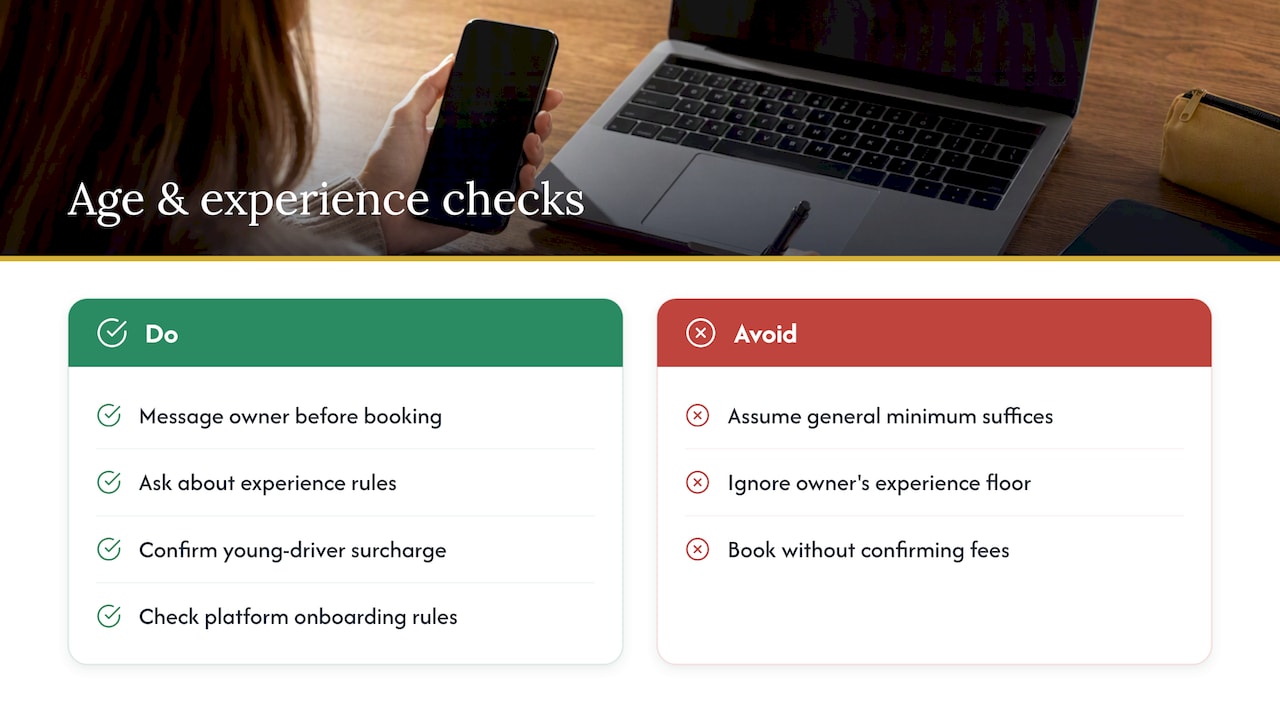
Meeting the general minimum age is not the same as meeting a specific owner’s or platform’s stricter bar. Many Forus Autolevi listings set their own age floor above the general minimum, particularly for higher-value vehicles, and some owners add a young-driver surcharge for anyone under a certain age even if they technically qualify to rent.
Driving experience matters just as much as age on paper. Owners renting to platform drivers often prefer a license held for at least a year or two, since a longer history signals fewer early mistakes behind the wheel. Bolt and Uber apply their own separate experience checks as part of driver onboarding, independent of whatever the car rental agreement requires, so a driver who just passed a test may satisfy the rental owner but still fail the platform’s own driver approval.
If you are a newer driver, expect to encounter at least one owner or platform step that asks more of you than the baseline. The practical move is to ask directly, before booking, whether the listing has an experience requirement beyond the stated age minimum, since this detail is rarely spelled out clearly in the listing text itself and often only surfaces when you message the owner.
Vehicle breakdown or accident handling procedures
What you do in the first few minutes after a breakdown or accident affects both your safety and your liability under the rental agreement. For any collision involving another vehicle or property damage, Estonian practice calls for contacting the police to file a report, which most rental agreements require as a condition for any insurance claim to proceed.
Photograph the scene thoroughly: all vehicles involved, license plates, road position, and any visible damage, before anything is moved if it is safe to leave it in place. Contact the car owner as soon as possible after the police report is filed, since most agreements set a short window for notifying them and missing it can complicate your claim regardless of who was at fault.
For a mechanical breakdown rather than a collision, check the rental agreement for a listed roadside assistance contact first. Many peer-to-peer listings include this directly in the app or contract, and calling the owner before an unauthorized garage saves you from disputes over who approved the repair. Keep every receipt and communication timestamped: it becomes your evidence if the breakdown or accident later affects your deposit or deductible charge.
Quick recommendations for drivers renting for platform work
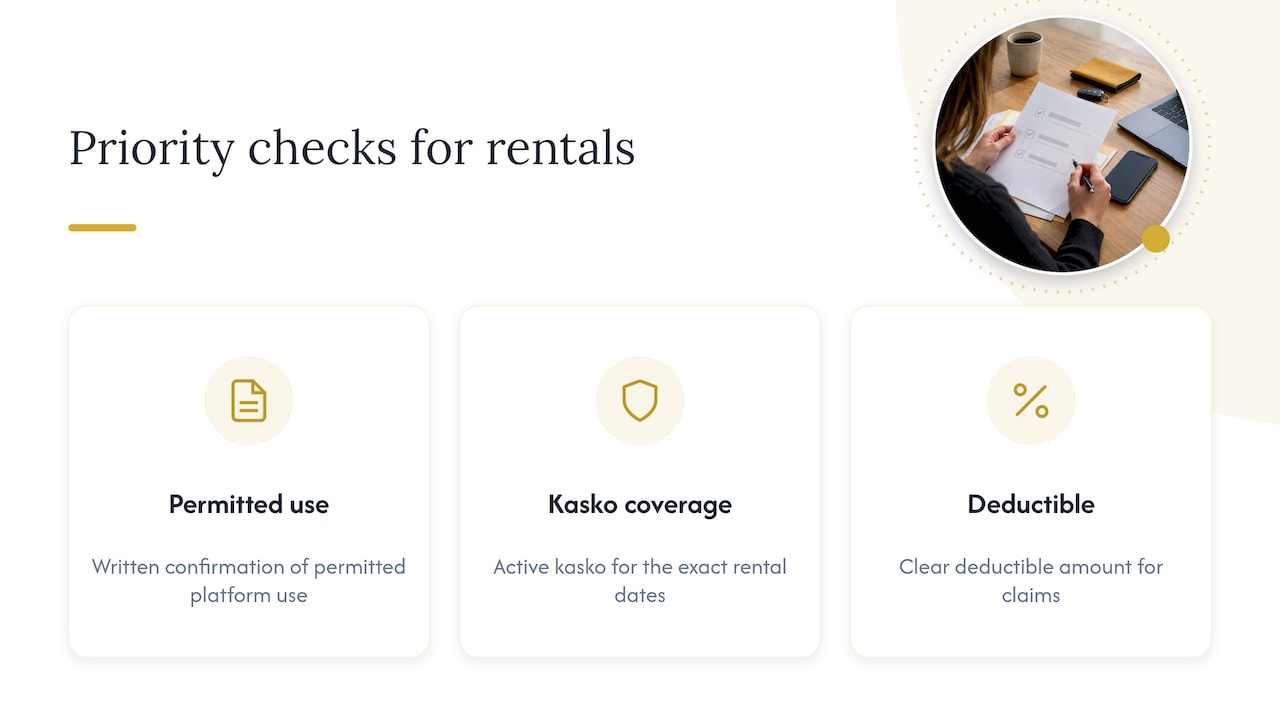
Three checks matter more than everything else combined: written confirmation of permitted platform use, active kasko coverage for your exact dates, and a clear deductible figure. Skip any of these and you are driving on assumptions, not terms.
Two red flags should end a booking on the spot: an owner who will not put permitted use in writing, and a listing that is vague about insurance status when directly asked. If either happens, walk away.
For a new driver, the order is simple: confirm eligibility and documents first, verify insurance and permitted use second, and only then worry about pricing details. Get the fundamentals locked down before the fine print.
— Erki
SolidRide as a professional alternative for platform-related transport needs
Renting a peer-to-peer car for Bolt or Uber work means managing your own paperwork, insurance checks, and deposit disputes, and that effort is exactly what SolidRide removes when you need transport handled rather than rented. Where a Forus Autolevi listing leaves you responsible for verifying kasko coverage and permitted use yourself, SolidRide’s own platform-driver rental service in Tallinn comes with terms confirmed upfront, so there is no ambiguity to chase down after booking.
For drivers who need dependable transport without managing a peer-to-peer contract, SolidRide’s fleet and pricing are laid out clearly on the SolidRide pricing page, covering everything from hourly transfer rates to route-based pricing across Estonia. If your need is a professional airport, city, or intercity transfer rather than a platform-driving rental, that pricing page shows rates by vehicle and route.
Check availability and current rates on the SolidRide pricing page before you commit to a rental agreement that leaves the details to chance.
FAQ
Can I use a Forus Autolevi rental car for Bolt or Uber?
Yes, but only when the specific listing’s permitted-use clause allows commercial or platform driving. Some Forus Autolevi owners restrict their cars to personal use only, so confirming this in writing before booking is essential.
Do I need a deposit to rent a car for platform driving in Estonia?
Not always. Local reporting on Forus Autolevi notes that some listings advertise no upfront deposit, though a deductible can still apply once a damage claim is filed.
What documents do I need to rent a car as a Bolt or Uber driver?
You need a valid driving license matching your vehicle category, a government-issued ID or passport, and an active credit or debit card in your own name for the security hold. Non-EU license holders sometimes need an international driving permit depending on the owner’s requirements.
Does the rental insurance cover accidents while driving for Bolt or Uber?
Coverage depends on the listing: third-party liability is mandatory on every Estonian vehicle, but collision or comprehensive coverage, known as kasko, is only active if the specific rental includes it. Confirm kasko status in writing for your exact rental dates before you start driving for any platform.
What happens if I return the rental car with less fuel than I received it?
Most agreements charge a refueling surcharge that is typically higher than standard pump price when the car is returned below the agreed fuel level. Photographing the fuel gauge at pickup and return protects you if a dispute arises over the charge.
Add a comment